A US ground stop sounds like somebody else's problem. Then more than 400 of your travelers are caught in it.
More than 400 of our travelers were affected by Friday’s US ground stop. This is what the first twelve hours looked like.

You will tell me that a nationwide ground stop over American airspace is an American problem. I understand the instinct. Most of us in Latin America read the headline on Friday afternoon, felt a polite sympathy for whoever was standing at a gate in Dallas, and returned to our own calendars.
I would like to spend the next few thousand words explaining why that instinct is expensive. Corporate travel has no domestic side and no foreign side once a traveler is in motion. A Brazilian engineer connecting through Miami, a regional director landing in Houston for a Monday meeting, a finance lead on the last leg home from New York: each of them is one disruption away from belonging to a problem that, on paper, belongs to somebody else’s country.
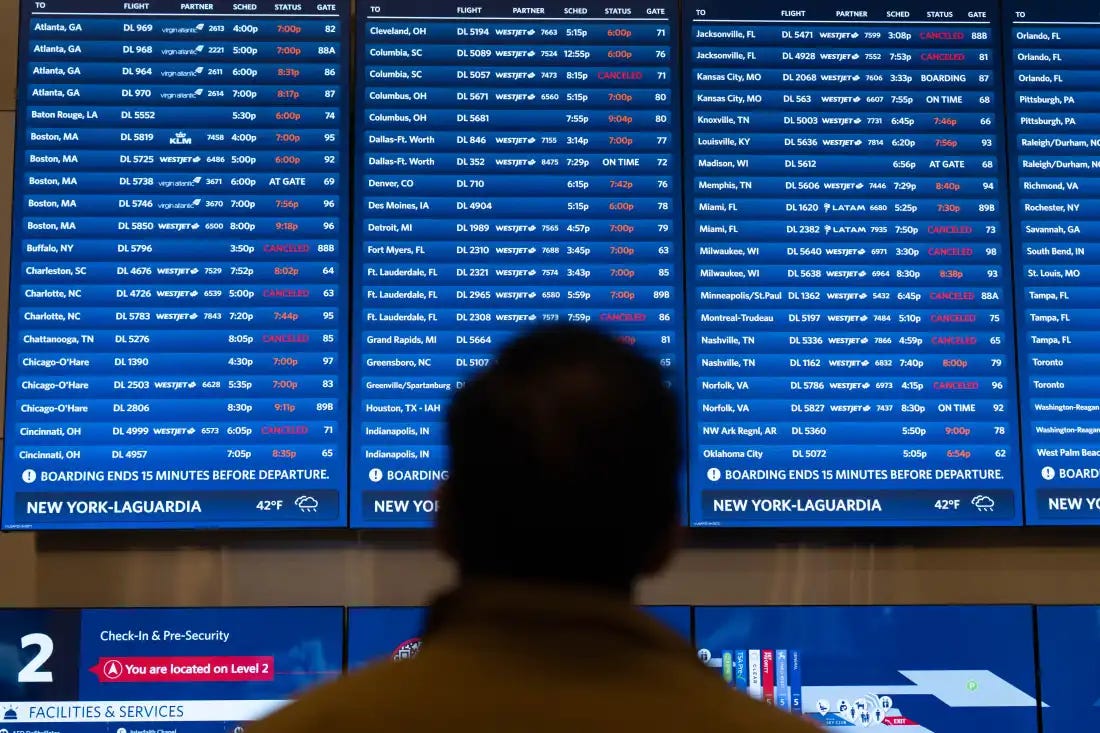
On Friday, November 13, the FAA held departures at airports across the United States, and the order lasted more than four hours. Inside that window, more than 400 travelers on the VOLL platform turned out to be affected, some directly and some one connection away.
The numbers I will share below are our operational data as of Saturday, November 14, and they come from my team, who had them ready when I asked. The numbers about the system around them come from the reporting of the outlets that followed the day, and I have linked each one.
One more thing before we start. I believe AI was the best colleague our travelers had on Friday, and I am going to say so plainly. I am also going to keep one eye on the people, because the most interesting part of this story is how the two divided the work.
What stopped, and for how long
Let me begin with what is known, and with the places where the reports do not yet agree.
According to ABC News, the FAA began seeing instability in radar and communications at control centers around 3:30 p.m. in New York, issued the nationwide order at 3:54 p.m., and lifted it at 8:15 p.m., roughly four hours and twenty minutes later. A university explainer from Northeastern quoted an FAA spokesperson saying the agency was investigating “communication issues impacting multiple Air Route Traffic Control Centers,” and it put the start of the suspension around midday Eastern. When two careful sources disagree on the clock, I prefer to say that the stop ran from Friday afternoon into the evening, Eastern time, and let the investigators publish the final timeline.
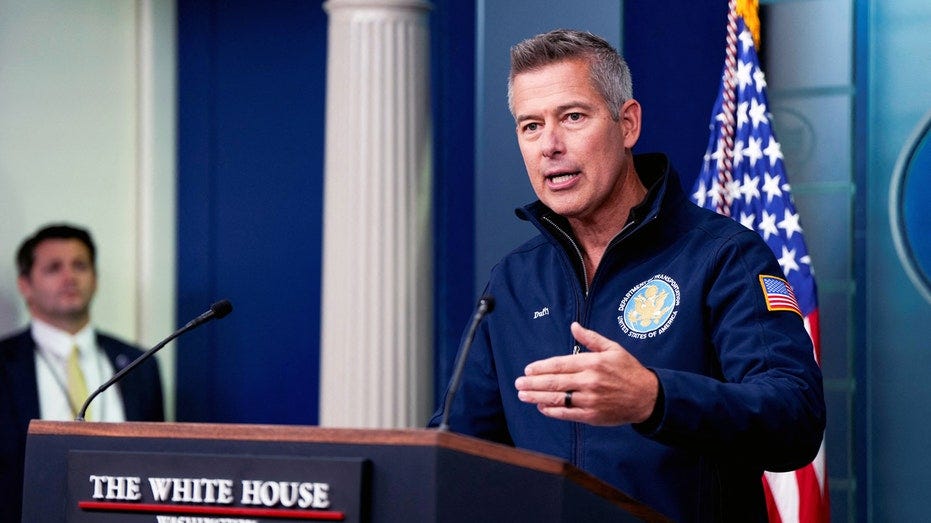
On the cause, the AP report carried by PBS NewsHour quotes Transportation Secretary Sean Duffy saying that a contractor replacing copper wire with fiber triggered a system overload, and that officials were investigating whether a contractor error or faulty equipment was to blame. I will leave the investigation to the people with the authority to run it. What matters for a travel buyer is the part nobody disputes: a piece of infrastructure that almost no traveler has heard of stopped a very large share of commercial aviation in one country, and it did so while the work around it was, by design, an improvement.
Duffy also said that more than 3,000 flights were in the air when the order came, and that all of them landed safely. That sentence deserves a line of its own in any honest account of the day, so here it is.
The scale numbers depend on when you read them. Fox Weather counted more than 10,300 delays and more than 1,300 cancellations by 5:45 p.m. Eastern. By the time Al Jazeera published its late-evening update, FlightAware was counting roughly 7,000 flights delayed or canceled. These are snapshots taken at different hours, and I would not add them or compare them. The AP quotes aviation consultant Andrew Charlton estimating that about a quarter of the roughly 45,000 flights the United States operates on a normal day were touched by Friday’s stop, and calls it the longest nationwide ground stop in 25 years.
I find that last comparison useful because it tells us what kind of event this was. It was rare enough that few travel programs have a playbook written for it, and large enough that every travel program with a US exposure had to improvise on the same afternoon.
The tail is longer than the stop
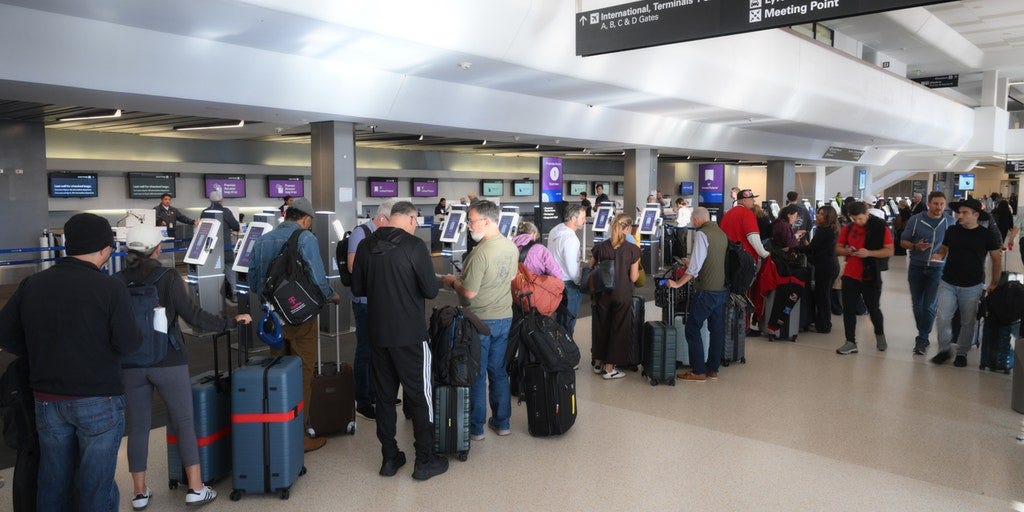
A ground stop is a pause button, and the aviation system does not resume where it paused. The pause leaves aircraft in the wrong cities and crews in the wrong hotels, and it leaves a day’s worth of passengers looking for seats on a network that was already running close to full. That is why the more important number of the weekend is the Saturday one: according to the AP, FlightAware counted more than 4,100 cancellations in the United States on Saturday, while Cirium put the figure above 3,200. Two trackers, two methods, and one conclusion: the day after the stop was almost as hard as the stop itself.
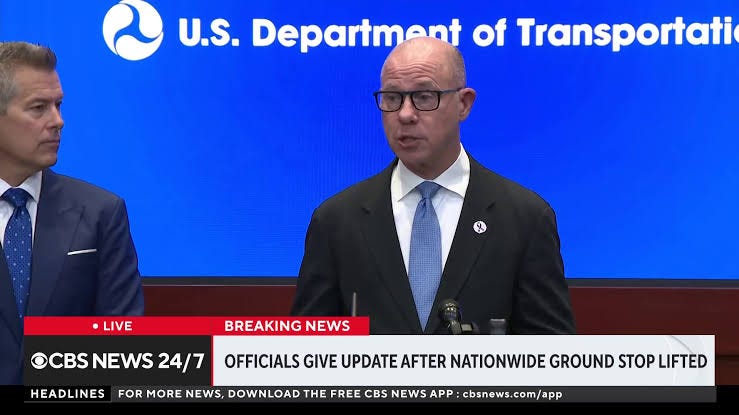
FAA Administrator Bryan Bedford told reporters that the worst was behind the system and that schedules should be back to normal by the end of Sunday. I would read that as a forecast for the domestic network. For a traveler who is crossing an ocean or a hemisphere, the tail is longer, because a long-haul aircraft that did not fly Friday night is not flying the return leg on Sunday, and the airline has to decide which route to cancel so that another one can happen.
In October, I wrote about why airlines redraw their networks when costs rise. A ground stop forces a version of the same decision in an afternoon, with no time to communicate it nicely. The traveler sees a cancellation. Behind the cancellation is an aircraft that cannot be in two places, and a crew with a legal limit on how long it can work.
This is also why I would not trust any estimate of “back to normal” that stops at an airport’s border. Latin America feels the tail through its connections, through the inbound leg of a trip that was supposed to end in São Paulo, and through meetings that quietly move from Monday to Wednesday and drag the hotel nights with them. The ground stop happened in one country, and the tail was shared by everyone with a traveler in it.
Everyone is shopping for the same seat

The most human sentence in the AP report is a small one. A Southwest gate agent in Dallas said that all flights were full. Travelers, the report adds, slept in airports and tried rental cars, buses, and trains.
Put that next to the cancellation count and you can see the real competition of a disruption weekend. The airlines are not rivals in it. The rivals are travelers competing for the same seat, and the one who wins is usually the one who finds out first and decides fastest.
A corporate travel policy is built for the other kind of day. It is designed to protect a budget when time is cheap, and it is usually very good at that. When I wrote about who decides what is logical in a travel policy, I was thinking about fares. A ground stop gives the same question a stopwatch: if the in-policy seat leaves on Monday and an out-of-policy seat leaves in four hours, who is allowed to choose, and how quickly can the answer reach the traveler at the gate?
I do not think there is a universal right answer. A traveler on the way to sign a contract and a traveler on the way home from a training week do not deserve the same priority, and I would be uncomfortable with any system that pretended otherwise. What I do think is that the answer has to exist before the day it is needed. A policy with a crisis mode is a policy that has already decided whose time is worth more, and it is much kinder to decide that in a calm meeting than in a terminal at midnight.
There is also a quieter cost. Every traveler who waits for a rebooking in a line is a traveler who is not looking at alternatives, and every alternative that disappears while he waits makes the next one more expensive. Speed of information is an economic variable, and on a day like Friday it is the only one that compounds by the minute.
A coincidence with a Microsoft logo on it
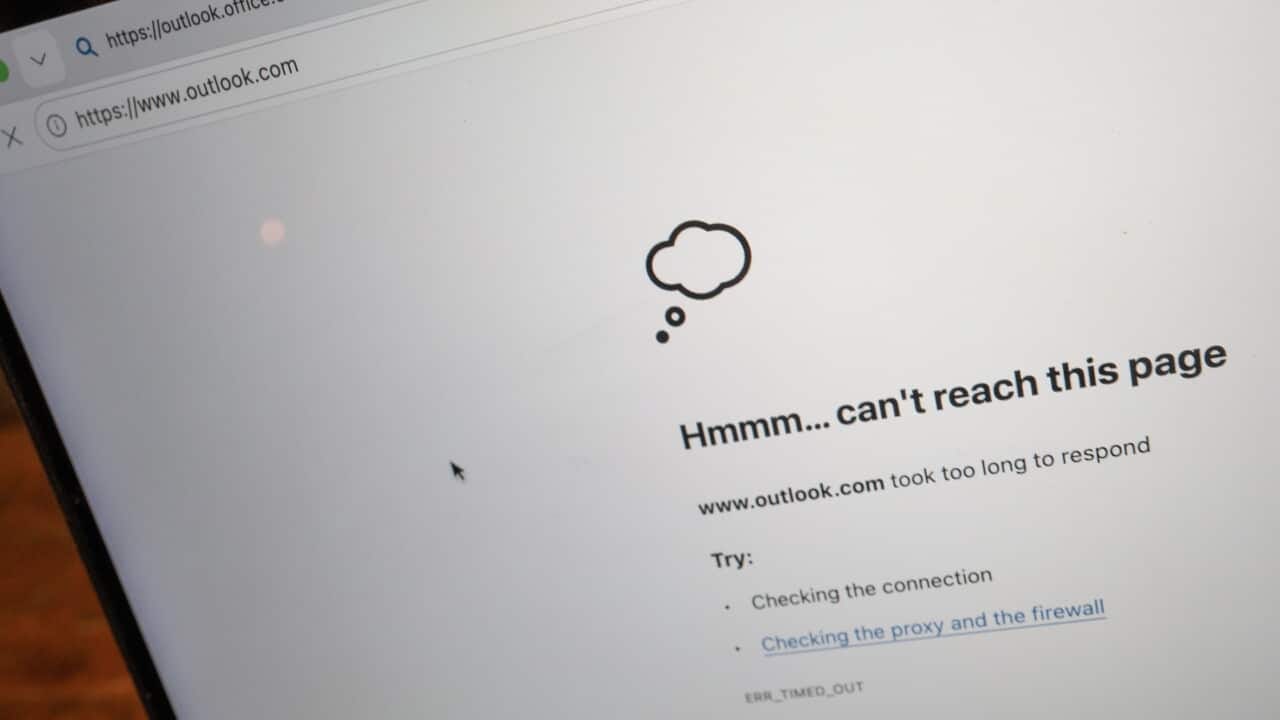
The internet noticed that Friday’s ground stop arrived during a Microsoft outage, and a few people wanted them to be the same event. They were not. The Homeland Security secretary, as quoted by Northeastern, said he saw no reason to connect the two, called them separate issues, and described the aviation event as a telecommunications outage, adding that there was no reason to suspect an attack so far.
Microsoft’s own account, summarized by Airways Magazine, is narrower: the outage began on November 12 and affected features that depend on Exchange Online, while Teams calls, meetings, and messages were largely unaffected. IndiGo told customers that its email support was affected while flight operations and other support channels were not, and Air India redirected its email so it could keep receiving messages.
I mention the coincidence for a reason that has nothing to do with conspiracy. Two unrelated failures in the same 24 hours taught one lesson that I find more useful than either story: the contact channel is part of the operation. When a traveler is stranded, the airline’s ability to talk is as important as its ability to fly. On a day when one channel is slow, another is closed, and a third is a queue, the companies that can reach their people through several routes at once have an advantage that no one will print in a press release.
For a travel manager, that is the part worth carrying home. Whether your travelers have a number to call is the easy part. How many independent ways your organization has to find them first is the harder one, and so is whether any of those ways works when the usual one is down.
Fifteen seconds, then a map

This is the section where I should be most careful, because it is the part of the story in which my own company appears. I will tell you what happened and let the numbers carry it.
The corporate travel platform I co-founded keeps AI agents watching travelers in crisis and emergency situations, and the agents were built by our own team.
When the order came on Friday, in less than 15 seconds we knew exactly which travelers had a direct impact and which had a potential, indirect one. We also knew where each of them was.
A traveler already in a terminal, a traveler on a connection that had not yet been canceled, and a traveler who had not yet left home for a Monday departure are three different problems, and the agents separated them from the start.
After the order was lifted and operations began to resume gradually, the agents did a second job. They analyzed possible new itineraries and suggested accommodation for travelers at airports where the expectation of releasing new departures was lower. That is a judgment call about the future of a particular terminal, made for a particular person, and it is exactly the kind of work that used to start with someone pulling up a spreadsheet and ending with someone saying “I think Dallas will clear first.”
Here are the results, with the caveat that this is a position as of Saturday, November 14, and travelers’ situations keep moving. More than 400 travelers were affected. We reached 100% of them, confirmed that all were safe, and are monitoring all of them. Within 12 hours of the official announcement, more than 75% already had updated itineraries, new flights, and hotel stays, in whatever combination their situation required.
I believe this was the fastest, most accurate and most proactive support we have ever delivered in a disruption. I cannot compare it with every other operation in the industry, and I would not try, because agencies, airlines, hotels, and companies with employees on the road all lived the same Friday, and I imagine many of them used AI as well. What I can say is that the speed was real, the contact was proactive, and the content of each message was personal to the traveler who received it.
I keep asking one question about every business trip, which is why the person is traveling in the first place, a question I explored in a piece about trip purpose. On Friday that question was a priority list. The agent could tell us where someone was. Our team could tell us what the trip was for.
The humans who still hold the phone

Here is the part of the story that rarely makes a headline, and the part I am proudest of.
The team did not step aside. The team led the agents. My colleagues monitored the agents’ responses, supplemented the analysis with new requests for information whenever an answer looked incomplete, and made the contacts that cannot yet be made by an agent. Most airlines currently limit their contact channels to the traditional call-center flow, and an agent cannot wait on hold with a person’s confirmation code. So a human did.
I want to say that without a trace of criticism. A call-center flow is a design that made sense for decades, and it exists to protect passengers from fraud and from mistakes. I expect the industry to open more doors to authorized agents in the coming months, and on a day like Friday the incentive to do so became obvious to everyone who tried to rebook four hundred people at once. For now, the practical split is simple: agents propose, people dial.
This division of labor is the answer I would give to anyone who asks me whether AI replaces consultants in a crisis. In my experience it does the opposite: it gives the consultants the one thing they never have at the start of a disruption, which is an accurate list of who needs them, in order, with their location attached. My team spent its energy on conversations instead of on building the list, and that is a much better use of a human being in the middle of a disruption.
In late October I wrote about AI adoption among travel managers, and the question I kept returning to was when adoption would be tested by a real day. Friday was one of those days. The test did not look like a dashboard or a feature launch. It looked like a message that reached a traveler before the traveler went looking.
There is a modest cultural point here as well. The agents that did this work were built by the people who then supervised them, and that is a different relationship from receiving a tool from a vendor. When the builders are also the operators, the feedback loop is a conversation in the same room, and the tool improves every time it meets a Friday like this one.
The message I did not ask for

A traveler from one of the companies that use the platform wrote to me. I will not name him, and I will not quote him in full, because it was a private message sent in the spirit of a thank-you. The gist is worth sharing, because it is the whole story in two sentences.
He said that he would need to book more hotel nights because of the stop in the United States, and that, without his asking, our team had already reached out to him.
He said nothing about a feature, an agent, or AI. The word that stayed with me was the surprise. In a disruption, the default state of the traveler is to be the one who has to go looking: for information, for a human, for a seat. The AP report describes people sleeping in airports, and I suspect that the loneliest hour of a disrupted trip is the one in which a traveler realizes that nobody knows he is there.
Anyone who has stood in a terminal after a cancellation knows the particular silence of that moment: the board has changed, the app has not, and every person around you is typing the same search with the same thumb.
A message that arrives before the question changes the order of that hour.
The traveler stops being a person who has to prove he exists to a queue and becomes a person whose situation someone else is already holding. That is a small shift, and it happens to be the one that decides whether he remembers the disruption as a story about an airport or a story about the people who looked after him.
I find the word “proactive” overused in our industry, and I want to be careful with it. A notification tells you that a flight changed. A proactive message that works also tells you what we already did about it, offers a hotel near the airport where the next departure is likely to clear first, and says that a person is available if the plan does not fit. That second kind of message has already done some of the work.
My team deserves that sentence more than any of the technology around it. They built the agents, they supervised the agents, and they picked up the phone for the contacts the agents cannot make. A thank-you from a traveler who did not have to ask is the best review I know of, and this one was short, which made it better.
If you are a buyer of travel services, I would listen to that kind of message more carefully than to any slide in a vendor deck. The test of a platform is the Friday it did not expect, and the evidence is a traveler who wrote to say he never had to chase it.
A prediction with a date on it
Here is what I expect, and I would like you to hold me to it.
By the end of 2027, a growing number of corporate travel tenders will include a question that did not exist a month ago: how long does it take you to identify every traveler exposed to a network-wide disruption, and what do you do in the first hour? I do not expect the question to sound like that. It will arrive dressed as “crisis response” or “duty of care capabilities,” and it will sit in a section nobody read last year. But the answer will separate providers more clearly than a discount in the fee table ever did.
I expect the industry’s contact channels to open for authorized agents. Not all at once, and not every airline, but in the same way other industries opened theirs once the cost of a closed door became visible to their customers. The ground stop was the first nationwide halt since January 2023, as Al Jazeera noted. I would not bet on a quiet gap of nearly four years before the next major disruption, and it does not have to be a ground stop. A storm, a systems failure, or an airport closure produces the same exposure with a different headline.
And I expect that, a year from now, the traveler’s side of the experience will have changed. The message that arrives before the question will stop feeling like a surprise and begin to feel like a standard, the way a boarding pass on a phone went from novelty to expectation. The companies that made it feel normal first will have earned a long period of trust that is very hard to buy.
For the rest of us, the immediate work is humbler. Check which of your travelers are still on the road in the United States this week, whether your own contact list is accurate, and whether the person who has to approve an out-of-policy seat can do it from a phone. Friday gave us a free rehearsal. I would take the notes while the memory is fresh.
Ask me again on the next anniversary of Friday the 13th. I will tell you whether I was right, and I will tell you how long the first message took.
About me

I am an entrepreneur with over 20 years of experience at the intersection of tourism and technology. I am co-founder and Chief Business Officer of VOLL, the largest mobile-first corporate travel and expense management platform in Latin America, where I lead the commercial strategy behind our AI adoption.
A first-cohort graduate of The AI-Powered Organization at Stanford Graduate School of Business and a Marketing specialist from Fundação Dom Cabral, I serve on the Tourism Council of FecomércioSP and on the Executive Council of the Latin American Association of Corporate Events and Travel Management (Alagev). I write and speak about innovation, digital transformation, entrepreneurial leadership, and the future of corporate travel.
Discussion about this post