AI adoption among travel managers is stuck at intention. Practice is what moves it
68% of travel managers used no AI in their last hotel RFP. What a day with more than 100 people at VOLL taught me about the gap.


Whenever I say in public that AI is already changing corporate travel, someone in the room raises a polite hand and points out that most travel managers they know are not using it. For a long time I answered with anecdotes. Now there is a number, and the person with the raised hand is right.
A study by the Global Business Travel Association and Radisson Hotel Group, presented at Cvent Connect Europe and reported by C&IT, found that 68% of corporate travel managers used no AI at all in their last hotel sourcing cycle. Only 8% used it moderately or extensively. And yet 69% expect to use AI to some degree in the next cycle, and 39% expect to use it moderately or extensively.
That is the most honest picture I have seen of AI adoption in corporate travel: a profession that believes in the technology, plans to use it, and has mostly not started. GBTA’s Catherine Logan put it in a phrase I have been repeating ever since: “Intention is not the same as readiness.”
This piece is my attempt to explain where that gap comes from, why I think it closes faster than most people expect, and what I learned from watching more than 100 people at VOLL close it in a single day. A disclosure up front: VOLL is the corporate travel and expense management platform I co-founded, and we build AI into what we sell. Take my optimism with that in mind, and judge it by the evidence.
What the GBTA and Radisson study says about AI in travel management

The study surveyed 250 corporate travel managers in Europe and North America about how they run managed hotel programs and requests for proposals. The RFP is a good place to look for AI, because hotel sourcing is exactly the kind of work that machines should help with: large volumes of rates, locations, amenities, historical spend and contract terms, compared across hundreds of properties.
The gap between the two expectation numbers deserves a second look. Almost seven in ten managers expect to use AI “to some degree” next time, but only about four in ten expect to use it in a meaningful way. In other words, many travel managers already imagine AI as a side tool for the next RFP. That is a reasonable starting point, and it is also how pilots turn into permanent pilots if nobody plans the next step.
The adoption numbers are low, and the reasons Logan gave are the interesting part. She listed the conditions that need to be in place before AI becomes useful in sourcing: reliable data, defined accountability, appropriate privacy controls and confidence in how recommendations are produced. Every item on that list belongs to the organization that uses the software.
The same session included findings from 27Names, which surveyed 89 event agencies in Europe and found a very different picture on the creative side: almost all of them use AI in their creative process, while only about one in five have implemented it fully across operations. The pattern repeats: people use AI where the stakes feel low and the output is easy to judge, and hesitate where a mistake has an owner. In the words of Cvent’s Laura Cresswell, quoted in the same report, someone needs to be accountable.
One more detail matters to me. Latin America was not part of the sample. That is common in this industry’s research, and I never read it as a weakness of the region. I read it as an open question. Latin America is a region where openness to AI is high, as I discussed in a piece on the region most open to AI, and I would love to see the same questions asked of travel managers here.
Hotels show the same pattern: AI recommends, people decide

The hotel industry offers a mirror image of the travel manager’s hesitation, seen from the other side of the negotiating table.
RoomPriceGenie’s 2026 State of Revenue Management report, which surveyed 450 senior revenue decision-makers in eight markets, found that 53% of hotels use AI to help set room prices, yet only 10% would let AI make most pricing decisions, according to Asian Hospitality. About 77% trust AI to some degree. And 43% of the hotels surveyed have no revenue management system at all, with 29% still pricing on spreadsheets and 14% on instinct or fixed seasonal rates.
The study comes from a company that sells pricing software, so I take the framing with care and keep the numbers. What the numbers describe is a sensible division of labor. AI does the analysis and makes a recommendation, and a human with context makes the call. That is a perfectly healthy way to start, and it happens to be exactly what travel managers say they want in sourcing.
I wrote a few weeks ago about why the hotel industry worries that AI will take the human out of hospitality. The revenue management data suggests something more practical: in pricing, as in sourcing, the first job of AI is to make the expert faster, and the expert stays in charge.
Why intention does not turn into practice

If most travel managers want to use AI and most of the conditions are organizational, why does the gap persist? My answer, after a year of watching this closely and a good part of this one studying it, has three parts.
The first is data that lives in too many places. A travel manager who wants to ask a simple question, such as how much the company spent on hotels in a given city last quarter, often has to collect the answer from a booking tool, an expense system, a card statement and a spreadsheet someone maintains by hand. No AI fixes that by itself, and every disappointing first experience with a chatbot that “did not know” the answer feeds the hesitation.
The second is accountability. In travel, a wrong answer has consequences: a traveler without a room, an approval granted outside policy, a contract signed on bad numbers. People are right to want to know who answers for a recommendation before they act on it. I explored this in a piece on the real AI governance problem, and I still think governance is mostly a question of clarity: what the system may do on its own, what it may only suggest, and who signs off.
The third reason gets less attention, and I think it is the most important. Most professionals have never used AI on their own real work. They have seen demos, read headlines and perhaps asked a chatbot to write an email. Very few have connected an assistant to the data they deal with every day and asked it the questions their boss asks them on Monday morning. Readiness is built by doing exactly that, and it rarely happens in a slide presentation.
What happened when more than 100 people at VOLL tried it in one day
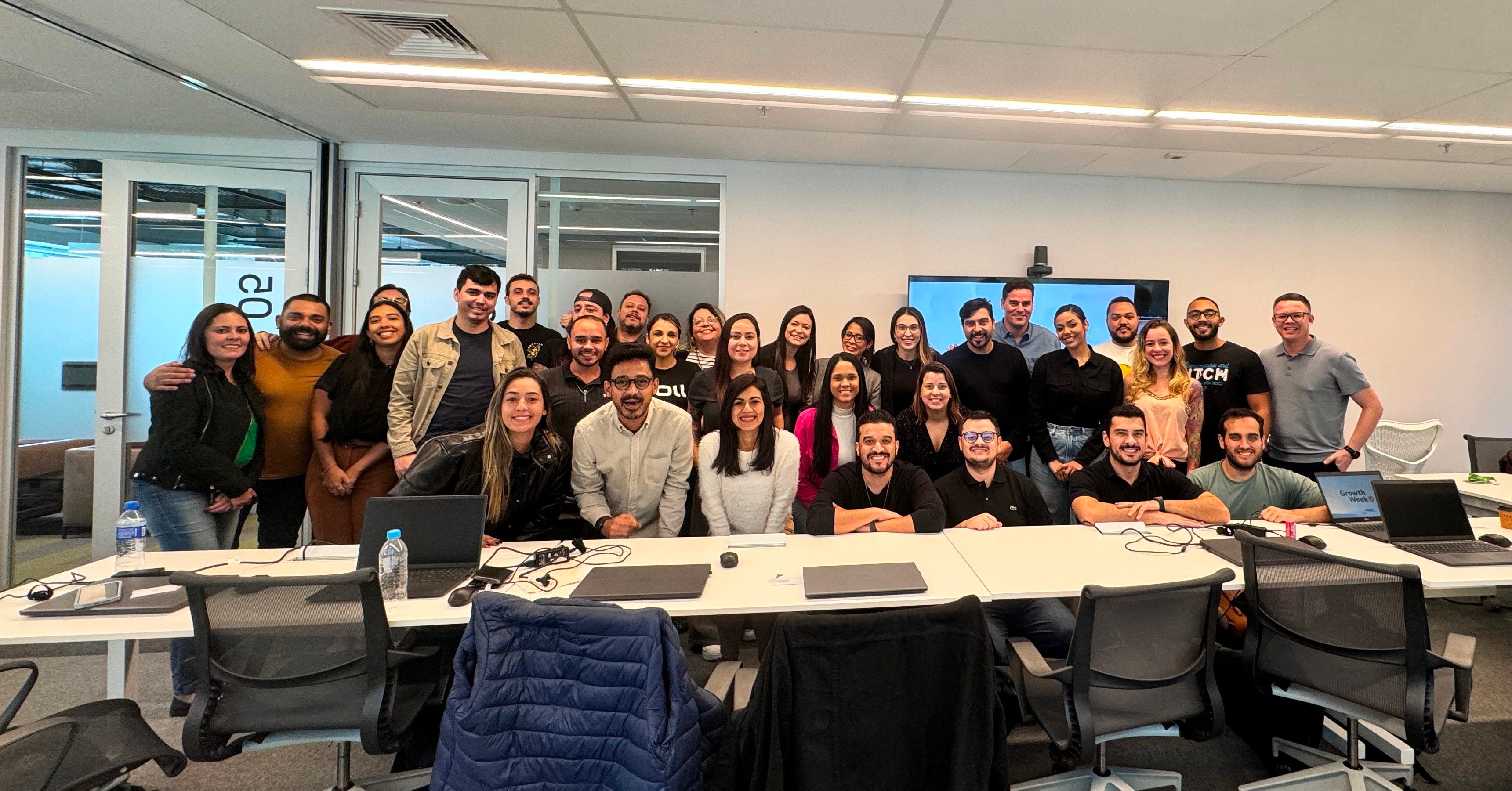
In October, more than 100 people from VOLL’s sales, customer service and marketing teams spent a day in São Paulo doing one thing. Each of them connected their own Claude or ChatGPT to the travel data of a demonstration company on our platform, and asked the three questions every travel manager asks.
How much did we spend on hotels, by city, this quarter? Who traveled outside the policy? Who is flying tomorrow?
We chose those questions on purpose. They are not glamorous, and they are the questions that consume a travel manager’s week. We decided to put the whole team to work the way our clients can now work, because the people who sell, serve and communicate need to feel in practice what a travel manager feels when the answer arrives inside the conversation, without a spreadsheet or a report request.
The day before, our CEO, Luciano Brandão, had published VOLL’s commitment to this way of working, and I signed my name under it. I have spent more than 20 years in this industry. I have never seen the distance between what technology promises and what a travel manager can use on Monday morning shrink as fast as it is shrinking now.
I also came back from an executive program on AI at Stanford this year convinced of something the GBTA study confirms: organizations change when people practice, and people practice when the organization gives them permission, structure and a real problem to solve. The training day was our attempt to give all three at once.
How a company makes AI ordinary instead of special

A single day of practice helps. A culture keeps it going, and I want to describe ours in some detail, because I think the mechanism matters more than the product.
Once a month, on a Thursday at 8 a.m., the whole company joins a call in which teams from every area present AI agents they built themselves, along with the results those agents produced for clients or for the business. Many of the presenters are not engineers. Before anything reaches that call, an AI enablement team reviews it for impact, structure, governance and real benefit. Then more than 750 employees vote, the most impactful project wins a prize, and the projects that did not win are improved and submitted again. We now have more than 75 AI projects built in-house this way.
The effect is that AI stops being special. It becomes part of how a customer success analyst, a finance coordinator or a sales executive thinks about their own work.
One of those efforts, the eVOLLuir agent led by our customer success team, took VOLL to the final of the CSX Awards 2026 in Recife, in the category for best innovation technology in customer experience, as R7 reported.
The same culture shaped the product our clients use. VOLL Intelligence, launched in September at our Travel Connect event in São Paulo, works as an agent for travelers and travel managers: it remembers traveler preferences, lets a manager upload the travel policy inside the conversation, sends proactive flight-status notifications and helps analyze budget, suppliers and spend. The manager sets the rules, and the agent works inside them. That is the division of labor the hotel data describes, applied to corporate travel.
How travel managers can move from intention to readiness
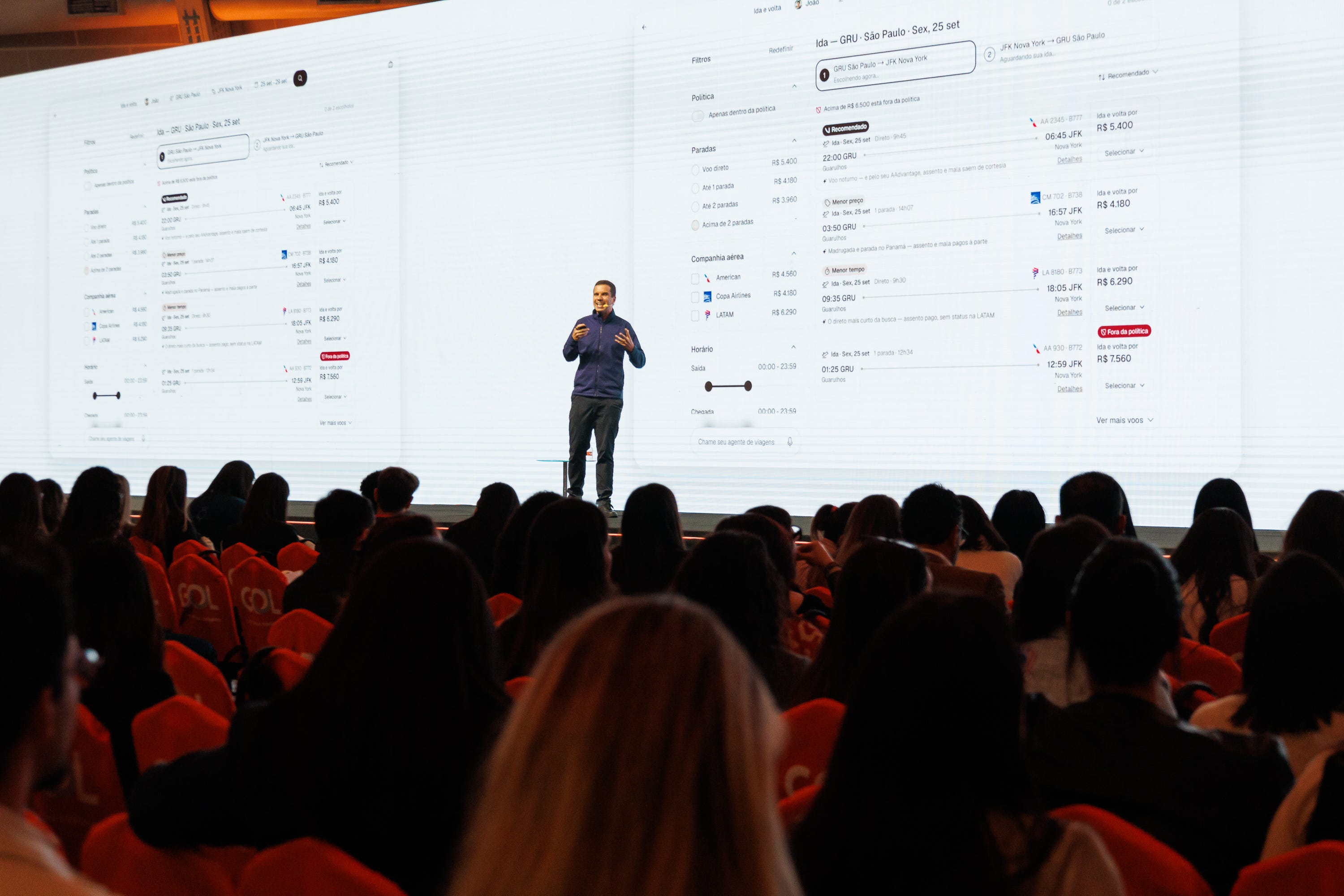
If you manage travel and you are part of the 68%, the good news is that the first steps are small, and none of them requires a large budget.
Start with your own three questions. Pick the questions your leadership asks you most often and try to answer them with an AI assistant connected to your real data, or to a realistic test environment. The point is to feel the experience on your own work.
Fix the data before you judge the AI. If the answer is wrong because spend lives in four systems, the problem is consolidation. I have argued before that an AI travel agent is only as good as the data behind it, and the same is true for an AI assistant for managers.
Decide what AI may do, what it may suggest and who signs. Write it down in one page. Accountability is what turns a promising tool into a trusted one.
Use AI to recommend in sourcing before you let it decide anywhere. The hotel RFP is a perfect first case: let the machine compare rates, locations and history, and keep the negotiation and the final choice with you.
Measure the time you get back. Before you start, write down how long it takes today to answer your three questions, prepare the quarterly hotel report or review out-of-policy bookings. Measure again a month later. Time returned to the travel manager is the most convincing argument for the next step, and it is the number your finance team will understand immediately.
Bring your team along, and make it social. A day of practice, a monthly showcase or a simple internal competition does more for adoption than any memo.
The GBTA study gives the industry a useful baseline, and I suspect the next edition will look very different. Intention is already there. Readiness is a matter of practice, and practice can start this week. The person with the raised hand in my audience was right about today. I would be surprised if they are still right a year from now.
About me
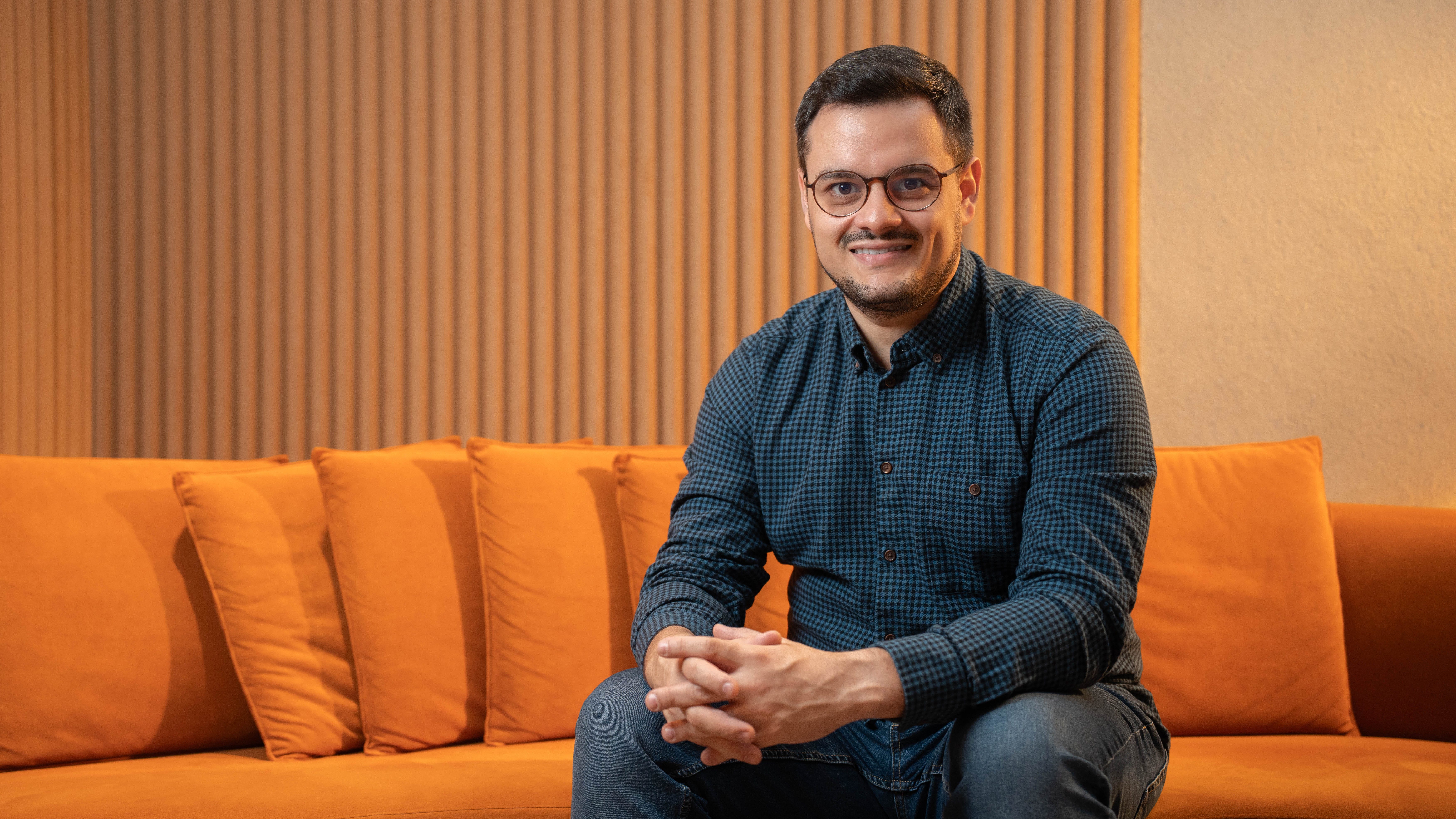
I am an entrepreneur with over 20 years of experience at the intersection of tourism and technology. I am co-founder and Chief Business Officer of VOLL, the largest mobile-first corporate travel and expense management platform in Latin America, where I lead the commercial strategy behind our AI adoption.
A first-cohort graduate of The AI-Powered Organization at Stanford Graduate School of Business and a Marketing specialist from Fundação Dom Cabral, I serve on the Tourism Council of FecomércioSP and on the Executive Council of the Latin American Association of Corporate Events and Travel Management (Alagev). I write and speak about innovation, digital transformation, entrepreneurial leadership, and the future of corporate travel.
Discussion about this post