I ask one question about every business trip, and it has nothing to do with price
Every purchase on a modern travel platform asks for a reason, and a meeting that is not quite a meeting showed me why it matters.


A couple of weeks ago, I was presenting results to a large client. Among the reasons the company had configured for its travelers, two read “meeting” and “meeting with a client”.
I asked how the company would tell the two apart in an audit. It is a hard question to answer, and I do not think anyone should be embarrassed by that.
Since that afternoon, I have been asking one question about every trip I hear about. I will tell you what it is at the end, because the rest of this article is the answer to why it matters. You have probably guessed it already. I would still like you to read on, because the interesting part is how rarely we answer it well.
Two reasons that look identical in a report

Let me explain the problem with the two reasons. A “meeting” can be a weekly review at another office, a negotiation with a supplier, a workshop with a team, or a conversation with a customer. A “meeting with the client” is one particular kind of meeting. To the traveler, the difference is obvious. To a system, an auditor or a finance analyst reading a report six months later, the two labels overlap, and a trip filed under one can legitimately belong under the other.
The overlap matters for a simple reason: the reason on a trip is the sentence that justifies the spending. In the United States, the Internal Revenue Service makes this explicit for anyone who claims travel costs. Publication 463 says that even when you use the standard meal allowance, you must keep records to prove the time, place and business purpose of your travel.
I mention a US tax rule only as an example of how seriously the idea is taken elsewhere. Companies in every market have their own versions of the same principle, and none of them is satisfied with an answer that could mean two different things.
What struck me in that conversation was that the problem lay in the design of the options, with no one’s carelessness involved. The company had done what many programs do: it created a short list of reasons that seemed sensible and moved on. That is a perfectly reasonable thing to do. It is also how a field that should hold the most valuable information in the system ends up holding the vaguest.
Every purchase on our platform asks for a reason
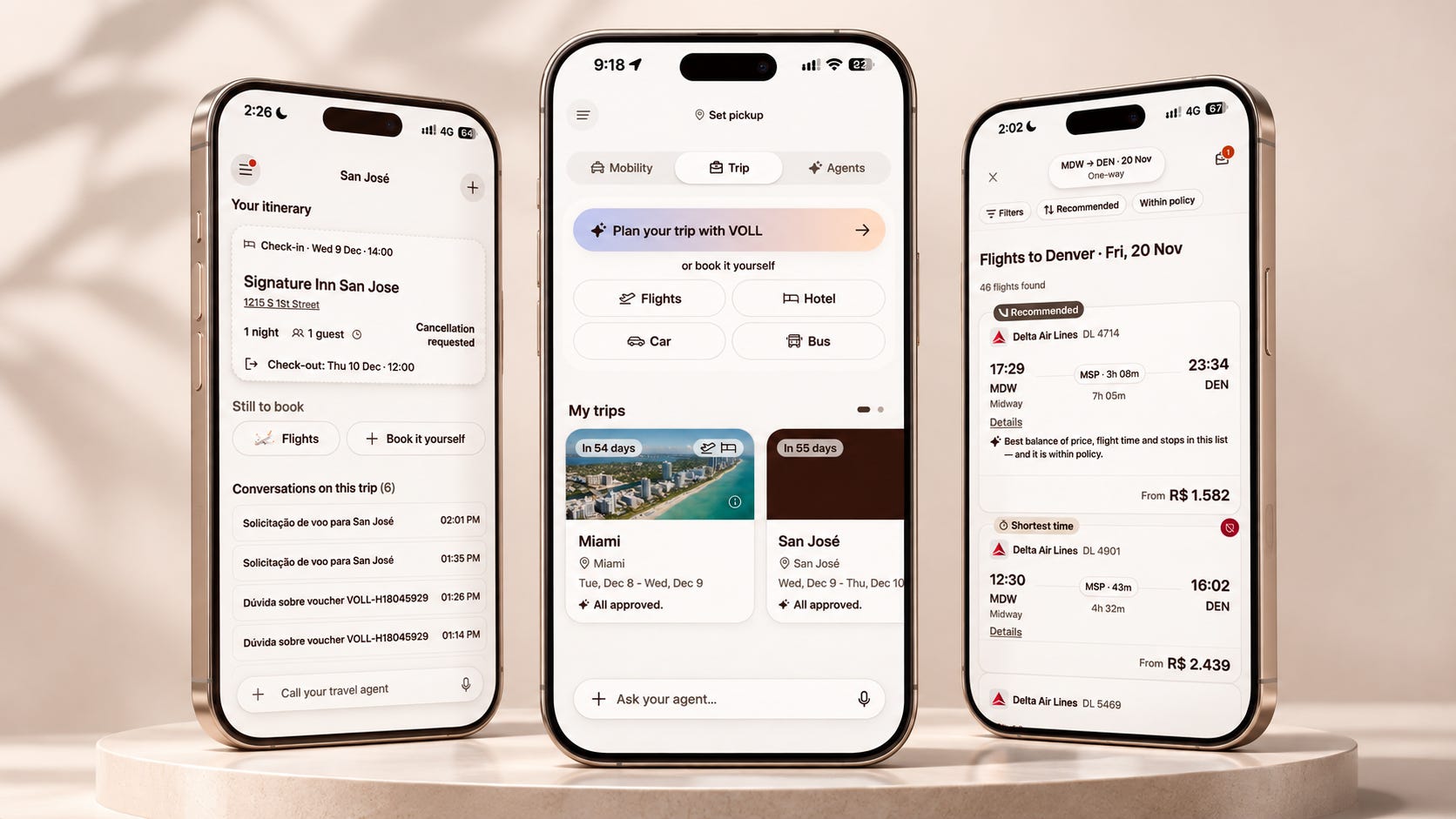
On the platform my company builds, every purchase requires a reason. It does not matter whether it is a trip, a commute, an expense report, a payment, an advance or a balance, an event, a group trip or a VIP trip: the system asks why before it completes the transaction.
We did not add this field to make anyone’s life harder. We added it because the question that finance and control teams tend to ask first is some version of “why did we spend this?” The answer to that question is rarely a price. It is a purpose. Prices tell you what happened. Reasons tell you whether it should have.
I wrote about a related idea in August, when I argued that the corporate travel ROI problem is an information problem, and that collecting the purpose of each trip at the moment of booking is where measurement begins. This article goes one level down. Once you agree that you need a reason, a second problem appears: how good is the reason you collect?
The market, in my view, has underinvested in this information. I want to be precise about what I mean, because I do not wish to blame anyone. I do not mean travel managers, who are often the people asking for better data and not getting it. I mean the tools, the habits and the default settings of an industry that spent decades optimizing the price of a ticket and the speed of a booking, and comparatively little the quality of the sentence that says why a person is on the plane.
The umbrella called event

Let me show you the most interesting example I know, because it is the one that has taught me the most. In our data, there is a reason called “event”. It looks simple. It is not.
An event, in a corporate travel program, can be several quite different things. It can be an internal training for a team that flies in from different cities. It can be an external fair or convention, where employees go to meet customers, suppliers or peers, such as the annual GBTA convention that I attend. It can be a leadership meeting, with executives gathering for a few days to set direction. And sometimes, honestly, it is a plain meeting that someone filed under “event” because the options did not include a better label, .
I looked at aggregated data from our platform to get a feeling for how much weight this label carries, and my estimate is that something around four in ten trips carry “event” as their main reason. I want to be very careful with that number. It is my own estimate, rounded, made from analyses I have seen, and it comes without a stated period or sample size. Please read it as an order of magnitude and not as a published statistic, and please do not quote it as one. I share it because even as an estimate, it says something important: the largest single reason is also one of the broadest.
Think about what that means for a company trying to understand its travel. If the biggest category is an umbrella, then the most useful report in the program, the one that shows why people travel, says very little about the largest share of trips. The finance team sees “event” and learns that people travel for events. That is correct. It is also close to useless.
Why the reason is the best field in the system

I have come to believe that the reason field is the most valuable piece of data in a travel program, and I have three arguments for it.
The first is auditability. A clear reason lets someone who was not there understand why the money was spent. It turns a transaction into a story with a beginning and an end.
The second is measurement. If you want to know whether travel produces results, you need to group trips by what they were meant to achieve. Trips grouped by “meeting” tell you nothing about which kinds of meeting paid off. I made a version of this argument in my piece on the hidden cost no one puts on the expense report, where the cost that mattered most was time, and where a policy check at the moment of booking was the way to recover it. The reason field is part of that same moment.
The third is the one that I find most exciting: anticipation. Structured information gives a human mind, and increasingly an artificial one, something to reason about. A system that knows a traveler is going to a client renewal can suggest a flight that arrives the evening before, a hotel near the office and a quiet table for dinner. A system that knows only “meeting” can suggest the cheapest option. I wrote about how the quality of what an agent remembers shapes the quality of its decisions in an AI travel agent is only as good as what it remembers about you, and the reason for a trip is one of the most useful things it could remember.
The reason is the task behind the trip

When I came back from Stanford, the idea that stayed with me most was a simple one: the right unit of analysis is the task, not the job. I wrote about it in my article on what ten weeks after the program had changed. A job title tells you little about what a person does on a given Tuesday. A task tells you.
A business trip works the same way. The traveler’s title or department says little about why the trip exists. The task does. “Closing a renewal”, “onboarding a new team”, “auditing a plant”, “attending a conference to find suppliers”: each is a task, and the trip is simply how the person gets to the place where the task can be done. A reason field that captures the task turns a list of tickets and hotel nights into a list of things the company decided were worth doing in person.
That framing changes the conversation about cost. A trip that costs a lot and completes an important task is a good trip. A trip that costs little and completes nothing is a poor one, however cheap. Without the reason, a finance team can only see the first number. With it, the team can ask whether the second one was met.
The reason also shapes the rules
There is one more consequence, and it reaches into the policy itself. Many of the rules a company writes for travel depend on what the trip is for. A client visit may justify a different hotel category than an internal training. A conference may justify an earlier booking than a routine visit. A leadership offsite may call for a different approval path than a site inspection.
I made a related point when I looked at what the IRS per diem map can teach a Latin American travel policy: rules that fit everyone fit no one, and the useful ones adapt to circumstance. The reason for the trip is the most natural circumstance to build on, because the traveler already knows it and the system can read it at the moment of booking. A policy that listens to the reason can be simple for the common cases and generous for the special ones, without turning into a thicket of exceptions.
Where I sit
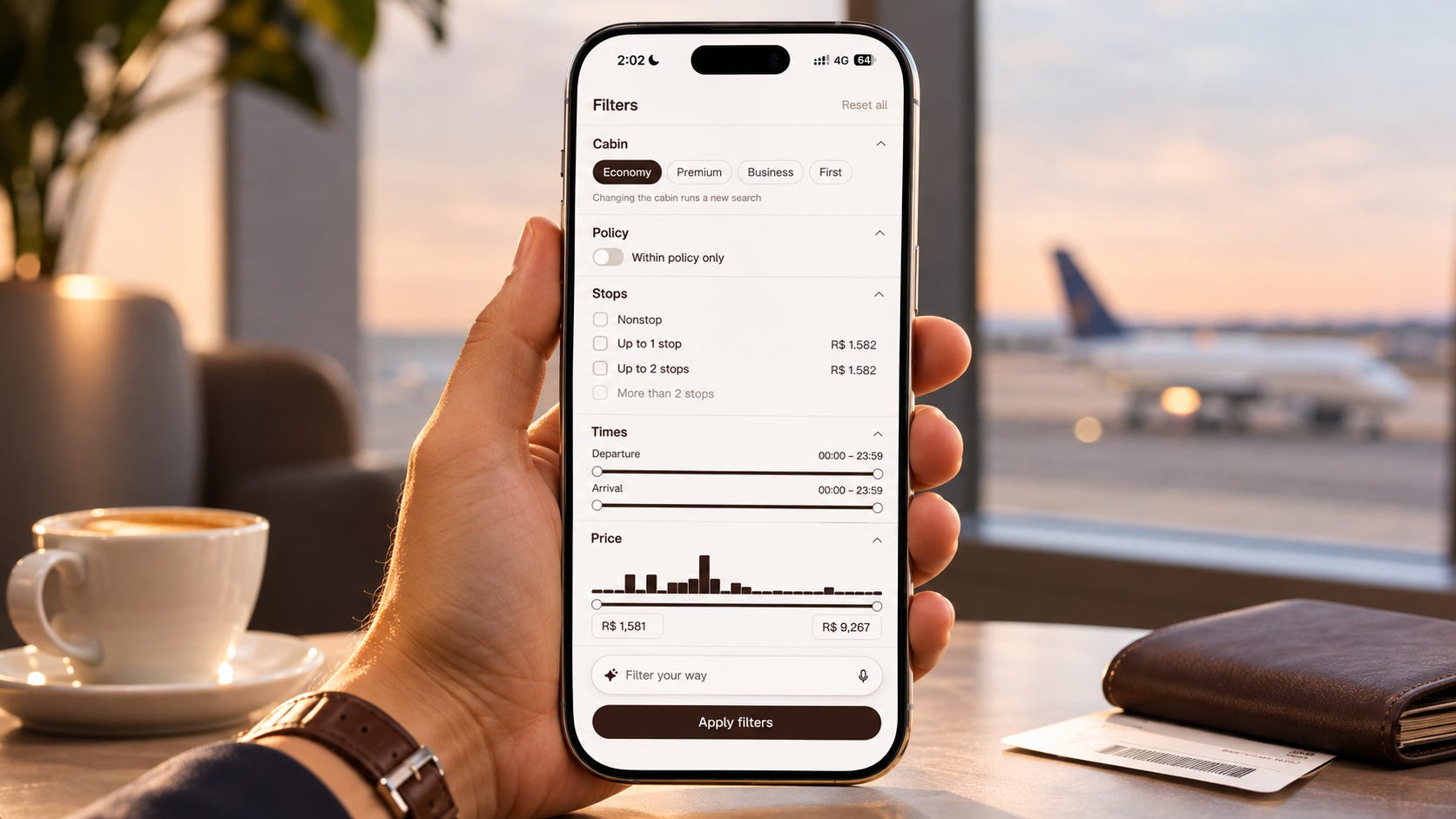
I should tell you where I sit, because the platform that asks for a reason is the one I help lead, and it was designed with the buyers’ concerns in this same conversation in mind. VOLL is the corporate travel platform I co-founded, and the field I am describing is one we made mandatory. I am convinced of its value, and I recognize that this is exactly the conviction you would expect from the person who built it. Please weigh my enthusiasm accordingly.
What I can add is a lesson from the inside. A mandatory field creates its own risk. If the options are poor, travelers choose the one that is closest and move on, and the data gets worse while appearing to get better. A mandatory field filled in carelessly is, in some ways, worse than an empty one, because it looks like information. The value of the reason depends on how well the options were designed and on whether the traveler understands why anyone is asking.
That is a design challenge and a communication challenge. The design part is the one we can solve with better lists and better wording. The communication part is harder: it requires a company to tell its travelers, clearly, that the reason is read, used and valued.
What a good reason looks like
I do not want to turn this article into a checklist, so let me offer a few thoughts and mark them as my own opinions. The buyers in a recent Business Travel Executive town hall said they want tools that show, at the decision point, what a trip like this one typically costs. That wish depends entirely on knowing what kind of trip “this one” is, and the reason is where that knowledge comes from.
A good reason answers the question “why this trip, and why now?” in a sentence that a stranger could read and understand. “Meeting” does not do that. “Client visit to discuss renewal of an annual contract” does. Suppose a company wants to understand its events. “Event: external conference” and “Event: internal training” and “Event: leadership meeting” give three very different pictures of the same budget line, and each one tells finance something it can act on.
I would also keep the list short enough to remember and specific enough to audit. These two goals pull in opposite directions, and the right balance will differ from company to company. A bank, a manufacturer and a software firm do not travel for the same reasons. A company that takes the trouble to look at its own trips for a quarter, and to read what travelers actually chose, will probably find the same thing I found in that room: two labels that mean almost the same, and one label that is hiding a large share of the program.
There is a human side to this as well. Travelers are busy and often tired when they book. A reason field that feels like a bureaucratic hurdle will be handled like one. A field that feels like a question a thoughtful colleague would ask, and that gives something back in return, such as a smoother approval or a better suggestion, will be answered with care.
What the answer unlocks

Imagine, for a moment, a travel program where every trip carries a clear reason. The first thing that changes is the quality of the questions a finance team can ask. Instead of wondering why travel costs rose in a quarter, the team can see which kinds of trips grew.
Perhaps client visits rose while internal meetings fell, which is a healthy shift. Perhaps the reverse happened, which is a different conversation. I am describing hypotheticals here, and not any real program, because the point is the kind of insight and the specific numbers will vary from company to company.
The second thing that changes is the relationship between travel and the rest of the business. A sales leader who can see how many trips went to renewals, and how many to new prospects, can connect travel to pipeline. A people leader who can see how many trips are for training can connect travel to development. A reason turns a cost into a decision that belongs to someone, and a decision that belongs to someone can be discussed, as I argued in the ROI piece.
The third thing is more subtle. A clear reason protects the traveler. When a trip is questioned months later, the sentence written at the time of booking is the traveler’s best defense. It says that the person went for a purpose that the company recognized and approved. In a world where travel budgets are watched closely, that sentence is a quiet form of care.
What a trip does for the company
Last week, in my hundredth article, I wrote about what travel does to the traveler: how it widens the view and how it changes the way we come home. This article looks at the same trip from the other side of the table, with the ROI question never far away. A trip does something for the person who takes it, and it should also do something for the company that paid for it. The reason is the bridge between the two. It is the sentence that lets the company understand what it bought.
I find it striking how rarely that sentence gets the attention it deserves. We obsess over the price of the ticket, the rate of the hotel and the speed of the booking, and we leave the most important part, the purpose, to a list of labels that someone chose in a hurry. I say that without criticism, because I think the opportunity is large and the cost of acting on it is small.
A note on honesty about the data
I owe you a reminder about the limits of what I am describing. The estimate of four in ten trips is mine, and it is an estimate. I do not have a published study to point to, and I do not want to give the impression that the industry has settled on a number. Different companies configure different lists, and a label such as “event” means different things in different programs.
The comparison across companies is therefore delicate, and any figure that claims otherwise deserves a second look.
I raise this because this article argues for the value of clear information, and it would be odd to make the case with vague numbers. The honest position is that the reason field is rich, uneven and underused, and that anyone who wants to learn from it has to start with their own program, their own labels and their own travelers. The same caution applied when I wrote about what an AI agent can remember about a traveler: the data is only as useful as it is honest.
The question
I argued in August that measuring travel starts with information, and this is the information I would collect first. So here is the question I now ask about every business trip, and the answer is shorter than the article that led to it. Why?
Not the price, the airline, the hotel or the policy. Why is this person going, in a sentence that someone who has never met them could understand and check? If you cannot answer it clearly, the trip may still be worth taking, but the company will never know that.
If I make one promise after writing this, I imagine it will be a small one: before my next trip, I will write the reason in one sentence, as if a stranger were going to read it. I suspect it will be harder than choosing the flight.
About me

I am an entrepreneur with over 20 years of experience at the intersection of tourism and technology. I am co-founder and Chief Business Officer of VOLL, the largest mobile-first corporate travel and expense management platform in Latin America, where I lead the commercial strategy behind our AI adoption.
A first-cohort graduate of The AI-Powered Organization at Stanford Graduate School of Business and a Marketing specialist from Fundação Dom Cabral, I serve on the Tourism Council of FecomércioSP and on the Executive Council of the Latin American Association of Corporate Events and Travel Management (Alagev). I write and speak about innovation, digital transformation, entrepreneurial leadership, and the future of corporate travel.
Discussion about this post