Your weekly flight can change. Why airlines redraw their networks when costs rise
Fuel costs doubled and margins thinned, so airlines are redrawing their networks. What a study of 6,000 routes says about fares.

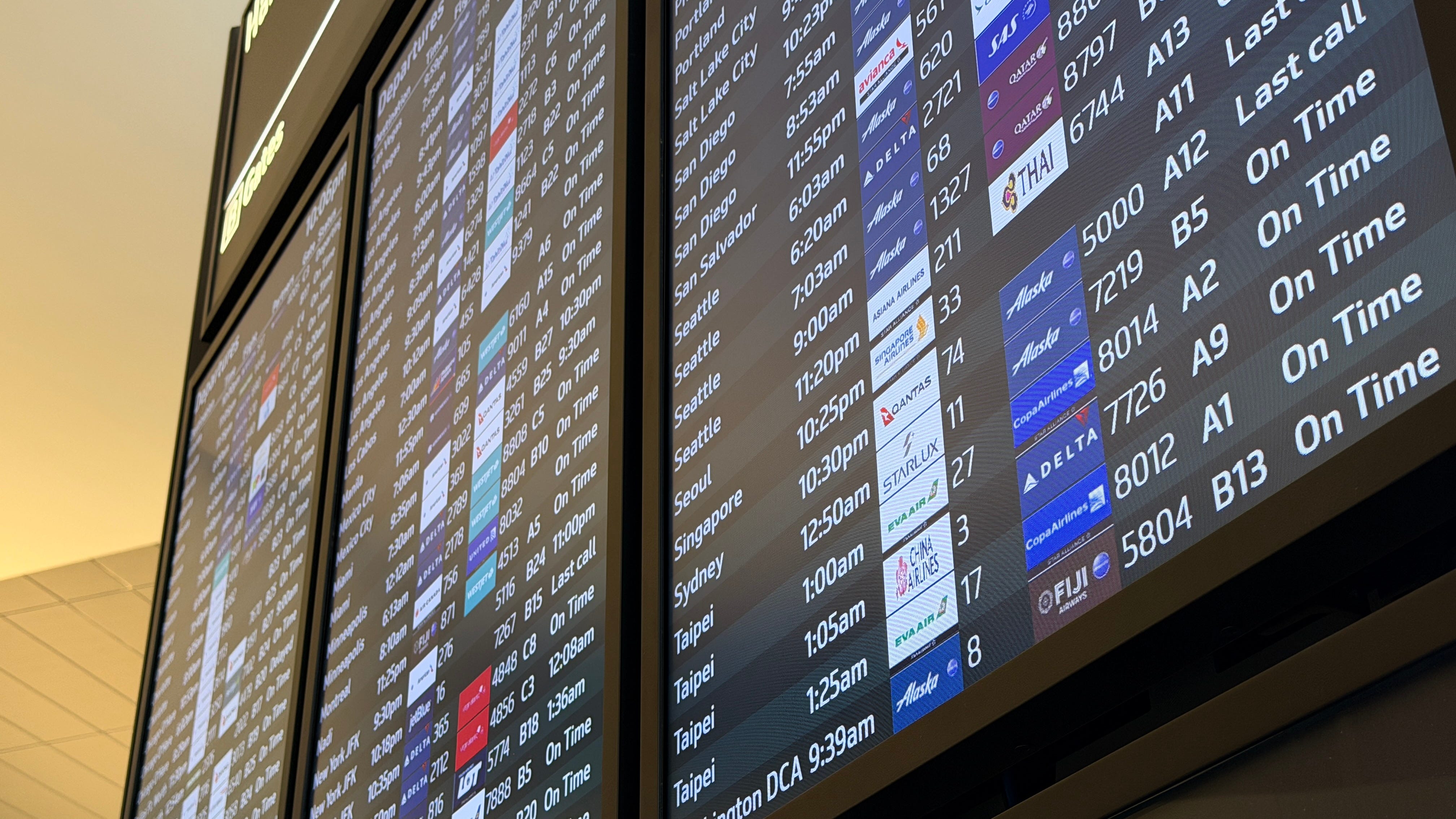
Most corporate travelers have a flight they consider theirs. The 7 a.m. departure to a client city on Monday, the last flight home on Thursday. They know the gate, they know which seat gets off the plane first, and the company’s travel budget quietly assumes that flight will still be there next year.
It usually is. An airline network, though, is a living thing. Routes open, grow, shrink and sometimes leave the schedule, and in a year when costs rise faster than revenue, the pace of those changes picks up. 2027 is shaping up as one of those years, in almost every market.
This piece tries to answer two questions I have been hearing from travel managers more often. Why do airlines adjust their networks when the economy gets harder? And what should a company do if the flight its people take every week changes time, loses frequencies or leaves the schedule? For the second question, I lean on a new study from Europe that measured what happens to fares when an airline leaves a route, or when a new one arrives.
A disclosure first. VOLL, the corporate travel and expense management platform I co-founded, sells tickets from all the major carriers in the markets where we operate, and several airlines are our commercial partners.
This article explains how network economics work in general and makes no judgment about any airline’s decisions. The people who plan airline networks see far more data than any of us on the outside.
Why airlines adjust their networks when costs rise
Passengers tend to think of a route as a fixture, like a road between two cities. Airlines think of it differently. An aircraft is an expensive, mobile asset, and each route is one possible use of it. Every season, network planners compare what an aircraft earns on one route with what it could earn somewhere else, and they move capacity accordingly.
In a comfortable year, a route that only covers its costs can stay in the schedule for good reasons: it feeds connections at a hub, it serves important corporate clients, or it holds a position in a market the airline expects to grow.
When costs jump, the arithmetic changes quickly.
Fuel is one of the largest costs any airline carries, and this year it moved a lot. American Airlines reported in its third-quarter filing with the SEC that fuel averaged 62.7% more than a year earlier, enough to turn record revenue into a quarterly loss. The margins were thin to begin with. As I explained in a piece on how little an airline makes on a ticket, the profit left on a typical ticket is small, which leaves very little room to absorb a cost shock on routes that were already marginal.
At that point an airline has a short list of levers. It can raise fares, and demand may or may not accept them. It can cut costs elsewhere, which takes time. Or it can move aircraft from the routes that lose the most money to the routes that earn the most. The third lever is the fastest and the one an airline controls most directly, which is why network adjustments tend to show up early when the economy tightens.
I find it useful to see these decisions as a way of protecting the whole network. A carrier that keeps flying every route at a loss puts all of its routes at risk; adjusting the weakest ones keeps the rest viable, along with the jobs, the connections and the service that depend on them. That reasoning applies to every airline, in every market, and it is how a healthy industry gets through a hard year.
Why 2027 looks like a year of network adjustments
The context this time is global. Costs rose faster than revenue almost everywhere, and airlines are responding in similar ways.
In Europe, Ryanair announced it would cut 20 routes and 1.1 million seats from its Belgian winter schedule after a new aviation tax, and its CEO expects fewer seats across the continent in 2027, as he told Euronews. The analysts at CAPA described the moment well in a recent briefing: the industry is moving from a problem of volume to a problem of the quality of growth. In their reading, 2027 will reward airlines with optionality, the ability to pause growth, retire older aircraft and step back from routes that do not cover their costs.
Latin America appears in the same briefing as one of the regions still growing, with capacity up 3.8% and strong domestic demand. That growth is real, and it coexists with pressure on costs.
Here in Brazil, my colleague Guilherme Dietze at FecomercioSP’s tourism council showed in his analysis that airlines absorbed a large part of this year’s fuel increase instead of passing it on to fares. Absorption of that size cannot last forever, and adjusting the network is one of the few levers an airline can pull without waiting for the market to change.
For a travel manager, the practical conclusion is simple. Network reviews happen every year, and in 2027 they are likely to be broader than usual, everywhere. The flight your people take every week deserves a place on your watch list, whichever airline operates it.
What the Oxera study found about competition and airfares
The study was carried out by the economic consultancy Oxera and released with ACI Europe, the trade association of European airports, as reported by TravelDailyNews. It analyzed nearly 6,000 European air routes and more than 62,000 data points, combining flight schedules, fares, airport charges and runway capacity.
The headline findings are clean enough to remember:
When an airline leaves a route, fares on that route are on average 9.7% higher. When a new airline enters, fares are 6.7% lower.
The study also measured how fares respond to three structural factors. A 10% increase in airline concentration on a route was associated with fares about 1.06% higher. A 10% increase in airport congestion corresponded to fares about 0.93% higher. And a 10% increase in airport charges was associated with fares only about 0.35% higher. The authors also estimated that scarcity at congested airports adds around €13.54 to the price of a one-way ticket, or €6.4 billion a year across Europe.
The sponsorship deserves a word, because it shapes the conclusion. ACI Europe represents airports, and its director general, Olivier Jankovec, used the study to argue that keeping airport charges low does not necessarily help passengers. That argument belongs to an active policy debate in Europe, where the European Commission is reviewing its rules on airport charges and slots. I take the numbers and leave the policy framing to the Europeans. For a corporate travel buyer, the most useful finding concerns competition: the number of airlines on a route is one of the strongest forces on the price you pay.
It helps to translate the percentages into something a budget owner can feel. On a route where a company spends a meaningful amount every year, a 9.7% difference is roughly the cost of one extra round trip for every ten the team already takes. Spread across a handful of key city pairs, competition becomes a budget line, even though it never appears on an invoice. The same logic works in reverse: when a new carrier enters a route your people fly every week, the savings arrive without anyone negotiating for them.
These are European numbers, measured on European routes. Brazil’s market has its own structure, with fewer large carriers, very different distances and a few airports that concentrate an enormous share of business traffic, as I discussed in a piece on Brazil’s full airport paradox. The direction of the effect follows basic economics. The size of the effect here would need its own measurement.
Which routes are most exposed when networks shrink
Network planners do not publish their formulas, and every airline weighs things differently. Still, some patterns repeat across markets and are worth knowing.
Point-to-point routes between two secondary cities tend to be the most sensitive. They avoid the hub, which travelers love, and they usually carry fewer passengers, which makes them harder to sustain when costs rise. Many of these cities are what I have called, in an earlier piece, the secondary cities of Latin America: places with real economic activity and growing companies, and fewer flights than their importance would suggest.
Routes driven mainly by leisure demand can also be exposed, especially in the low season, because leisure travelers are more sensitive to price and less likely to accept a higher fare.
Long, fuel-intensive routes feel a fuel shock in proportion to their length, and fares on them do not always rise fast enough to keep up.
Most adjustments, however, are partial. Reducing frequencies is far more common than leaving a route entirely. A daily flight becomes four flights a week, a morning departure moves to midday, a larger aircraft is replaced by a smaller one. For a corporate traveler, these smaller changes can matter as much as a cancelled route, because the schedule your people built their week around is the thing that moves.
There is an encouraging side to this. Routes between major business centers tend to be the most resilient, because corporate demand pays for them. Corporate travel is often part of what keeps a route alive, and that gives travel programs a voice in conversations with their airline partners.
What fewer direct flights mean for corporate travelers
For a leisure traveler, a schedule change is an inconvenience. For a company, it shows up in four places.
1️⃣ The first is total travel time. A connection through a hub can turn a one-hour flight into a four-hour journey, or a morning departure into an evening arrival. For a sales team that visits clients in regional cities, that is the difference between a day trip and an overnight stay.
2️⃣ The second is the hotel night that appears out of nowhere. When the return flight no longer fits in the same day, the company pays for a room, a dinner and a taxi it did not plan for. I suspect this is the cost that budgets miss most often, because it never appears on the airfare line.
3️⃣ The third is price. Here the Oxera study is a useful guide to direction. Routes with less competition tend to carry higher fares, and itineraries with connections often price differently from direct flights. How much any specific route changes is impossible to say in advance, and I would distrust anyone who claims to know.
Time has become the scarcest resource in corporate travel. GBTA’s latest Business Travel Index describes companies as increasingly selective and focused on productivity, as reported by Hospitality Net.
In that environment, a connection that adds three hours to a trip has a cost even when the fare stays the same, because those are hours a salesperson spends away from a client and an engineer spends away from the plant.
The fourth, and the one I think matters most, is reliability and wellbeing. Every connection is one more opportunity for a delay to cascade into a missed meeting. Travelers notice, and a travel program that ignores this will hear about it.
How travel managers can prepare if a weekly flight changes

A few concrete steps go a long way here, and most good travel programs already know how to take them.
Map your exposure. Look at last year’s travel and identify which of your frequent city pairs depend on a single direct flight, a single daily frequency or a single carrier. That list is your watch list for 2027.
Talk to your airline partners early. Ask which alternatives will be available for the city pairs that matter to you, including connections, codeshare options and new schedules. Airlines plan their networks months ahead, and a corporate client that shares its travel patterns early helps them plan, too.
Rebuild the whole trip around each affected route. For each city pair on your watch list, look at the full journey: connection times, the risk of an overnight stay and the hotel options in the hub city. A slightly more expensive itinerary that avoids an extra night is often the cheaper trip.
Update the policy where it no longer fits. A rule that requires the lowest fare can push travelers into long connections when a direct option disappears. Allowing reasonable connection limits for key routes protects productivity, a point I explored in a piece on how companies write policy when budgets rise.
Tell your travelers before they find out at booking. People handle change well when they understand it. A short note explaining what is changing and what the alternatives are saves a lot of frustration.
Measure what actually happens after each schedule change. Compare fares, connection times and hotel nights on your affected city pairs with the same period of the previous year. Network changes are easier to discuss with leadership, and with airline partners, when you can show what changed for your own travelers instead of quoting a general study.
Watch the opportunities, too. Network changes open space. When one airline steps back from a route, another may step in, and the Oxera numbers suggest that new competition is good news for fares. For Latin American cities with growing economies, 2027 could bring new entrants as well as exits.
I find that last point encouraging for our region in particular. CAPA’s projection of domestic growth of 8% to 10% in Latin America for the rest of this year describes a market with real demand behind it. Secondary cities with growing economies are exactly the places where airlines look for their next routes once costs stabilize, and corporate travel is often the demand that makes those routes viable.
A travel manager who documents how often the company flies to a given city is also building the case for an airline to keep that route, or to open it.
Airline networks will keep moving, as they always have, and the adjustments of a hard year are part of what keeps air travel available in the good ones. What changes in a year like 2027 is the pace. The travel programs that handle it well will be the ones that look at their routes before the schedule changes, talk to their airline partners as partners, and plan the whole trip around the people who have to take it.
About me

I am an entrepreneur with over 20 years of experience at the intersection of tourism and technology. I am co-founder and Chief Business Officer of VOLL, the largest mobile-first corporate travel and expense management platform in Latin America, where I lead the commercial strategy behind our AI adoption.
A first-cohort graduate of The AI-Powered Organization at Stanford Graduate School of Business and a Marketing specialist from Fundação Dom Cabral, I serve on the Tourism Council of FecomércioSP and on the Executive Council of the Latin American Association of Corporate Events and Travel Management (Alagev). I write and speak about innovation, digital transformation, entrepreneurial leadership, and the future of corporate travel.
Discussion about this post