The question that fit between Laguna Beach and Coronado
A retired communications executive, a modest car and a seventeen-year-old with a question that quietly rewrote a career.


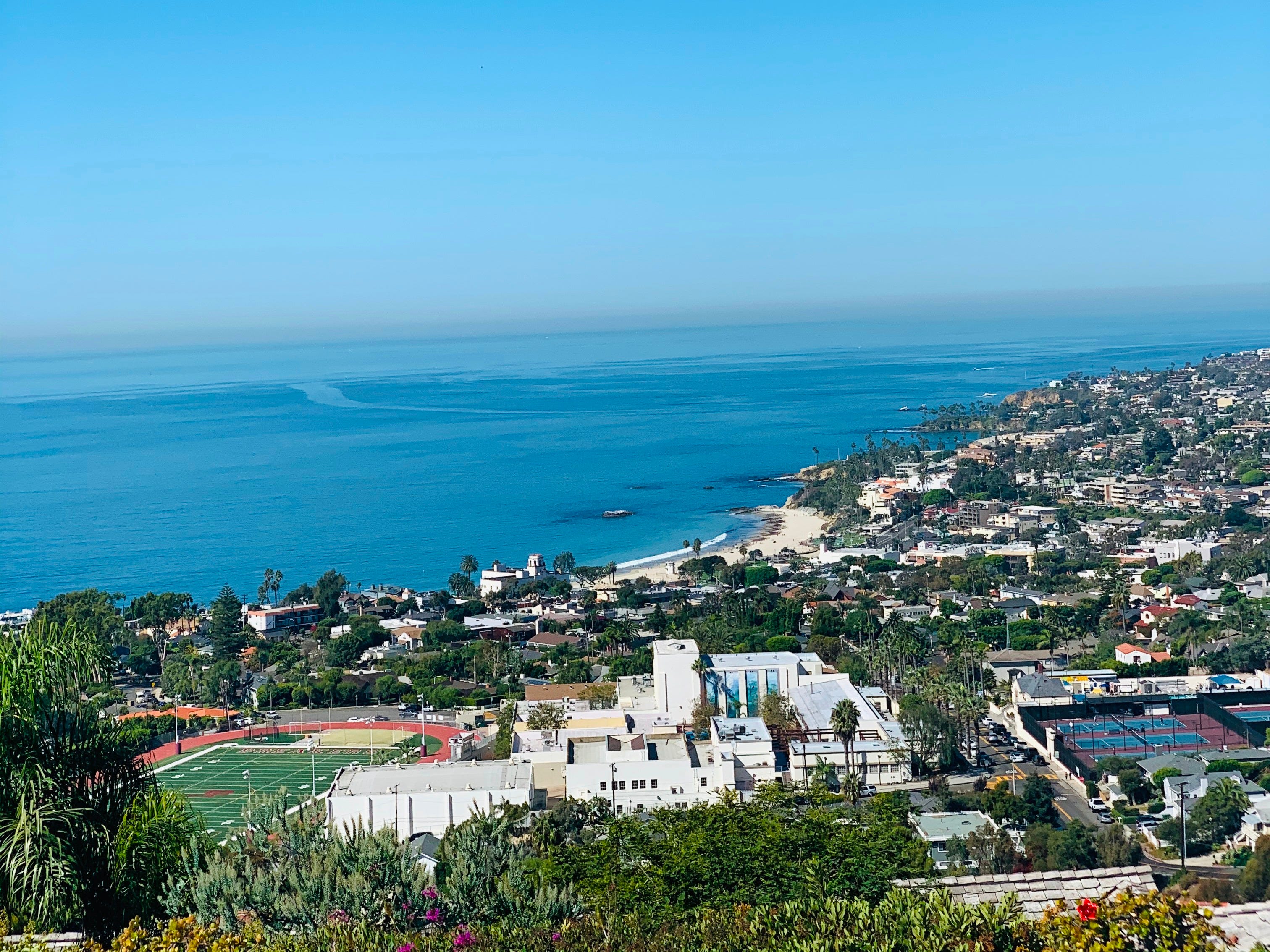
The sea stayed on the right for most of the drive. It had the blue that people mean when they say a landscape looks hand-painted, a blue so settled that I stopped trying to describe it and simply let it ride along with us. The car was modest, nothing like what one might picture for a Coca-Cola International executive. Sônia drove it down the Pacific Coast Highway with the ease of someone who knows a road the way some people know a familiar piece of music. Little towns slid by one after the other. I was seventeen, I had been in California for more than a year, and I did not yet know that I was sitting in the most important car of my life.
I should explain how a boy from Belo Horizonte ended up in the passenger seat of a retired Coca-Cola executive’s car. I had spent my whole exchange year in California’s Central Valley, attending high school in this little town named Delhi, with just about 3,000 people living in it. When it ended, I went south to Laguna Beach and stayed for about a month and a half at the house of my dad’s uncle and cousin. Their circle of friends was largely Brazilian, which is how Brazilians on a foreign coast tend to find each other, by instinct. And in that circle there was Sônia.
She was a retired public relations director for Coca-Cola International, and she was carioca down to the last syllable. Social, high-energy, talkative, funny in a way that never needed to be loud, and generous with her attention in a way that I have rarely seen since. She had a view of the world that came from having looked at it for a long time, and a kindness that seemed to cost her nothing. I was a teenager who asked too many questions. She answered every one of them as if it had been the first question of the day.
We took many drives together in those weeks. Sometimes there were four of us: my second cousin, who is a university professor of Spanish, Sônia, her brother, who was also from Rio and also in Laguna Beach that summer, and me. That day it was only the two of us. I cannot tell you why. Perhaps the others had other plans, perhaps they simply did not want to go. My memory has kept the car, the road and the woman at the wheel, and let go of the rest.
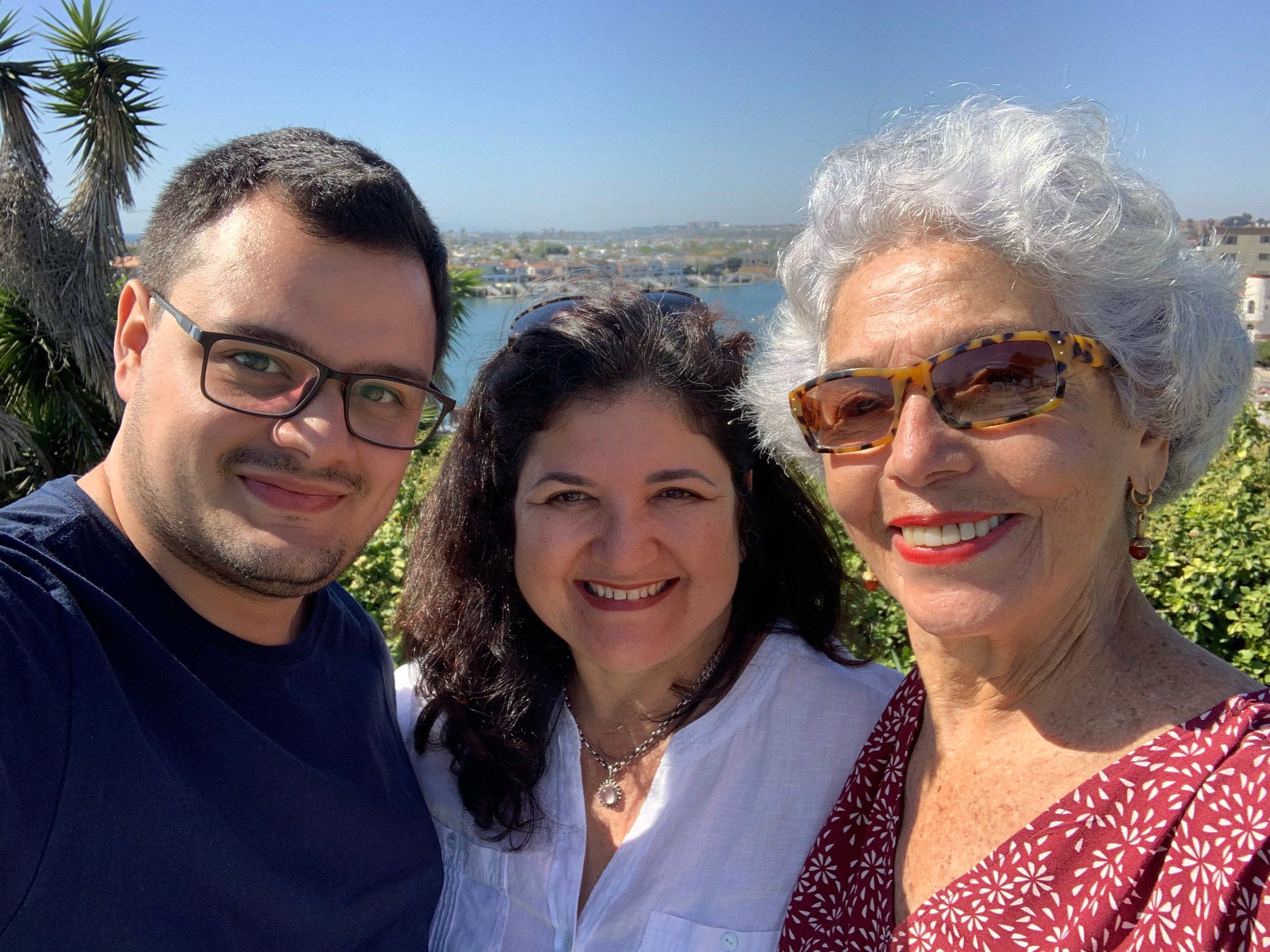
I have seen good skies since then. Florida has a beautiful one. Chicago has a sky I admire in a different way, wide and unfussy. But I have never found the equal of the California sky. My explanation is amateur, and I offer it as such. The coast is close, the Pacific sends its breeze inland, the hills give the horizon some shape, and there are few tall buildings to argue with the light. The result is a sky with room in it. That afternoon it hung above the road like a thing that had all the time in the world.
We went to San Diego, the old part first, then Balboa Park. The park is a wonder in its own right: its Spanish Colonial Revival buildings come from the 1915 Panama-California Exposition, and its Botanical Building was described, when it was built, as the largest wood lath structure in the world. I knew none of that at the time. I knew that there were gardens and museums and that I was being led through them by someone who talked about each corner as if she had a personal arrangement with it.
Near one of the paths, a vendor had a small cart. He was selling Japanese sweets made of rice, filled with a paste of beans. I had watched anime on Brazilian children’s television for years, the Pokémon generation, and I had a childhood idea of what those sweets looked like, an idea assembled from drawings. I had never tasted one. I bought it, with the curiosity of a boy who wanted to eat a cartoon, and I took the first bite standing there on the path. My palate was trained on Brazilian sweets, which are extravagantly sweet, and this was something else entirely. At the first bite I knew it was not my beach, and I asked Sônia whether she had seen sweets like that in Japan.
She had, she said. They were very common in Tokyo and in Kyoto, and she mentioned it as casually as one mentions a bakery on the corner. It was the first time I noticed that, for her, Kyoto was a place she had actually been to, the way for me it was still a page in the atlas.

From Balboa Park we continued to Coronado. Coronado is called an island, although a narrow strip of sand, the Silver Strand, ties it to the mainland, so it is an island with a tether. The star of the place is the Hotel del Coronado, which opened in 1888 and stands there like a white and red wedding cake left out in the sun. Sônia told me its history, and the story of its link to Marilyn Monroe, who filmed Some Like It Hot there in 1959, and the way the building had become an icon of Southern California architecture. I walked beside her listening, and I remember the particular pleasure of being told a story by someone who tells it well.
I have since learned to think of hotels as the first theater of travel. I started my own career in one, and I am a hotelier at heart in ways that nobody can remove from me. Perhaps that is why a historic hotel on a sandy island felt so natural that afternoon. A building could hold more than a century of arrivals, and I liked the idea.
Somewhere along the road, before or after Coronado, I do not remember exactly, I asked her the question.
We had been talking about her career for weeks, in pieces. Her stories were so full of places that, in the car, I finally asked it outright: which countries had she gotten to know in all her years at the company?
I want to be exact about her answer, because the answer is the whole story. In the version I carry with me, Sônia said:
“Luiz, I think it’s easier to tell you which ones I haven’t been to for work.”
Everything about the tone was the opposite of arrogance. It sounded like a practical observation, the kind a person makes when she has lost count of a list, when it is simply easier for her memory to carry the places she has missed than the places she has visited.
She said it lightly, we both laughed, and we went on talking. I said “Oh, nice,” which I believe is the least elegant reply anyone has ever given to a sentence that changed his life. And she went on to tell me more about her experiences.
I do not remember what we said afterward. I remember the light, the sea on the right, the sound of her laugh and the feeling of being handed something that I did not yet know how to hold.

Nothing happened in that car. There was no thunder, no violin, no sudden decision announced aloud. A seventeen-year-old said “Oh, nice” and ate a rice sweet he did not love. But something shifted inside, without noise, the way a ship changes heading by a single degree and arrives, many miles later, at a different port.
Until that afternoon, my plan was reasonable and affectionate. I was going to study Language Arts and become a teacher of either English or Portuguese, a keeper of literature, an academic of words, like my mother in her own classroom. The plan fit me like a familiar coat. I did not realize it at the moment, but I noticed how much I wanted a life like the one Sônia had just described to me, with more countries known than unknown, more cultures met than missed.
I did not announce this to anyone. I set it down inside, in the heart, as something to pursue, the place where one keeps things that are too early to say out loud.
When I returned to Brazil, I took the SATs for Public Relations in four different colleges. I chose it for a reason I could explain only partly: I wanted a profession that would not lock me into one career, one city or one country. I know now that part of the reason was sitting in a car on the PCH.
I did not give up teaching, because some things do not leave a person. I taught seniors in a social project run by my university. I taught English as a second language for more than ten years. The teacher stayed. He simply gained a travel companion.
There was another passenger in that car, and he had been with me much longer than the drive. I had grown up with somehow limited resources, with parents whose effort I only understood later and for which I am deeply grateful. Family trips were humble. I remember a modest car packed with family and about nine hours of road to the beach, and I remember it fondly. But around the age of fifteen, classmates went to Disney during the holidays, and I understood, without anger, that the world had levels of access and that I was standing on a lower step. So I traveled in other ways. I borrowed an atlas from the library more times that I can remember and went around the world sitting down.
After California, the tourist in me needed to eat, and the opportunities were slim. During college, I worked at the front desk of a five-star hotel in Belo Horizonte, the largest hotel in the city, built for events. It hosted speakers, artists, politicians, executives, and its presidential suite measured about 3,200 square feet.
Behind that counter, I could not go anywhere, and yet I traveled constantly. Guests arrived with their stories, I checked them in, and every one of them left a small postcard in my memory. I have written about what a bellboy learns that an algorithm does not, and I believe that every person who has worked a hotel desk carries a similar atlas. I also learned there what a hotel truly sells to a traveler on business, a lesson I tried to put into words in the four things a hotel actually sells. That hotel was a second home to me, and I tried to capture that feeling in the corner table with the best light.
I began that job in October 2007, on the same day as a colleague named Sabrina. We were hired together and grew in the hotel in parallel, she as a supervisor and I as the receptionist who watched the lobby fill and empty. Some years later she would be the person who opened the next door for me. Nobody tells you, when you start a job, who will be the one to hold the next door.
During those years I traveled in the modest ways that my salary allowed. I lived alone, paid my own bills, went once to Uruguay and many times around Brazil. International trips to the United States, Europe and Asia remained on the other side of a wall of arithmetic. The sentence I had heard in the car sat inside me like a small lamp, and I did not know yet how to carry it into the daylight.
When I finished my degree, I wanted to test the diploma. I left the hotel and spent a year working with the professor who had guided my thesis. She had opened a small integrated communication agency with three people: her, her daughter and me. It was a wonderful school of entrepreneurship, and she is a close friend today. But after a year I wanted a bigger challenge, and I wanted a corporate environment that would feed the dream I carried since California.
That is when Sabrina called. She had moved to a corporate travel agency, and she invited me to join the events team. I said yes right before she could finish her words. The agency was where I would build much of my career, and, in a long and winding way, it would turn out to be the cradle of the company I later co-founded, VOLL. I mention it here as a matter of full disclosure, since I now work in the industry I am describing, and I would not like anyone to read the love in these paragraphs as neutral. The love is real, and it has an address.
Working at a travel agency meant I could finally touch the dream, at one remove. I did not yet have the means to travel the world, but I could organize trips for clients, which let me travel through them. It was a way of exercising the sentence from the car, and living a bit of that dream through other people’s conquests. If someone had asked me then whether this was a compromise, I suspect I would have called it an apprenticeship.
I have thought a great deal about why tourism is such a generous backdrop for this kind of story. It is an industry that draws scenes of arrival, of triumph and of discovery. People travel to close a deal, to meet a grandchild, to run a marathon, to receive an award, to recover from a loss or to start again.
The industry sits behind all of these scenes, mostly out of sight, like a stagehand who is proud of never being noticed. Every airport is full of the first act of somebody’s story. Every hotel lobby is a waiting room for a plot.
That is why a plain question in a moving car belongs to this industry’s tradition. A trip can be a pretext. A conversation on the way to a museum can change a boy’s direction. And a professional who has spent a career moving between countries, like Sônia, can tell a young person something quiet and decisive without ever raising her voice.

I saw the Mission San Juan Capistrano with her too, on another outing, and I remember the stone ruins of a church that stands, in pieces, where an earthquake in 1812 left it. The mission was founded by Franciscans in 1776, and it has stood open to the sky for more than two centuries. I find it strangely consoling that a place can lose its walls and remain a destination. The best of what a person learns on a journey often survives the building that taught it.
Last year I gifted two of the people I lead international trips. I want to say something about that, because I believe it more than I believe almost anything I write on this blog.
A trip is the one gift that cannot be taken back. A raise can be absorbed, a bonus can be spent, a title can be forgotten, but the sight of a monument you have only seen in films and books, standing in front of you for the first time, is yours until the end. It is knowledge felt on the skin. It is an emotion that nobody controls. It is the discovery that the world is much larger than the view from your house.
If I am honest, I suspect the boy at the hotel counter, and the woman who said that the list of places she had not been to was the easier one to recite, had something to do with that decision. I doubt my team members knew they were receiving a sentence from a car in 2007. I like to imagine that, in some way, they did.
If I could lean forward from the present and tap the seventeen-year-old on the shoulder, I would not say much. I imagine I would tell him to enjoy the sweet, even if it is not his taste, and to remember the shade of that blue, because it will not repeat itself. I might suggest that he write down the date. And I would let him go on being the boy who says “Oh, nice,” because I suspect the plainness of the reply is part of what kept the sentence safe.
The sea stayed on the right. Sônia kept driving, and the road kept going south, with a sky above it that had nothing to prove.
About me
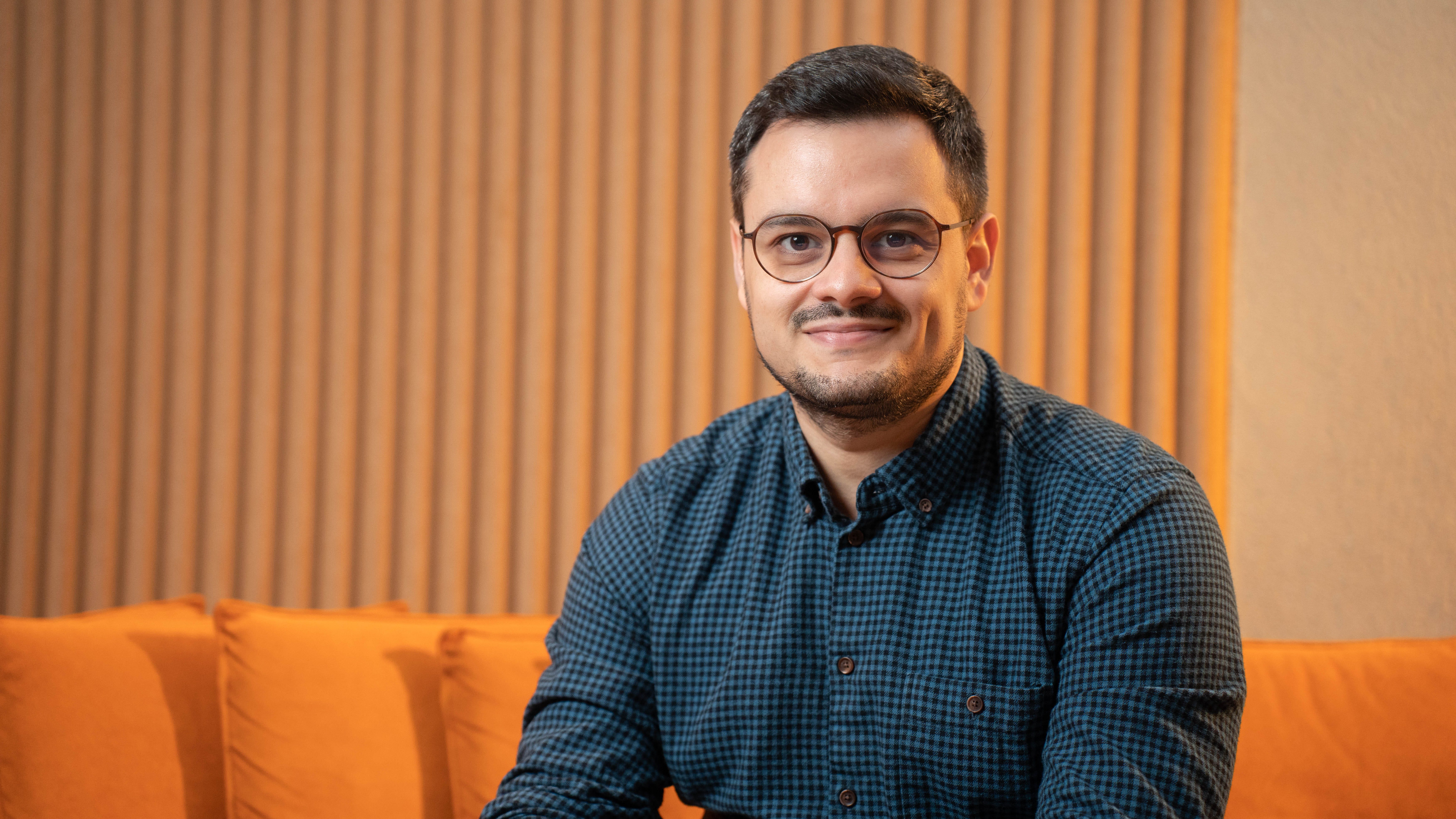
I am an entrepreneur with over 20 years of experience at the intersection of tourism and technology. I am co-founder and Chief Business Officer of VOLL, the largest mobile-first corporate travel and expense management platform in Latin America, where I lead the commercial strategy behind our AI adoption.
A first-cohort graduate of The AI-Powered Organization at Stanford Graduate School of Business and a Marketing specialist from Fundação Dom Cabral, I serve on the Tourism Council of FecomércioSP and on the Executive Council of the Latin American Association of Corporate Events and Travel Management (Alagev). I write and speak about innovation, digital transformation, entrepreneurial leadership, and the future of corporate travel.
Discussion about this post