



I started my career in hospitality, long before travel technology, and the people who trained me shaped how I still think about a hotel stay today.
One of them, a general manager at the hotel where I worked for nearly five years, used to say that a corporate guest recognizes exactly three things in a stay that actually mattered.
A good mattress, so a tired body gets a real night of rest after a long day of meetings.
A good shower, with water pressure strong enough to work the shoulders and the scalp loose before the next day starts.
A good breakfast, energizing enough to open a workday in a city that is not yours on the right foot.
I have carried that list for twenty years, and today I would add a fourth item of my own: reliable internet, strong and stable enough that a traveler can stay connected and productive whenever the day demands it.
Those four things are also, whether the industry says so out loud or not, the actual hook behind every hotel loyalty program. Corporate travel loyalty programs get discussed as if they were about status tiers and point balances.
They are really about who delivers the mattress, the shower, the breakfast and the connection without fail, consistently enough that a traveler stops thinking about the risk of a bad night.
The data agrees with what hospitality already knew
A new Hotels.com report puts numbers behind exactly that instinct. Free breakfast now outranks loyalty rewards and flexible check-in as the hotel perk business travelers value most, at 49% against 39% and 37% respectively, according to the company’s Booked for Business research, released alongside a new dedicated booking experience for business trips. Breakfast, the third item on that general manager’s list from decades ago, beats the entire mechanism of points and status that the hotel industry spent the last thirty years building.
That is not a coincidence. It is confirmation that the fundamentals never stopped being the fundamentals, and that loyalty programs work best when they sit on top of reliability rather than trying to replace it.
The same research puts real scale behind business travel’s return. Thirty seven percent of Americans now say they travel more for work than they did before the pandemic, and the average business traveler logs about 10 nights of work trips a year, Asian Hospitality’s coverage of the data confirms.
Technology workers and tradespeople travel most frequently, at five to six trips a year, and technology workers specifically travel 50% more than they did before the pandemic, with an average hotel budget of $264 a night against $236 for business travelers overall.
Loyalty programs are built for a narrow, high-frequency traveler
Break the spending down by role and the target of every loyalty program becomes obvious. Finance professionals report the highest daily travel allowance, at $134, followed by technology workers at $131, against an overall average of $115 a day, while government travelers receive the lowest, under $79.
Nearly two thirds of travelers, 63%, now say the best business trips blend work and leisure, with New York, Los Angeles and Miami as the most cited destinations, and June and September emerging as the busiest months of the year for business travel.
Read that distribution honestly. A loyalty program does not need most travelers to notice it. It needs the finance director on their eighth trip of the quarter, the technology lead who lives out of a hotel room five months a year, the traveler who already treats the mattress, the shower, the breakfast and the Wi-Fi as solved and is now shopping for the next thing on top of that baseline.
That is a narrow population, and it is exactly the population every hotel chain is fighting hardest to keep.
Hotels.com is chasing that same narrow population directly, not just describing it. The same research launched a dedicated business travel booking mode inside the Hotels.com app, letting a traveler save work-trip preferences, rebook favored stays and earn rewards on business trips within the same account used for personal travel, the company announced alongside the survey.
A leisure OTA building a standalone product around individually booked business travel is itself a signal worth sitting with: the volume of work trips booked outside any company platform is large enough that a consumer travel brand now considers it worth a dedicated feature.
The traveler chasing loyalty is already stretched thin
There is an emotional layer to all of this that the loyalty debate usually skips. Fifty six percent of U.S. business travelers say they show a different side of their personality on work trips, a figure that rises to 69% among Gen Z, and 58% say they wake earlier and are more consistently punctual while traveling for work than they are in daily life, according to the same Hotels.com research, reported by Yahoo Finance.
Gen Z travels for work more than any other generation and is the group most likely to change behavior on the road, while Boomers remain the most punctual and the most brand-loyal travelers of any generation, Hotel Online’s coverage of the report notes.
A traveler already running a more structured, more type A version of themselves for days at a time is not chasing loyalty status for the thrill of it. They are chasing anything that removes one more decision from a day that already has too many.
A mattress that works. A shower that works. A breakfast that does not require research. A network connection that survives a client call.
Status simply buys a faster, more predictable version of the same four things, which is why it appeals most to the travelers under the most sustained pressure, not the ones treating a work trip as a perk in itself.
How mature policy already treats a traveler’s points

The instinct to worry about loyalty is not new, and plenty of well-run programs have already worked out a calmer answer than an outright ban. Most corporate travel policies let employees keep the personal loyalty points, miles and status they earn on company-funded trips, and simply require that the policy say so explicitly, so nobody has to guess, as one corporate travel policy guide summarizes standard practice.
Other frameworks go further and treat small flexibility perks, seat selection or loyalty point retention among them, as a reasonable trade when the underlying booking stays within policy, on the logic that a policy too rigid to allow for any personal benefit simply pushes travelers to book outside the system entirely, a corporate travel policy guide from AltexSoft argues.
Neither approach treats the traveler’s point balance as the enemy. Both treat it as one input to manage, not the thing to eliminate.
Why some travel managers are writing loyalty out of policy anyway
The industry’s standard answer to that fight has been suspicion. Buyers increasingly worry that personal loyalty status quietly overrides company policy, and some are rewriting their travel policies to state explicitly that airline and hotel loyalty benefits must not influence a booking decision, a rule that is easier to mandate than to enforce, as Business Travel News reported.
Programs with business-class entitlements are running monthly audits on their top routes and travelers specifically to catch status-chasing behavior before it becomes a pattern. As one travel management advisor summarized the buyer mindset in that reporting, “buyers are reminding travelers that policy compliance comes first, not personal rewards.”
That framing treats loyalty as a leak to plug. I think it is the wrong framing, and I want to explain why using two weeks of my own August.
What two weeks in this south Florida town actually taught me
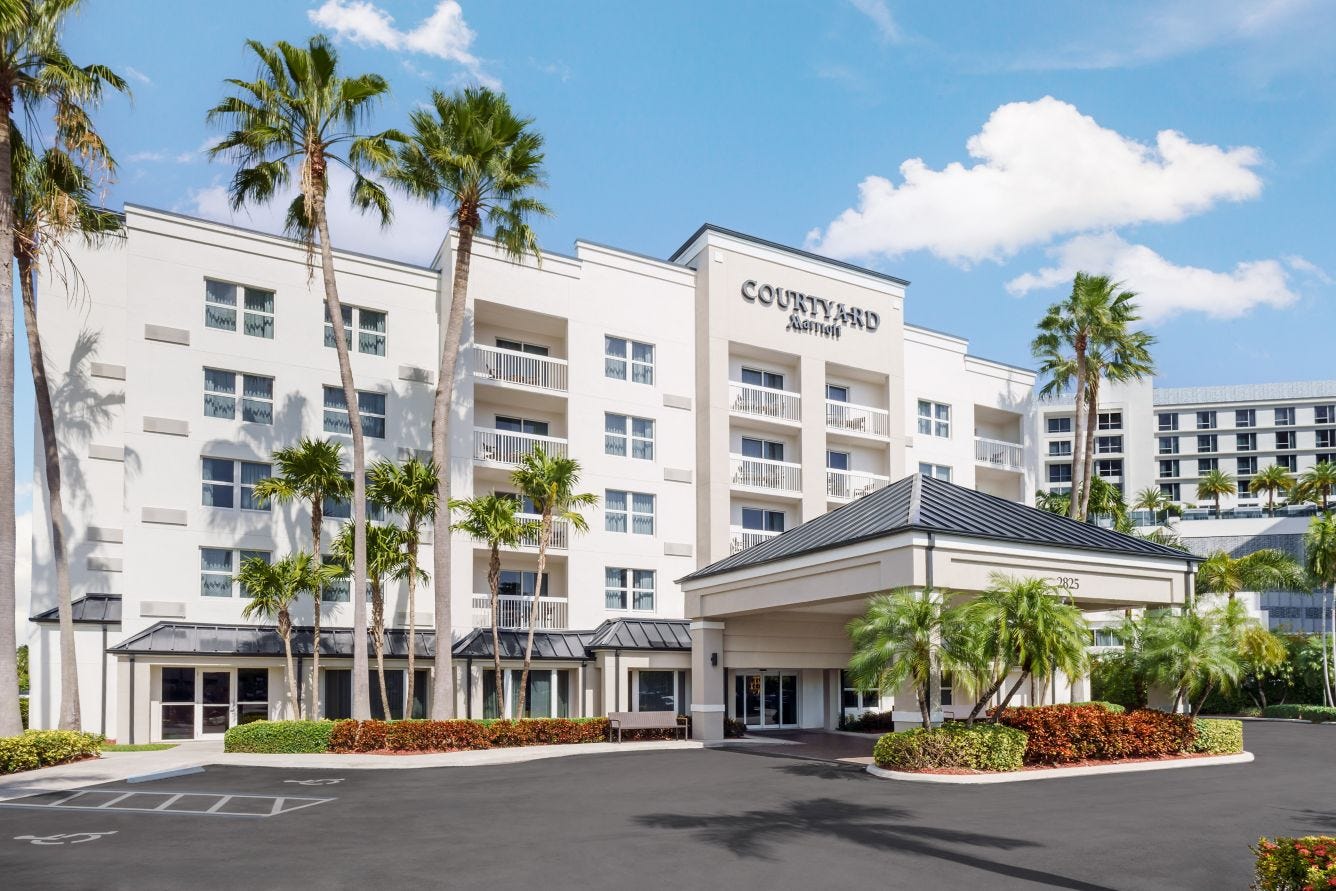
I spend part of every year in Aventura, a city just north of Miami that has become my base for rest, organized, clean, without the density of Miami Beach, with all the infrastructure that makes daily life comfortable. I always stay at the same property, the Courtyard by Marriott next to Aventura Mall, because I already know the team and they know me.
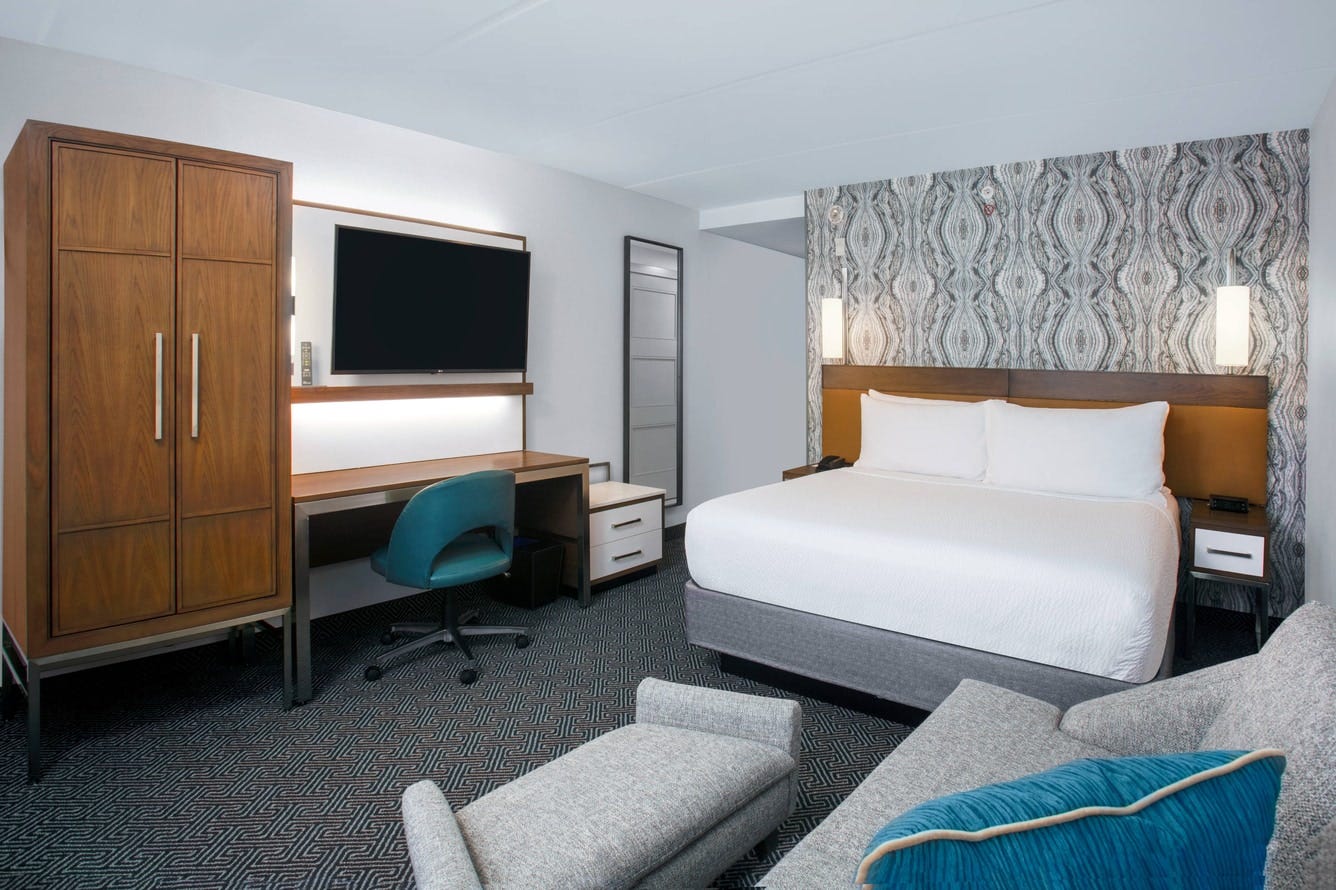
The rooms are a good size, the bathroom is spacious, the location is excellent, and, more than any of that, everything simply works.
In South Florida, air conditioning and internet are not amenities, they are survival infrastructure, and at this hotel neither has ever let me down.
My status in Marriott Bonvoy is what turns that reliability into something better. I get room-category upgrades, faster network access, and flexible check-in and check-out on nearly every stay, the exact perk that 37% of business travelers in the Hotels.com data ranked as a top priority, right behind breakfast and loyalty rewards. It sounds like a small thing until a delayed flight lands at midnight and the front desk already has the right room ready without a conversation.
The points I accumulate across the chain’s properties convert into free nights, which is exactly how I once found myself spending a weekend in Lake Mary, a beautiful small city north of Orlando, extending a work trip into two days of genuine leisure, the bleisure pattern the Hotels.com data shows 63% of travelers now actively want.
None of that happened because a point balance changed which hotel I chose for business. It happened because a program I was already earning through reliable, well-run stays gave me the flexibility to do something worthwhile with the relationship afterward.
Loyalty is not the enemy of a strong travel culture
A strong culture protects that collective benefit as the priority, and a mature one also knows how to use the shortcuts loyalty programs hand to the individual, since those points always belong to the traveler as a person, never to the company, in service of what the organization is actually trying to achieve.
A traveler who redeems earned status for a weekend in Lake Mary has cost the company nothing extra and gained something real.
A traveler who books a worse flight at a higher fare to protect an airline’s top tier has cost the company real money for a personal benefit. The difference between those two outcomes is not the existence of the loyalty program.
It is whether the company has the policy discipline and the data visibility to tell them apart, trip by trip, in something closer to real time than a quarterly audit.
That distinction, more than any debate about banning personal points from company travel, is where a travel program’s maturity actually shows. It is also, not coincidentally, a data problem before it is a policy problem.
Telling the two travelers apart trip by trip requires a platform that already knows the lowest logical fare, the traveler’s actual routing history and whether the booking in front of it sits inside or outside policy at the moment the decision gets made, not three months later in an expense audit.
That is the layer I spend my working life building, so take the point with that in mind. But the point does not depend on me being right about my own company.
It depends on whether a program can see the difference between a free weekend earned through five years of reliable stays and a $400 flight upgrade chasing a status threshold, while the trip is still happening.
Most programs today cannot, and that gap, not the loyalty program itself, is the actual cost hiding in plain sight.
About me

I am an entrepreneur with over 20 years of experience at the intersection of tourism and technology. I am co-founder and Chief Business Officer of VOLL, the largest mobile-first corporate travel and expense management platform in Latin America, and a recognized reference in the development of the corporate travel industry.
A Marketing specialist from Fundação Dom Cabral, I serve on the Tourism Council of FecomércioSP and on the Executive Council of the Latin American Association of Corporate Events and Travel Management (Alagev). A frequent traveler and close observer of human behavior in motion, I write and speak about innovation, digital transformation, entrepreneurial leadership, and the future of corporate travel.