


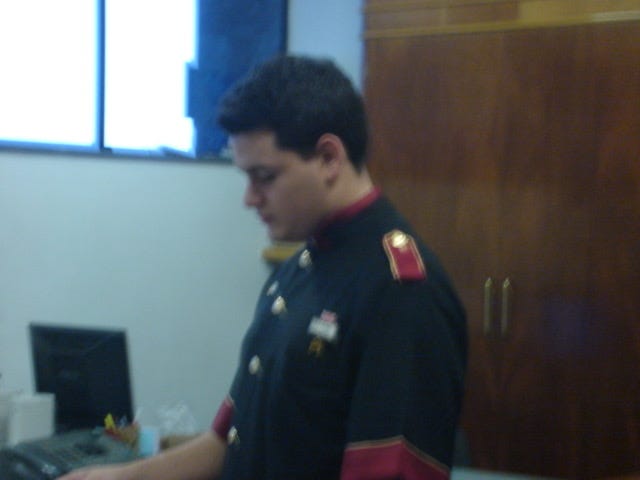
The first thing they give you is a uniform that does not quite fit, and a position by the door.
I was a teenager. The hotel was not glamorous, whatever the word “hotel” might conjure. My job, in its entirety, was to be useful to people who were arriving somewhere tired and leaving somewhere hurried, and who mostly did not see me. I carried bags. I called taxis. I gave directions to restaurants I could not afford to eat in. I learned the precise weight of a suitcase that someone has overpacked for a trip they are anxious about, which is heavier than the same suitcase packed by someone going somewhere they want to go. You learn to feel the difference. The bag tells you before the face does.
I did not know it then, but I was getting an education that no school sells, and that I have spent the rest of my life drawing on.
What the lobby teaches
Here is what the lobby teaches you, if you are paying attention. It teaches you that almost no one who walks through a hotel door is actually thinking about the hotel. They are thinking about the meeting tomorrow, the flight they nearly missed, the child they left at home, the deal that might fall through, the parent in the hospital. The hotel is the last thing on their mind and the first thing standing between them and rest. Your entire job, the real job underneath the bag-carrying, is to remove yourself and every obstacle behind you from a person who has more important things to hold.
The best people I worked with understood this without ever saying it. There was an older doorman, a man who had stood at that same entrance for longer than I had been alive, and I watched him do something I have never forgotten. A guest would come through the doors, and before they had said a word, he had already read them. He knew who needed a warm greeting and who needed to be left alone. He knew which traveler wanted directions and which one wanted to be told, gently, that everything was handled and they did not need to worry. He was not a mind reader. He was just paying a kind of attention that the rest of the world had stopped paying. He treated each arrival as a person with a context he could not fully see but could respect.
I wanted to be good at that. For a long time, being good at that was the whole of my ambition.
What the lobby teaches
The trouble with a lobby, though, is that it shows you the problem one person at a time. You solve it beautifully for the guest in front of you, and then the doors open and there is another, and the solving starts over. The wisdom does not scale. A great doorman can change the day of every person who passes through his door, and the number of people who pass through his door in a lifetime is, in the scheme of things, small. I started to feel the edges of that. I could see the craft. I could not see how to give it to more than one person at a time.
That tension is what eventually pushed me out of the lobby and into the rest of my career, though it took years to understand that was what had happened. I moved into the business of travel. I learned the industry from the operational side, the part travelers never see: the contracts, the systems, the logistics, the way an entire trip is assembled from a hundred small arrangements that have to align. And I kept noticing, in every company I worked with, the same thing I had felt at the door. The systems were built to process travelers, not to attend to them. They were efficient in the way a conveyor belt is efficient. They moved people through. But the attention, the reading-of-the-person that the old doorman did instinctively, had been engineered out, because attention does not scale and conveyor belts do.
This is the part of the story where, if it were a tidy fable, I would tell you I set out to fix it. The truth is messier.
What I have spent my life building
I did not have a grand plan. I had an irritation, a sense that something valuable had been lost in the trade for scale, and a slowly growing conviction that the trade might not be necessary. That maybe the choice between attention and scale was a false one. That the thing the doorman did, the reading and the anticipating and the quiet removal of obstacles, might be encodable after all, not to replace him but to extend his reach to the thousands of travelers he would never personally meet.
That conviction is, in the end, what I have spent my professional life building toward. Technology for travel that does not feel like a conveyor belt. Systems that try to do what the doorman did: notice what the traveler needs before they have to ask, handle what can be handled invisibly, and reserve the human moment for when it actually matters. When people ask me why someone who runs a technology company talks so much about service, this is the answer. I do not see them as opposites. I see the technology as the only way to give the service the scale it never had when it lived only in the instincts of one man at one door.
I have learned, building this, where the line sits between what a machine can do and what it cannot, and the line is not where most people assume.
Where the machine ends and the person begins
A machine can be extraordinary at the parts of hospitality that are really pattern and memory. It can remember that this traveler always wants the early flight, prefers the aisle, hates the layover in a particular airport. It can notice that a flight is about to be cancelled before the traveler does and have the alternative ready. It can apply, consistently and without fatigue, the thousand small rules that a great concierge applies from experience. These are not trivial. They are, in fact, most of what good service consists of, and a machine that does them well gives the traveler something the overworked human system often cannot: reliability.
But there is a thing the machine cannot do, and it is the thing the doorman did best. It cannot care. It can simulate the outputs of caring, often convincingly, but it does not feel the weight of the overpacked bag. It does not know, in the way a person knows, that the traveler in front of it is frightened or grieving or quietly falling apart behind a composed face. And every so often, that knowing is the only thing that matters. The trip falls apart at midnight, and what the traveler needs is not an optimized rebooking but a human voice that understands this is the third thing to go wrong today and responds to the person, not just the problem.
So the work, as I have come to understand it, is not to replace the doorman with a machine. It is to use the machine for everything the machine does well, the patterns and the memory and the tireless handling of logistics, precisely so that the human attention, which is scarce and precious, can be saved for the moments that actually require it. The technology does not eliminate the human. It clears space for the human to matter where they matter most. Done right, it is the doorman’s wisdom finally given the reach it always deserved.
A machine can be extraordinary at the parts of hospitality that are really pattern and memory. It can remember that this traveler always wants the early flight, prefers the aisle, hates the layover in a particular airport. It can notice that a flight is about to be cancelled before the traveler does and have the alternative ready. It can apply, consistently and without fatigue, the thousand small rules that a great concierge applies from experience. These are not trivial. They are, in fact, most of what good service consists of, and a machine that does them well gives the traveler something the overworked human system often cannot: reliability.
But there is a thing the machine cannot do, and it is the thing the doorman did best. It cannot care. It can simulate the outputs of caring, often convincingly, but it does not feel the weight of the overpacked bag. It does not know, in the way a person knows, that the traveler in front of it is frightened or grieving or quietly falling apart behind a composed face. And every so often, that knowing is the only thing that matters. The trip falls apart at midnight, and what the traveler needs is not an optimized rebooking but a human voice that understands this is the third thing to go wrong today and responds to the person, not just the problem.
So the work, as I have come to understand it, is not to replace the doorman with a machine. It is to use the machine for everything the machine does well, the patterns and the memory and the tireless handling of logistics, precisely so that the human attention, which is scarce and precious, can be saved for the moments that actually require it. The technology does not eliminate the human. It clears space for the human to matter where they matter most. Done right, it is the doorman’s wisdom finally given the reach it always deserved.
The suitcase and the person
I think about that lobby more than I expected to, all these years later. I have sat in rooms I never imagined I would sit in, made decisions about businesses larger than that hotel could have dreamed of being. And the thing that has stayed with me, the compass I keep returning to, is not anything I learned in those rooms. It is the weight of a stranger’s suitcase, and what it told me about the person carrying it, and a doorman who taught me that the highest form of service is to see the person clearly and then quietly carry what you can.
There is a temptation, when you build technology, to believe the technology is the point. It is not. The technology is the suitcase. It is the thing you carry so that the person does not have to. The point was always the person, the one arriving tired with their mind full of more important things, who deserves to have the obstacles removed without having to ask. I learned that before I knew anything else about this industry. Everything I have built since has been, in one way or another, an attempt to do it at a scale that one teenager by a door never could.
The uniform did not fit, back then. But the lesson did. It has fit my whole life.
About me
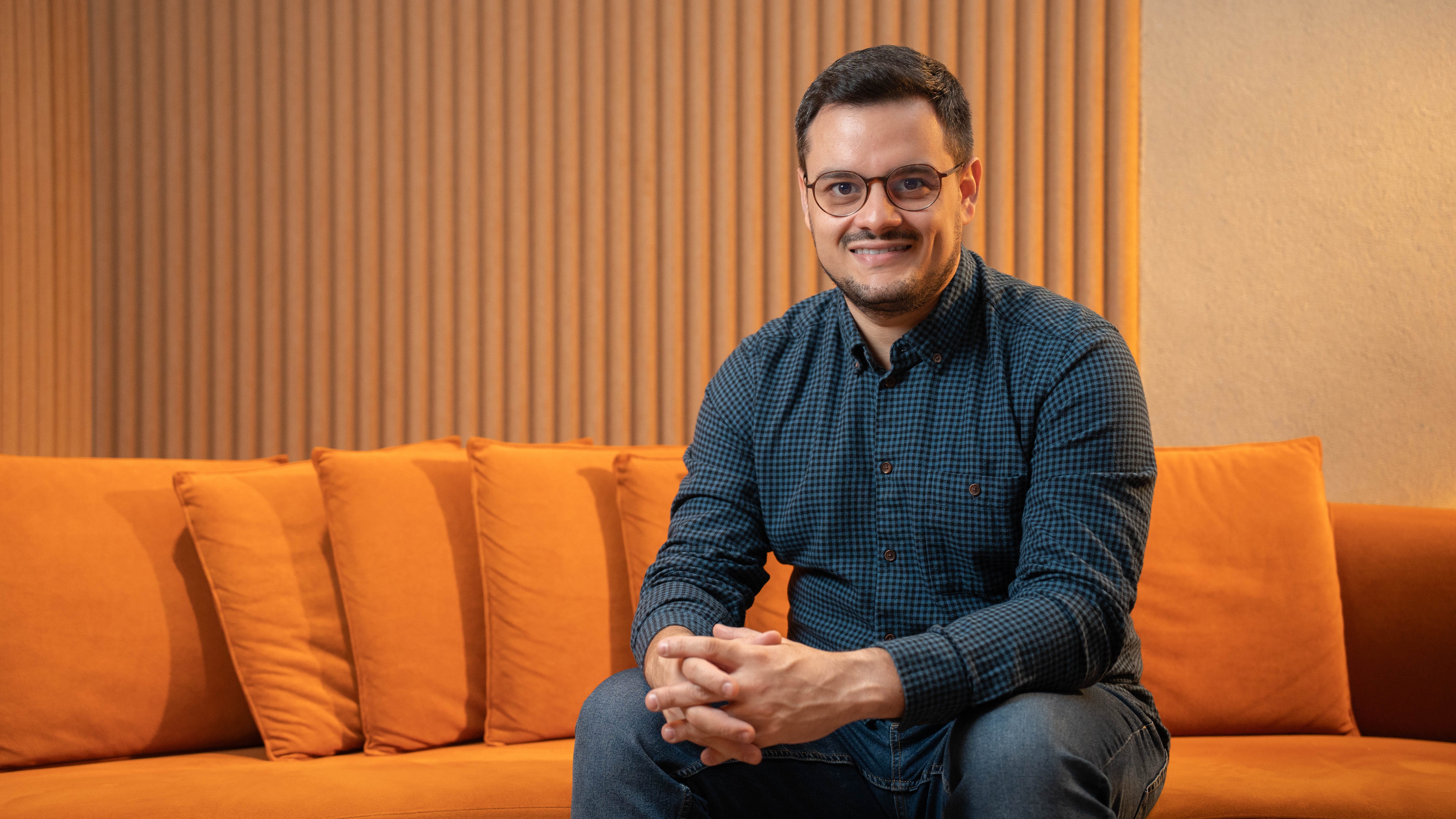
I am an entrepreneur with over 20 years of experience at the intersection of tourism and technology. I am co-founder and Chief Business Officer of VOLL, the largest mobile-first corporate travel and expense management platform in Latin America, and a recognized reference in the development of the corporate travel industry.
A Marketing specialist from Fundação Dom Cabral, I serve on the Tourism Council of FecomércioSP and on the Executive Council of the Latin American Association of Corporate Events and Travel Management (Alagev). A frequent traveler and close observer of human behavior in motion, I write and speak about innovation, digital transformation, entrepreneurial leadership, and the future of corporate travel.