The hotel industry is afraid AI will flatten its soul. The data says the opposite
Hospitality’s gift is the personal touch, and the fear is that AI and scale will grind it down. The numbers point the other way.

The worry I hear most often from people who love this industry goes something like this. Hospitality is a handmade craft, built on a thousand small human reads of what a guest actually needs, and the moment you industrialize it with AI and scale, you sand off the very thing that made it worth doing. It is a reasonable fear. It is also, I think, exactly backwards, and a batch of new industry data gives me a cleaner way to explain why.
The short version, which I will spend the rest of this piece earning, is that AI does not threaten the personal touch in hospitality. It threatens the paperwork that has been crowding the personal touch out.
I want to be upfront about my angle before I make the argument, because I am not a bystander. I build technology for corporate travel, so I have a stake in the claim that software can help rather than hollow out a human business. Take the disclosure as a reason to check my logic, not to skip it. The logic runs through the numbers, and the numbers are more interesting than either the boosters or the doomsayers tend to admit.
The paradox buried in the adoption numbers

Start with a finding that should stop any hotelier mid-sentence. In a new industry study of how hotels distribute and operate, most hotels are adopting AI while still drowning in manual work, the kind of contradiction that usually means a transformation is real but unfinished. More than half of hotels are using or actively acquiring generative AI, and yet 69 percent still key in guest-preference data by hand, while only 19 percent pull it automatically from guest interactions.
Commercial teams, meanwhile, report burning one to two days a week on manual reporting and analysis at better than 80 percent of properties.
Here is the part that matters. Despite all that adoption, fewer than one in ten hotels report cutting their manual workload by more than 30 percent, a number that rises only to 14 percent among midsize chains. So the tools are arriving and the relief is not, at least not yet. Read cynically, that looks like a technology that overpromises. Read more carefully, it looks like an industry that has bought the engine and not yet rebuilt the car around it, which is a very different problem with a very different fix.
The research behind this, a State of Distribution report produced with New York University and industry bodies, is worth reading as a progress report on a job half done rather than a verdict on the tools.
What AI should actually be taking off the table

So what is the job? It helps to be concrete about which work AI can genuinely absorb and which it cannot, because the fear of flattening comes almost entirely from blurring those two piles. One useful map comes from HRS, whose chief product officer, Martin Biermann, argues in a recent interview that AI could sharply cut the cost of a typical corporate-travel task within a couple of years. His headline figure, a reduction on the order of three quarters, is a vendor’s projection and I would treat it as a hypothesis rather than a measured result, especially since the savings depend heavily on program size and complexity. The useful part is not the percentage. It is the sorting.
The work he puts in the machine’s pile is telling: spreadsheets, email administration, data ingestion, request-for-proposal analysis, booking-tool configuration and reconciliation, rate auditing, invoice comparison. The work he keeps firmly in human hands is just as telling: strategy, complex decisions, supplier relationships, and the messy escalations when something goes wrong. Look at those two lists and the fear dissolves, because not one item in the machine pile is the thing a guest remembers.
Nobody ever checked out of a hotel moved by the quality of its invoice reconciliation. The emotional core of hospitality lives entirely in the second list, and the second list is precisely what the industry claims it never has time for. The whole promise, if it is real, is to move the hours from the first pile to the second.
Scale was never the real enemy of the personal
This is where I want to challenge the premise directly, because the assumption hiding inside the fear is that personal attention and scale are opposites, that you can have the warmth of a ten-room inn or the efficiency of a thousand-room operation but never both. I spent about four years working a hotel front desk earlier in my life, and I will admit I believed a version of that myself back then. I was wrong, and the reason I was wrong is the single most important idea in this whole debate.
What does not scale is doing each personal gesture by hand. What scales beautifully is the method that produces the gesture. A great receptionist who remembers that a returning guest likes a high floor away from the elevator is not performing magic that dies when the hotel grows. They are running a method: notice the preference, record it, retrieve it next time, act on it. The feeling the guest gets is personal and human. The mechanism underneath it is a process that can be written down, taught, and yes, supported by software, so that the thousandth guest gets the same read as the tenth.
I have argued before that the value in hospitality hides in exactly these human details, and the point stands. The details are the product. The question AI poses is simply whether they depend on one gifted person being on shift, or whether the hotel has built a way to deliver them every time.
That is the reframe the industry keeps missing. The enemy of the personal touch was never scale. It was the manual drudgery that ate the hours the personal touch needed, and the fragility of care that lived only in one employee’s memory.
The method is what you build, the feeling is what you keep
If the method is the thing that scales, then the real blocker is not a shortage of warmth. It is a shortage of structure. This is where the more sober voices in the field are worth heeding. Frank Pitsikalis, a senior product executive at Agilysys, cautions that hotels should slow down and do AI right rather than race to automate, and his framing is the one I find most honest in the whole conversation. He calls hospitality a human business, and he points at the unglamorous prerequisite everyone would rather skip: the guest’s data is scattered across systems that do not talk to each other, a state he describes as something close to the Wild West.
That fragmentation is the actual reason 69 percent of hotels still type preferences by hand. The information exists, it just lives in a dozen disconnected places, so a human becomes the integration layer, copying and pasting what a connected system should carry on its own. Fix the plumbing and the method can finally run. Skip it, and AI just adds a fast, confident layer on top of a mess. This is the same lesson I keep coming back to from the traveler’s side, that people were never asking for another clever app, they were asking to be recognized. Recognition at scale is a data-and-method problem wearing the costume of a hospitality problem. The warmth is not manufactured by the software. It is delivered reliably because the software stopped making a person do the filing.
What I took from a room full of executives
I spent part of this year in an executive program on building AI into organizations, in a cohort of leaders from seventeen countries, and the single idea I carried out of it reframes this entire argument. The useful division of labor between people and machines is not fast versus slow or cheap versus expensive. It is prediction versus judgment. Machines have become extraordinary at prediction, at filling in the most likely next value, the probable preference, the expected answer. What they cannot do is judge, which is to weigh what matters, to decide what the situation actually calls for, to own the consequence.
Hold that lens against Biermann’s two lists and they snap into focus. Everything in the machine pile is prediction work. Everything in the human pile is judgment work. The reconciliation, the rate audit, the data ingestion, those are predictions a model can make. The supplier relationship, the escalation, the strategic call, those require someone to judge, and judgment is exactly where human attention becomes most valuable, not least. This is the honest version of what I try to build, not software that manufactures care, but software that clears the predictable work so the judgment has room. The disclosure stands: that is the business I am in. It is also, I am convinced, where the industry is genuinely heading, and the hotels that sort their work this way will feel more human to the guest, not less.
Why Latin America is unusually well placed here

I will close from my own region, and with more optimism than the fear deserves. There is a worry that this kind of transformation is a rich-market concern, something Latin America gets to think about once the fundamentals are handled. I think it reads the situation backwards, for a reason specific to what we are good at. The hard, uncopyable part of all this is the warmth, the instinct to notice and accommodate the particular person in front of you, and that instinct is abundant in the hospitality culture I grew up inside.
What the region has sometimes lacked is not the feeling but the method, the structured, repeatable discipline that lets the feeling arrive every time rather than only when the right person is working.
AI, used the way Pitsikalis describes and not the way the hype promises, is a method machine. It is very good at the repeatable scaffolding and useless at the warmth, which is the exact complement to a region rich in warmth and still building its scaffolding. That is why I keep insisting this is the most optimistic corner of the industry to be building in right now, and it is why I think the receptionist’s instinct that an algorithm cannot replicate on its own is not endangered by this technology but finally made scalable by it. The feeling stays human. The method gets help.
The craft is safe, the clipboard is not
So I would tell the worried version of this industry to relax about the wrong thing and get serious about the right one. The craft, the read of the guest, the judgment call, the welcome that lands, none of that is on the chopping block, because none of it is what the machines are good at. What is on the chopping block is the clipboard, the manual re-keying, the day and a half a week lost to reporting, the care that evaporates when one person leaves.
Losing that is not losing the soul of hospitality. It is finally giving the soul of hospitality room to work. It is the same point I keep making from the guest’s side, that what a traveler actually wants is to be recognized, not handed another gadget, and recognition is precisely the judgment work that survives automation.
The hotels that understand the difference will spend the next few years feeling more personal at a larger scale than they ever managed by hand, and the ones that confuse the clipboard for the craft will automate the wrong pile and wonder why the warmth leaked out. The tools will not decide which group a hotel joins. The judgment will, and so will the discipline to fix the plumbing before trusting the machine on top of it.
About me
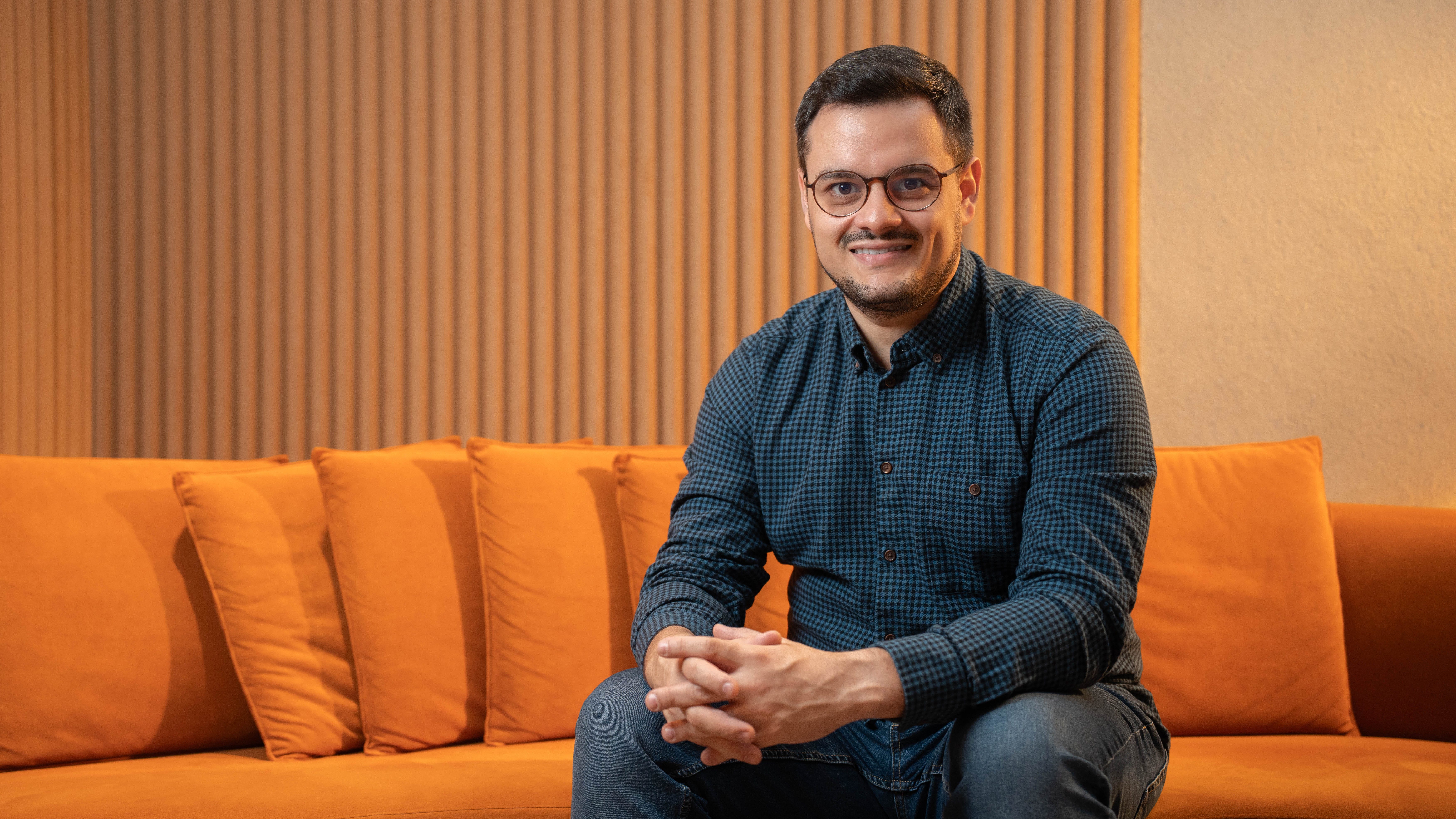
I am an entrepreneur with over 20 years of experience at the intersection of tourism and technology. I am co-founder and Chief Business Officer of VOLL, the largest mobile-first corporate travel and expense management platform in Latin America, where I lead the commercial strategy behind our AI adoption.
A first-cohort graduate of The AI-Powered Organization at Stanford Graduate School of Business and a Marketing specialist from Fundação Dom Cabral, I serve on the Tourism Council of FecomércioSP and on the Executive Council of the Latin American Association of Corporate Events and Travel Management (Alagev). I write and speak about innovation, digital transformation, entrepreneurial leadership, and the future of corporate travel.
Discussion about this post