


The industry keeps repeating a version of the same sentence: travel needs more AI. More agentic tools, more copilots, more assistants that plan and book on a traveler’s behalf. I think that sentence is half right and half a distraction, because the harder problem sitting underneath it is not intelligence, it is memory, and almost nobody selling an AI product wants to lead with that admission.
An agent can reason beautifully and still book the wrong hotel room, because it never actually knew the traveler was traveling with a colleague who needed an adjoining room, or that a dietary restriction existed, or that a passport had just been renewed.
Why an AI travel agent forgets you the moment you switch apps
Here is what actually happens to a managed traveler’s identity today. A piece of it lives in the employer’s HR system. Another piece sits in the online booking tool. Another in the GDS profile, another in the expense platform, another with the travel management company, another in the airline’s frequent flyer program, another in a hotel loyalty account, another in a car rental preference file, and a final piece in whatever risk platform tracks duty-of-care obligations. None of these systems sync in real time.
A traveler who changes departments, renews a passport, earns a new tier on a different carrier, or simply updates a seat preference sets off a cascade of manual updates across systems that may or may not actually propagate, a pattern laid out in detail by Gee Mann, founder and chief executive of Travlr ID, in a two-part opinion column for Business Travel News Europe, the first installment of which is available here.
His framing is blunt: “the travel industry does not have an AI problem, it has a memory problem,” and an agent asked to plan or book on a traveler’s behalf is only ever as good as the fragmented, half-synced context it is handed.
Picture the failure mode concretely, the way it actually plays out for a real traveler. A traveler renews a passport in March. Their travel management company updates its own record within a week, because a human processed the change manually. Their airline loyalty profile still shows the old document number in June, because nobody thought to push the update there too, and it only surfaces as a problem at check-in for an international flight, at the exact moment a traveler has the least slack to fix it.
An AI agent asked to book that trip inherits whichever version of the traveler’s identity the system it happens to query still holds, with no way to know it is working from stale data unless something downstream breaks loudly enough to notice. That is not a hypothetical edge case, it is the default condition of almost every managed travel program operating today.
A market of vendors is already racing to build the missing layer

This is not one founder’s isolated theory. At Phocuswright Europe 2026, TravlrID shared a case study built with Scania, the Swedish logistics manufacturer, combining what the companies called personal memory and organizational memory to cut manual work, reduce errors and automate the tedious job of keeping traveler profiles current, as reported independently by PhocusWire.
On the same panel, TrustYou described a competing approach to the identical problem from the hospitality side, building its own memory layer from roughly 1.6 million properties and 250 million guest reviews, integrated with the Apaleo property management system to give an AI agent working guest context rather than a blank slate on every stay.
Two companies, working on opposite ends of a trip, independently concluded the same infrastructure was missing.
The conversation has moved beyond individual vendors and into formal standards work. The Decentralized Identity Foundation’s Hospitality and Travel working group hosted Gee Mann specifically to present the architectural case for what the industry is now calling a memory layer, covering traveler-controlled context stores and consent-governed access models, according to the meeting notice posted by the group’s organizer.
The technical vocabulary is worth unpacking briefly, because it signals how seriously this is being treated. A traveler-controlled context store means the profile itself is not owned by any single booking tool or airline, it is held in a location the traveler (or their employer, on their behalf) actually controls. A consent-governed access model means a hotel, an airline or an AI agent has to be granted permission to read specific pieces of that profile, rather than pulling a full data dump because that happens to be how the integration was built.
Both concepts exist precisely because today’s alternative, a dozen platforms each holding their own partial, unsynced copy, is the thing producing the failure mode described above. When a standards body convenes a session specifically to debate the plumbing underneath AI agents rather than the agents themselves, that is a reasonably strong signal the plumbing is the real bottleneck.
Read the sponsorship before you read the number
Travlr ID’s own column carries the most useful data point in this entire conversation, and also the one that deserves the most skepticism. The company says it tested what happens when an AI agent works from a unified, accurate traveler profile instead of fragmented data, and found that API calls dropped between 60 and 80 percent when the agent had real profile context, a claim made in the second half of the same column, continued here.
No published methodology accompanies that figure, no sample size, no independent audit, and the company selling the exact product that would produce this improvement is also the company reporting it.
What makes this worth noting rather than dismissing outright is that BTN’s own editors flagged the same concern before I did. A disclosure attached to the column states plainly that the publication cut a considerable portion of the piece because it read as commercial language, disallowed under BTN’s policy for opinion contributions, and that editors judged the remainder illustrative enough to keep given the topic’s importance.
That is an unusually candid piece of editorial housekeeping to leave visible, and it is exactly the instinct worth applying to the 60-to-80-percent figure itself: treat it as a plausible order of magnitude from someone with every incentive to round up, not as an audited result.
The same gap, described independently by a consultancy and a founder

What lends the underlying argument real weight is that it did not originate with a niche founder trying to sell infrastructure. A recent Accenture Research report surveying 600 senior travel executives found that 79% describe traveler identity and profile data as disconnected inside their own organization, a figure I wrote about at length in this newsletter’s previous piece on agentic commerce in travel.
Accenture’s incentive runs in the opposite direction from Travlr ID’s: a global consultancy selling integration work has no reason to talk up a scrappy identity startup’s thesis, and a founder selling identity infrastructure has no reason to cite Accenture’s survey methodology. They landed on the same number anyway, from completely different starting points, which is a stronger form of confirmation than either source could produce alone.
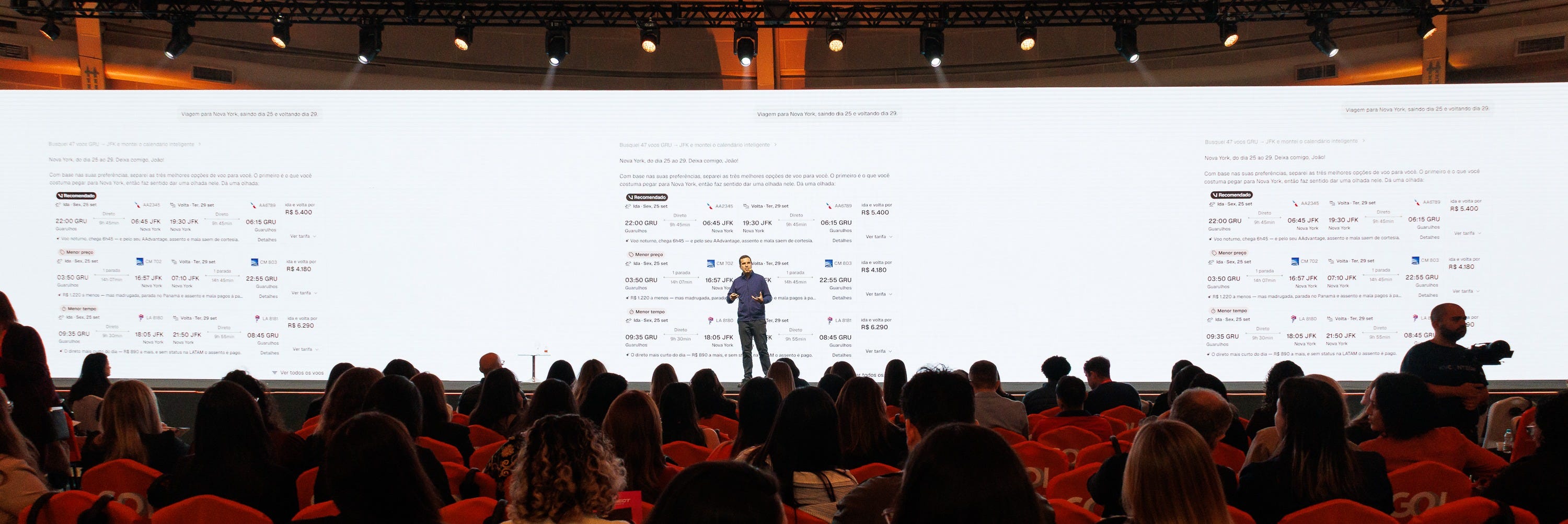
I have an obvious reason to find this whole conversation compelling. Two weeks ago, VOLL launched VOLL Intelligence, an agentic layer built specifically to remember a traveler’s preferences across interactions, as PanRotas reported from the launch at Travel Connect. Reading Gee Mann’s argument, the honest question it raises for a platform like ours is not whether memory matters, we already bet that it does, it is whether that memory should live portably, controlled by the traveler and revocable across any platform the way Travlr ID’s self-sovereign model proposes, as the company describes its own architecture, or whether it is reasonable for it to live inside the platform doing the booking.
That is an unresolved architectural question for the whole industry, VOLL included, not a settled one, and I do not think anyone selling a product in this space, myself among them, has fully earned the right to claim they have already answered it.
What this means for the person who actually owns the policy
Set the vendor debate aside for a moment and think about what a working memory layer would actually change for a corporate travel manager, because the abstraction hides a very concrete operational benefit.
Duty-of-care obligations depend on knowing, accurately and in real time, where a traveler is, what documents they are carrying, and what medical or dietary constraints apply, information that today lives scattered across exactly the systems Gee Mann lists.
Policy enforcement depends on an agent knowing a traveler’s actual entitlements, not a cached snapshot from whenever a profile was last touched by a human. Most existing corporate travel policy guidance already assumes this kind of unified context is available, as a widely used policy framework from Ramp lays out, without addressing what happens when the underlying systems it depends on do not actually agree with each other.
A memory layer, if one vendor or another actually builds it well, is not a nicer traveler experience bolted onto the program. It is the precondition for duty of care and policy enforcement to work the way the policy document already assumes they do.
Nobody has asked whether Latin America has a seat at this table yet

Every name in this conversation sits in the same narrow geography. Travlr ID and TrustYou presented in Europe. Scania is Swedish. The Decentralized Identity Foundation session ran on European and North American time zones. Accenture’s 79% figure comes from a 17-country executive survey that folds Latin America into a single combined regional bucket rather than breaking it out on its own.
Nobody currently building the memory layer this industry is converging on has said a word about how it should work for a traveler whose HR system, booking tool and expense platform were all built for a Brazilian, Mexican or Colombian regulatory environment, with its own document standards and its own patchwork of local suppliers that never show up in a European identity pilot.
That silence is not proof the region does not need this infrastructure. If anything, a market where corporate travel programs already juggle more currencies, more tax regimes and more locally fragmented supplier relationships than most of the markets currently defining this standard has more reason to care about a working memory layer, not less.
GBTA put the corporate travel economic impact of São Paulo alone at more than US$ 3.4 billion in a single year, figures presented in the city the same week VOLL launched its own agentic tool, a single city generating enough travel activity to justify its own identity infrastructure conversation rather than inheriting one built for Stockholm or Amsterdam.
A region this large, with this much corporate travel spend moving through it, should not have to wait for a European working group’s specification to decide whether its own document standards, local supplier fragmentation and tax reporting requirements fit cleanly inside an architecture nobody designed with them in mind.
The industry has a habit of building infrastructure first in one geography and asking whether it travels later. Memory, of all things, should not be the piece of travel technology that forgets to ask that question early.
About me

I am an entrepreneur with over 20 years of experience at the intersection of tourism and technology. I am co-founder and Chief Business Officer of VOLL, the largest mobile-first corporate travel and expense management platform in Latin America, and a recognized reference in the development of the corporate travel industry.
A Marketing specialist from Fundação Dom Cabral, I serve on the Tourism Council of FecomércioSP and on the Executive Council of the Latin American Association of Corporate Events and Travel Management (Alagev). A frequent traveler and close observer of human behavior in motion, I write and speak about innovation, digital transformation, entrepreneurial leadership, and the future of corporate travel.