A record pipeline is a long way from a room near your meeting
Global hotel construction hit a record in Q2 2026. Much of it is still on paper, and rates follow the calendar of demand.


Every few months, the same headline comes back: the global hotel construction pipeline has reached a record. And every time it does, the same inference follows, usually in the comments and sometimes in a budget meeting. More hotels are coming, supply will loosen, and the rate you pay in your next business city will finally ease.
I started my career at a hotel front desk, and I would like to gently push back on that inference. The data is excellent, and it deserves to be read closely. My concern sits with what a pipeline measures, and with how far a record on a spreadsheet sits from a room near your meeting on a Tuesday night.
What the record actually counts
The source is Lodging Econometrics, the research firm whose quarterly pipeline reports the whole industry reads. According to its Q2 2026 global release, the pipeline reached 15,976 projects and 2,433,948 rooms, a new all-time high in project count. The same release debuts a forecast for 2028 openings, and Hospitality Net published the full release.
Two words in that sentence deserve attention: “projects” and “pipeline”. A project in a pipeline is a hotel that someone has announced, planned or started to build. A hotel that has opened is a different thing. The distance between those two states can be measured in months or in years, and some projects never complete the trip. When I read a record pipeline, I read a record of intentions, and intentions are useful, but they do not check anyone in.
Four in ten rooms are being built. The rest is a promise

The breakdown in the same release tells the story better than the headline. Of the 2,433,948 rooms in the pipeline, 1,043,290 rooms (6,174 projects) are under construction, roughly 43% of the total. Another 530,326 rooms (3,743 projects) are scheduled to start construction within twelve months, about 22%. And 860,332 rooms (6,059 projects) are in early planning, roughly 35% of the total, a segment that also reached a record and grew 5% in projects and 8% in rooms over the previous year.
Early planning is the most optimistic category in the report, and also the least certain. It includes projects that have a site and a concept, and sometimes little else. Nobody should write a travel budget on the assumption that every one of them will open on schedule. I say this with affection for developers, who take real risks to get a hotel out of the ground. Some will make it. A pipeline is wide at the top and narrow at the bottom for that reason.
The openings forecast is the part that touches a traveler directly. LE expects 379,921 rooms in 2026, 389,412 in 2027 and 361,430 in 2028, compared with 332,699 rooms opened in 2025. Those are meaningful numbers. They are also spread across thousands of hotels and dozens of markets, which is how supply tends to arrive: gradually, unevenly and in places that are not always the ones travelers are heading to.
A converted hotel adds a flag, not a bed
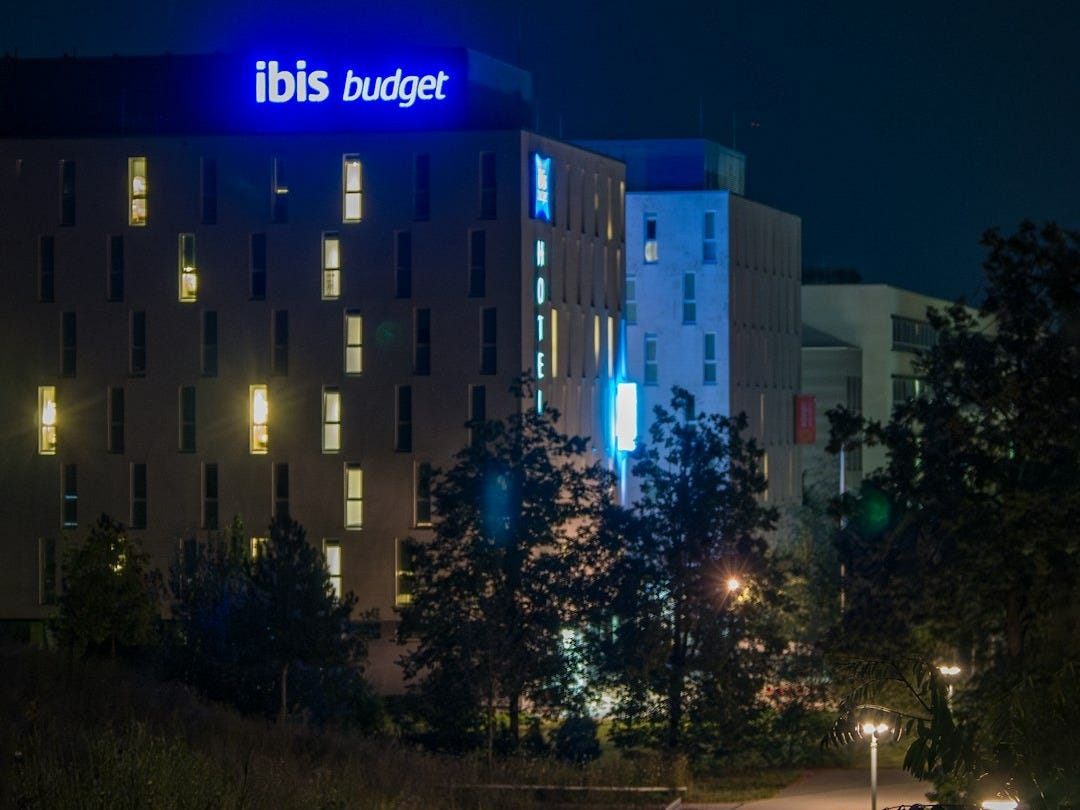
There is a second record in the same report, and it tells a different story. Brand conversions reached 2,927 projects and 351,257 rooms, up 12% in projects and 17% in rooms from a year earlier. A conversion happens when an existing hotel changes its brand. Add renovations, and the combined figure is 3,760 projects and 521,849 rooms.
Changing a flag is faster than building from zero, which is probably much of its appeal, and the conversion figures show owners using it more every year. It can improve a hotel’s distribution, its loyalty program and its fit with corporate programs. But when a property converts from one brand to another, the city does not gain a single room. The sign above the entrance changes, and the inventory stays where it was.
For a travel manager, that has a practical consequence. A record number of projects that includes a large share of conversions will not necessarily produce the volume of new beds that the headline suggests. The next time someone tells you supply is on the verge of exploding, ask how much of it is a new building and how much is a new logo.
A project can also change shape on the way. A hotel announced as a 300-room full-service property can open smaller, later, under another brand or in a different category than the one first described.
Developers adjust to financing, to labor, to what the local market will pay. I do not have data on how often this happens, so I offer it as a pattern to keep in mind and make no claim about frequency. Still, it is worth keeping in mind each time you read a list of projects and imagine the rooms.
For a traveler, the consequence is that the category of room that opens can differ from the category of room that was announced, which matters when a corporate program has a rate negotiated for a specific level of hotel. I mention it because pipeline reports describe projects by their intended chain scale, and the intended chain scale is the first thing to move.
Where I learned to read a hotel by its calendar

I worked as a receptionist in a five-star hotel in Belo Horizonte from 2007 to 2011. I will not name it. What matters is the building. It had 343 apartments, and at the time, as I remember it, it housed the largest convention center inside a hotel in the city: space for more than fifteen thousand people, and an auditorium for five thousand. It sat between downtown and the international airport, about thirty minutes by car from the center.
The arithmetic of that place taught me everything I know about hotel supply. 343 apartments cannot host an event for fifteen thousand people. The convention center filled, and the surrounding city absorbed the overflow. Over the years, other hotels rose around it, and today, if my information is right, there are five more within about a kilometer, in lower categories, including a long-stay apart-hotel. The event drew the supply to itself.
I learned something else at that front desk. Occupancy in Belo Horizonte in those years was close to or at 100% from March to June and from August to November, the months of business and conventions. On holidays, school breaks, year-end celebrations and Carnival it fell to something between 20% and 40%.
I am giving you the memory of a receptionist and no statistical series, and I mark it as such. But the shape of it has stayed with me ever since: a hotel is priced by the calendar of demand that surrounds it, and building another hotel next door changes how that calendar is shared, but not the calendar. I wrote about the people who work this calendar from the inside in what a bellboy learns that an algorithm does not, and the idea has not left me.
There is a lesson here for hotel partners and buyers alike. A buyer who reads the pipeline carefully can ask better questions: which of these projects are in my cities, which are under construction, which have a signed brand, and which have a date. A hotel partner who reads it carefully knows that the buyer is asking. In my experience, the conversations that go well are the ones where both sides look at the same calendar before they look at the rate card.
Where the cranes are

Geography matters as much as volume. In the global release, the cities with the largest pipelines are American. Dallas leads with 183 projects and 22,840 rooms, followed by Atlanta with 157 projects and 17,423 rooms, and Nashville with 122 projects and 16,281 rooms.
I have a personal connection to two of them, because Dallas and Atlanta were the host cities of my first two GBTA conventions, in 2023 and 2024. Those are cities where large events fill the hotels around the convention center, and where a developer can plan with confidence that the calendar will provide a customer. It makes sense to see construction following demand.
It also means a traveler heading to a market without a crane on its skyline cannot count on global supply to help. A record number of projects in Texas and Georgia does not lower the price of a room in a city where nobody is building. Orlando shows the other side of the same coin: a city with enormous hotel infrastructure, as I wrote in my article on why it is the most visited city in America, where the question is still which week you are booking. Supply and demand have to meet in the same neighborhood and in the same week.
What the Latin American numbers say, and what they leave out
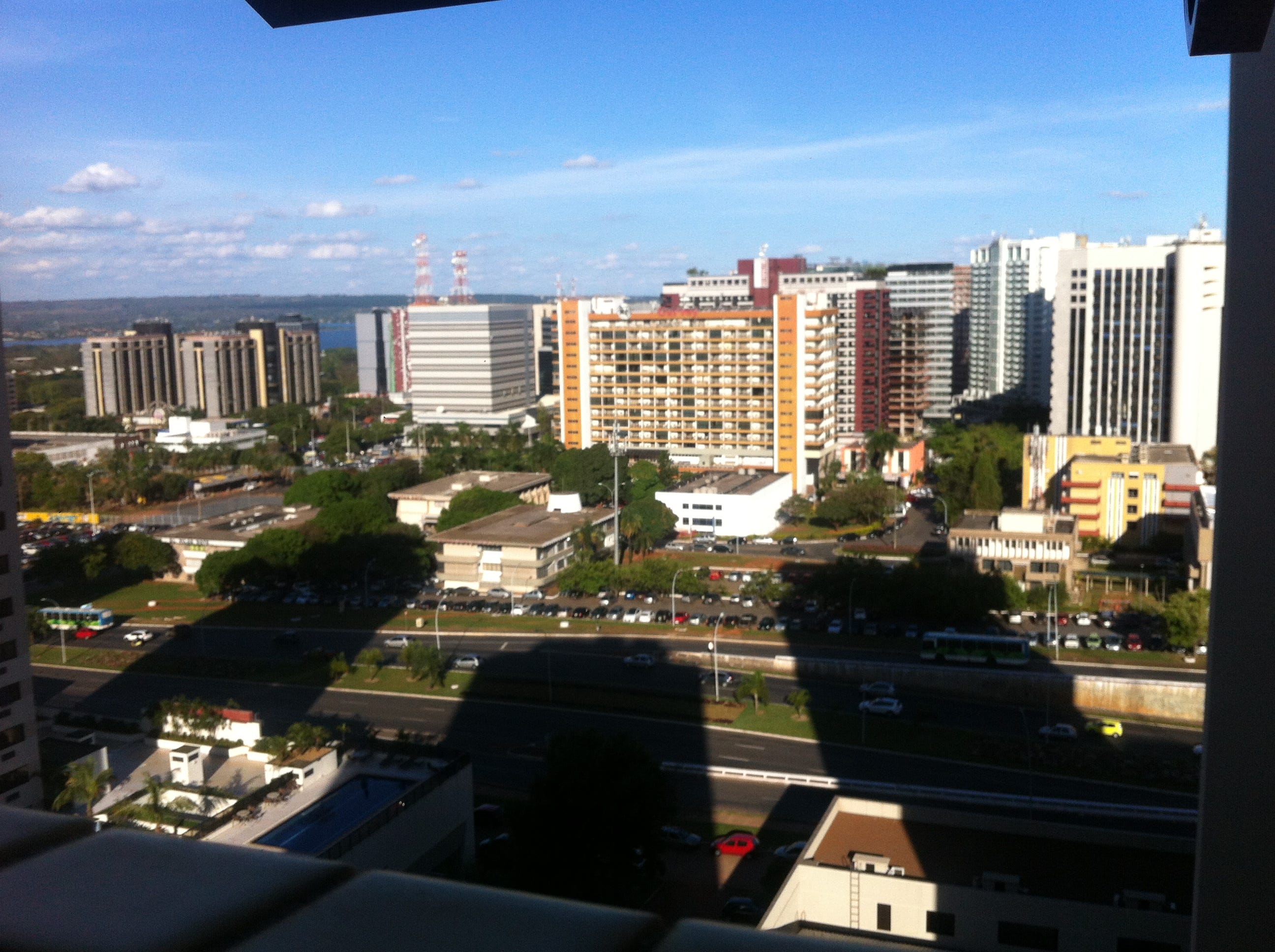
My own region has its own report. In its Latin America release for Q2 2026, Lodging Econometrics counted 759 projects and 111,340 rooms, a slight increase in projects from a year earlier. Of those, 284 projects (43,840 rooms) were under construction and 172 (27,149 rooms) were scheduled to start within twelve months. Early planning grew 22% in projects, to 303 projects and 40,351 rooms, which tells me that developers in the region are still looking ahead.
Three countries account for most of the activity: Mexico with 234 projects (33,131 rooms), Brazil with 140 projects (20,181 rooms) and the Dominican Republic with 85 projects (17,085 rooms). Together they hold about 61% of the region’s projects. The city ranking is led by Mexico City with 25 projects and 2,737 rooms, followed by Lima with 18 projects and 2,402 rooms.
I have to be honest about the limits here. In the material I could access, São Paulo, Rio de Janeiro, Bogotá, Santiago and Buenos Aires do not appear with per-city figures, and I did not find reliable public numbers for them. I will not guess. When a city has no published data, the right thing to say is that the data is missing, and that anyone who tells you precisely how many rooms are coming to a specific neighborhood has a source that I would like to see.
One more note: the release lists 104 hotels expected to open in the region in 2026, and its room totals do not add up cleanly across the first half and the rest of the year, so I use the project counts and not that figure.
The calendar still sets the price
Now for the part that matters most to anyone who books travel. Rates are driven by demand, and demand follows the calendar. In my analysis of the São Paulo Grand Prix, aggregated and anonymized booking data processed by the VOLL platform showed corporate hotel rates rising by up to 38% on race nights, as I described in You don’t need a ticket to Interlagos to pay for the São Paulo Grand Prix. No pipeline report, however large, would have changed that number, because the event is a fixed week and the rooms are a fixed quantity in that week.
That is why a travel program should treat the pipeline as background information and the calendar as the operating tool. A record in construction is a good reason to follow the market, to talk to hotel partners about future supply and to renegotiate when a new property opens in a corridor you use. A big event still deserves the same early booking window it always did. The same logic I applied to daily allowances, in the IRS per diem piece, holds here: a simple assumption applied everywhere fits nowhere.
A bet for the next twelve months

Think about it from the point of view of a travel manager planning a program for next year. Suppose a new hotel is announced near your regional office, in the right category and with the right brand. Do you adjust your allowance for that city? Do you change your preferred supplier list?
The sensible answer is to wait until the property has an opening date and has been open long enough to show how it actually operates. In the meantime, the existing hotels near your offices remain your program, and the relationship with them is worth protecting.
One more caution about averages. A global figure hides enormous variation between markets. A record number of rooms in the pipeline can coexist with a city in which nothing at all is being built, and with another where a single large project will change the competitive landscape.
Reading a regional or global total as if it described your city is like reading a national weather forecast to decide whether to carry an umbrella in São Paulo. It is a start. It does not tell you what will happen on your street.
I will end with a prediction, and I will give it a deadline so you can hold me to it. I suspect that a year from now, the next Q2 report will again make the news, and the headline will again promise that supply is on its way. I also suspect that the rooms near your most important meetings will still be priced by the calendar of the week in which you need them.
Between now and then, the useful work belongs to the people who manage travel programs. They can watch the pipeline in the corridors where their travelers go, record which new hotels actually open, and treat an announcement as a date to follow, and leave the rate expectations for when the doors open.
A record is a good headline, and a room that opened on time near your meeting is what you will pay for. I wrote about why hotels are where corporate travel really happens, and I will keep watching the pipeline with that in mind.
About me

I am an entrepreneur with over 20 years of experience at the intersection of tourism and technology. I am co-founder and Chief Business Officer of VOLL, the largest mobile-first corporate travel and expense management platform in Latin America, where I lead the commercial strategy behind our AI adoption.
A first-cohort graduate of The AI-Powered Organization at Stanford Graduate School of Business and a Marketing specialist from Fundação Dom Cabral, I serve on the Tourism Council of FecomércioSP and on the Executive Council of the Latin American Association of Corporate Events and Travel Management (Alagev). I write and speak about innovation, digital transformation, entrepreneurial leadership, and the future of corporate travel.
Discussion about this post