You don't need a ticket to Interlagos to pay for the São Paulo Grand Prix
Our data shows corporate hotel rates in São Paulo jump up to 38% on Grand Prix nights. What big events teach travel managers.


There is a piece of folk wisdom in São Paulo that every local will confirm with a straight face: no matter where you are in this city, you will always find a sign pointing the way to Interlagos. I can confirm it from years of crossing the city for meetings: the signs really are everywhere, patiently reminding more than eleven million people that the racetrack exists.
I confess I have never been to the race. But I live in the city that hosts it, and I work in corporate travel, so every November I get to watch something more interesting than a pit stop: what a three-day event does to the price of everyone else’s trip.
This year the São Paulo Grand Prix runs from Friday, November 6, to Sunday, November 8, with the race on Sunday afternoon. The last edition drew more than 303,000 spectators and an estimated R$2.3 billion in economic impact, according to a Fundação Getulio Vargas study released by São Paulo’s city hall and cited in a recent R7 report for which I was interviewed.
That is wonderful news for the city’s tourism economy. It is also a line item that will appear, quietly, on the expense reports of thousands of people who have no interest in Formula 1 at all.
So we went to the data.
In the interest of full disclosure, the numbers below come from aggregated, anonymized hotel bookings made by companies on the VOLL platform for stays in the city of São Paulo, which is my day job. I share percentages and variations only, never absolute amounts or client names. What follows is the clearest picture I have seen of how a major event reshapes corporate hotel rates in a Latin American city, and I suspect the lessons travel well beyond Interlagos.
How much the Grand Prix adds to São Paulo hotel rates
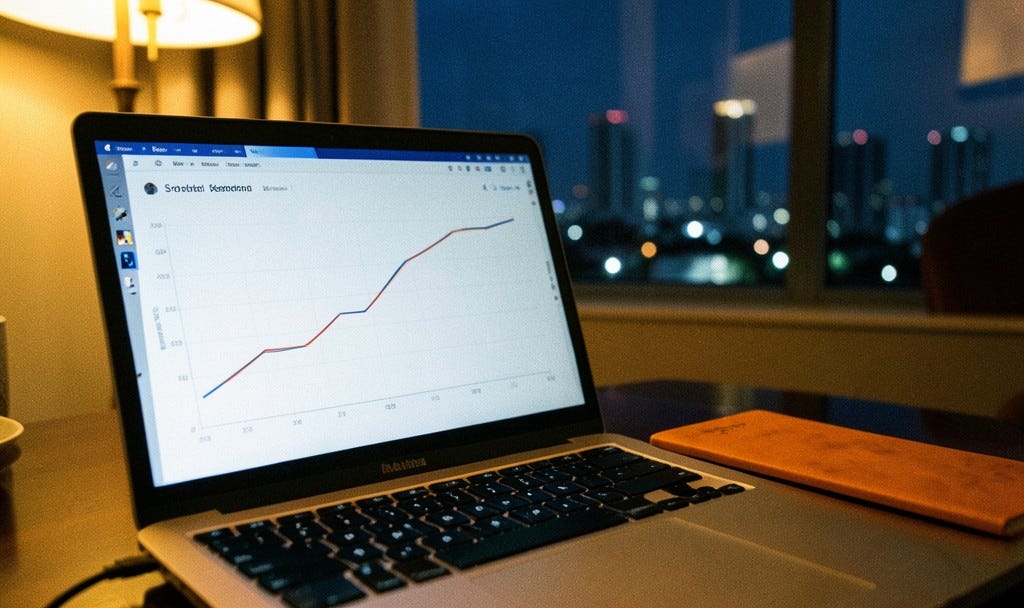
We defined the Grand Prix window as the nights from Thursday to Sunday, which covers someone arriving for Friday practice and leaving on Monday. Then we compared those nights with two benchmarks: the annual average, and the average for the same day of the week across the year. The second comparison matters, because weekends in São Paulo are naturally quieter for corporate travel, and a Saturday night has its own price logic.
Against the annual average, the average nightly rate during the Grand Prix window was 22.9% higher in 2024 and 32.8% higher in 2025. Against the same days of the week, the gap widens to 25.1% in 2024 and 37.6% in 2025.
The core of the weekend tells an even louder story. On Friday and Saturday nights, rates were 51.8% above the usual Friday and Saturday in 2024, and 57.2% above in 2025. Saturday alone peaked at 76% above an average Saturday in 2024 and 84% above in 2025. If you have ever wondered why a colleague’s two-night stay in São Paulo in early November looked suspicious in the expense system, there is your answer.
Two details caught my attention. The first is that the pressure is starting earlier. Thursday night rose only 8% in 2024, but 28% in 2025. Hotels, and the people who book them, have learned the calendar. The second is that the event premium is growing faster than the market. The average Grand Prix rate rose 22% from one year to the next, while the annual average rate in the city rose 13%. São Paulo is getting more expensive, and Grand Prix weekend is getting more expensive faster.
Our measurement probably understates the peak. Our base records the average rate of each stay, and a booking from Thursday to Monday spreads the cost of an expensive Saturday across four nights. The real Saturday effect is likely higher than what we can see. We also checked whether a single large account was distorting the result. Excluding the largest one, the 2025 variation over the same weekdays stays at 37.3%, practically identical. The pattern is robust.
Hotel occupancy confirms the squeeze from the supply side. Ahead of the 2024 edition, the state’s hotel and restaurant federation, Fhoresp, projected occupancy of up to 100% in São Paulo hotels during the event weekend. When a city fills up, the price of the last available room is set by whoever needs it most.
Why São Paulo hotel rates jump when demand spikes for a few days
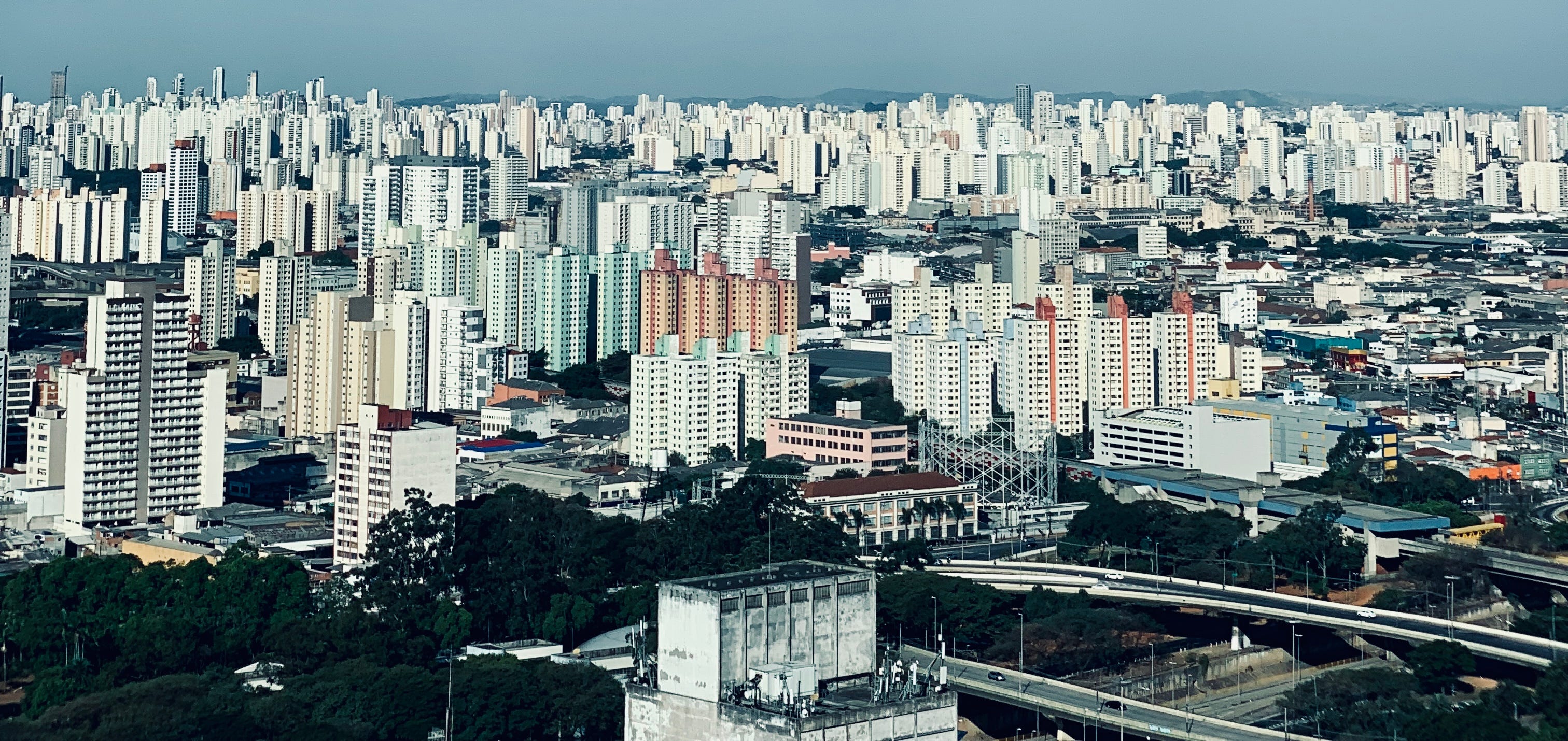
There is a simple economic logic behind all of this, and I tried to explain it in plain words to R7: the supply of hotel rooms and airline seats is relatively inelastic. Nobody builds a hotel for one weekend in November, and airlines can only add so many seats to a route on short notice. When thousands of people need to be in the same city on the same days, prices rise, and they rise for everyone, including people who have no relation to the event.
Demand this year looks solid. According to Embratur, Brazil’s international tourism promotion agency, São Paulo had 14,933 international air bookings for the period from November 4 to 11, up 1.15% over the same window in 2025, as reported by Mobilidade Sampa. Add domestic visitors, teams, sponsors, broadcasters, suppliers and the small army of professionals who arrive before the cars and leave after them, and the city absorbs a short, intense wave.
For corporate travel, the most important consequence is less visible than a higher price on a booking screen. During high-occupancy periods, some hotels stop making negotiated corporate rates available. A company may have a perfectly good agreement with a hotel near Avenida Paulista, and the agreement still exists on paper, but the room at that rate simply does not show up on Grand Prix weekend. I have written before about how negotiated hotel rates depend on what the hotel is willing to expose, and big events are where that dependency becomes painfully obvious.
I want to be fair to the hotels here. Pricing to demand is the natural behavior of a market, and Formula 1 is a real opportunity for a hospitality sector that works hard the rest of the year. The issue is on our side of the table: a travel program that treats every week in São Paulo as the same week will be surprised every November.
How corporate travelers behave during Grand Prix week
The data also shows that corporate travelers are less naive than the averages suggest. When we compared bookings that touch any night of the Grand Prix window with all other São Paulo bookings in the same year, three behaviors repeated in both 2024 and 2025.
First, people book earlier. Average advance purchase for Grand Prix stays was about 26 days in both years, roughly four days more than for the rest of the year. The share of bookings made three days or less before arrival fell as well, to 9.1% in 2025 against 11.7% for other stays.
Second, stays get longer. In 2025, the average Grand Prix stay lasted 2.9 nights, against 2.3 nights for the rest of the year. In 2024 the gap was even wider.
Third, and this is my favorite, almost three times as many stays cross a Saturday night. In 2025, 9.3% of Grand Prix stays included a Saturday, against 4.0% the rest of the year. Some of that is people who came for work and stayed for the race, and some of it is people who simply could not find a sensible way out of town on Saturday. I will let readers decide which group is happier, although I have argued before that bleisure stopped being a trend a while ago.
Most of this demand is ordinary corporate travel living alongside the event. A large share of the weekend nights in 2025 came from training cohorts, the kind of in-person program companies schedule for a weekend because it does not interrupt the work week, and which happens to collide with one of the busiest weekends of the year. A smaller part is directly linked to the race: one client even labels those trips with the name of a Formula 1 operation, which tells you that for some companies the Grand Prix is a business event in its own right.
Volume changed in 2025 too. Sunday night of the Grand Prix had about 2.6 times the bookings of the surrounding Sundays, and Friday had about 70% more. In 2024 the volume stayed stable and only the price moved. In 2025, both moved at once.
When the hotel rate cap meets the event calendar
This is the part of the analysis that matters most for anyone who writes a travel policy.
Most companies set a maximum nightly rate per city. It is a reasonable rule, and it usually works, because it is calibrated on normal weeks. In 2024, the share of Grand Prix stays above the city cap was 23.6%, practically the same as the rest of the year. Travelers found rooms within policy, or close to it.
In 2025, that share jumped to 34.7%, against 21.6% for other stays, a gap of 13 percentage points. At the same time, the share of requests handled offline, through a human consultant instead of self-service, almost doubled, from 11.4% to 20.1%. Both signals point to the same thing: inventory became scarce, and the policy written for an average week stopped fitting the week people were actually traveling.
Scarcity also leaves fingerprints on the calendar around the race. In 2024, the week after the Grand Prix stayed expensive because Fenatran, one of Latin America’s largest transport and logistics trade fairs, took over the São Paulo Expo from November 4 to 8. It did not contaminate the race window in our measurement, but it explains why a travel manager looking at November 2024 as a whole might have concluded that São Paulo simply got pricier. The city’s event calendar stacks, and a policy that ignores it pays twice.
There is a better way, and it is surprisingly undramatic. The example I like to use is a rule that requires trips to São Paulo to be booked with a much longer advance window, say 65 days, whenever the dates overlap with the Grand Prix. Another option is a seasonal cap: a higher ceiling for known event dates, so travelers stop collecting exceptions for something everyone saw coming. I argued in a recent piece on travel policy that rules work best when they describe the reality of the business, and event weeks are reality.
Technology helps here, because nobody wants to rewrite a policy document every November. On our platform, a travel manager can set this kind of rule in conversation with an AI agent and see it applied to the next booking. The point is to decide ahead of time which events deserve a different rule, and to let the system carry that decision instead of an approver at 11 p.m.
Big events in Latin America follow the same script
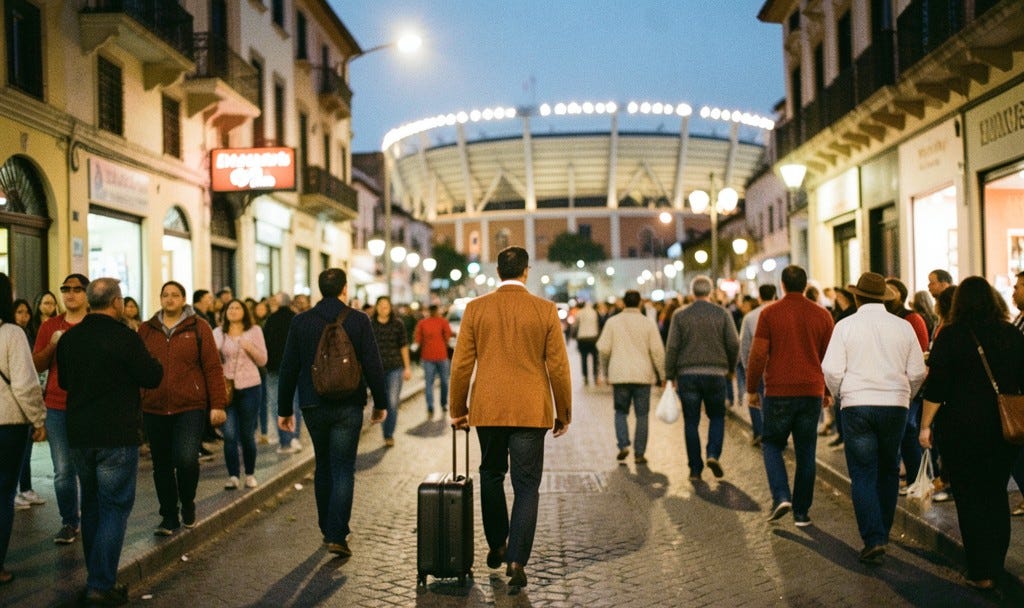
São Paulo is my case study, but the pattern is regional.
Mexico just lived it at a much larger scale. During the five weeks of the World Cup this year, the federal tourism ministry reported that average hotel rates in the host cities rose 51.5%, while occupancy averaged 66%, up 13% over the same period of 2025, according to Publimetro’s coverage of the official balance. On match days, occupancy reached 85% to 90%, and on the other days of the week availability returned to normal. These are government estimates, and earlier in the tournament Mexico News Daily reported that hoteliers feared bookings would fall short of expectations. Read together, the message is clear: rates moved much more than occupancy, and the premium concentrated on the peak days, exactly the shape we see on Grand Prix Saturday in São Paulo.
I wrote about this risk before the tournament in a piece on how the World Cup would stress corporate travel budgets. The lesson holds for any city with a crowded calendar: a business trip that happens to fall on an event night competes with fans who planned it months ago and are willing to pay almost anything.
The broader backdrop makes this more urgent. GBTA’s latest business travel forecast, produced with a travel management partner, expects Latin America to post the strongest hotel rate growth of any region in 2026, at 9.5%, driven by demand outpacing new hotel development, according to The Business Travel Magazine. In a market where the baseline is already rising, event peaks sit on top of an increase, and the gap between a good week and a bad week gets wider.
I see this as an opportunity, and I mean it. Latin America’s major cities are becoming event destinations of global relevance, with Formula 1, football, music festivals, trade fairs and conferences filling the calendar. That is a sign of economic vitality, and it brings visitors, jobs and investment. Corporate travel simply needs to plan for a region that is busier than it used to be.
What the city feels like, and what travel managers can do about it
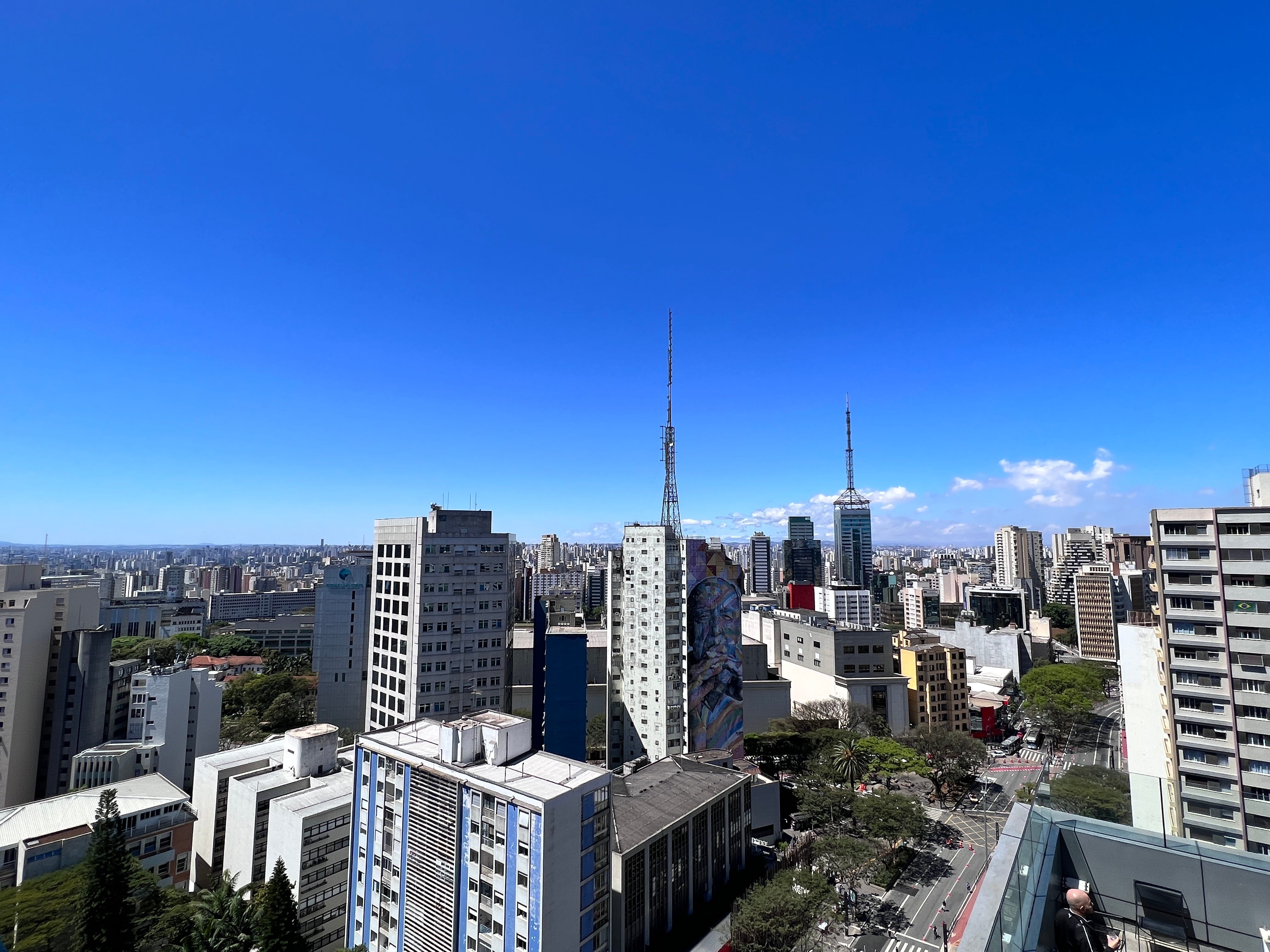
Data explains the price. It does not quite capture the feeling of São Paulo in Grand Prix week, so let me try.
São Paulo is already a city in permanent motion: dense, loud, crowded at almost any hour. A major event simply turns up the volume. The streets get fuller, the wait for a taxi or a ride-hailing car gets longer, restaurants that normally seat you at 9 p.m. ask you to come back at 10:30, and finding a reasonable rate at any of the city’s hundreds of hotels becomes nearly impossible. The airports get busier too. The VIP lounges, which are crowded on a normal Friday, lose any remaining pretense of exclusivity. A business traveler arriving on Thursday evening for a Friday meeting experiences all of this without ever hearing an engine.
The remedy is a calendar. My practical advice for travel managers, especially those with teams traveling to São Paulo in the first half of November, fits in a few lines.
Map the event calendar before you set the budget. The Grand Prix, major trade fairs and big concerts are announced months in advance. They belong in the travel plan the same way holidays do.
Book earlier for event weeks, and tell travelers why. Our data shows people already do this instinctively, adding about four days of advance purchase. A clear rule makes the instinct consistent.
Adjust the cap for known peaks, instead of collecting exceptions. If more than a third of stays will exceed the limit, the limit is the problem.
Talk to your hotels before the event, not during it. Ask which negotiated rates will remain available on peak nights, and consider alternatives in other neighborhoods with good access to the meeting.
Ask whether the trip needs to happen that week. Sometimes it does. The training cohort that books São Paulo on Grand Prix weekend, though, could probably have found another Saturday.
As I told R7, São Paulo’s calendar of major events is an asset for the city’s tourism, and these dates are known well in advance. That combination is good news for anyone willing to look at the calendar before the booking screen. The race lasts about an hour and a half on Sunday afternoon.
The planning that keeps it from eating your travel budget can start today, and it will still be useful long after the last car crosses the line.
And if you get lost on your way to a meeting next month, do not worry. There will be a sign pointing to Interlagos.
About me

I am an entrepreneur with over 20 years of experience at the intersection of tourism and technology. I am co-founder and Chief Business Officer of VOLL, the largest mobile-first corporate travel and expense management platform in Latin America, where I lead the commercial strategy behind our AI adoption.
A first-cohort graduate of The AI-Powered Organization at Stanford Graduate School of Business and a Marketing specialist from Fundação Dom Cabral, I serve on the Tourism Council of FecomércioSP and on the Executive Council of the Latin American Association of Corporate Events and Travel Management (Alagev). I write and speak about innovation, digital transformation, entrepreneurial leadership, and the future of corporate travel.
Discussion about this post