17.4 million customers in four years, and the Delta and LATAM joint venture still feels like one airline
Four years in, two carriers sell, reward and carry travelers as one, while each keeps its own ramp. A look from my own seat.

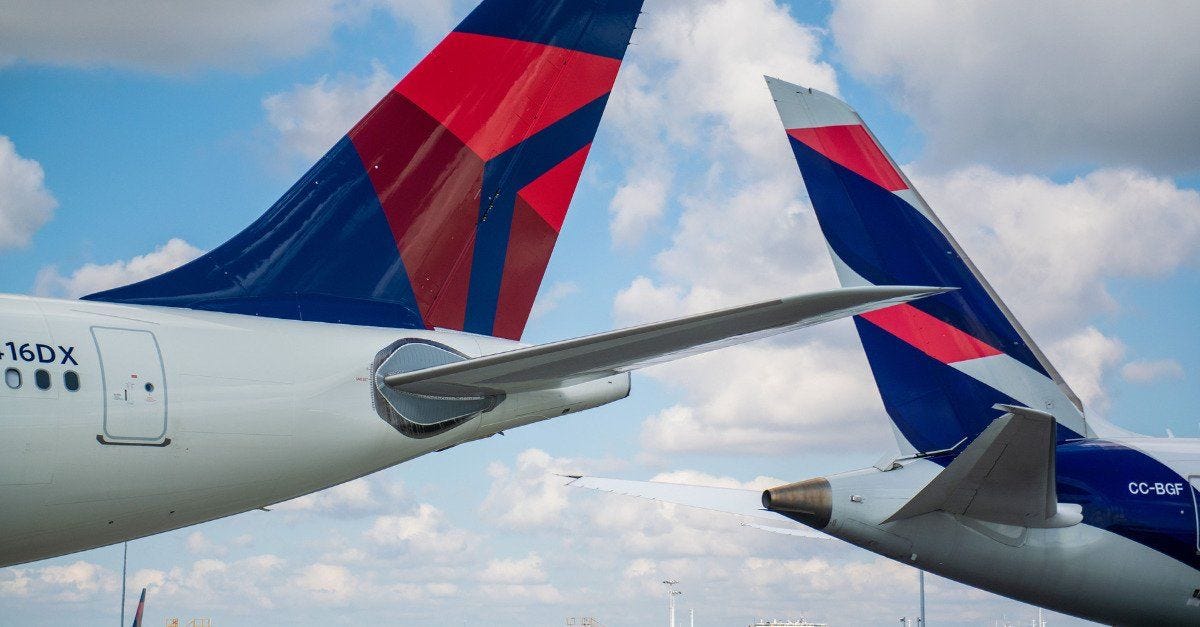
I have bought more than one ticket to Atlanta that begins in São Paulo and changes planes in Miami. On the first leg, the airplane belonged to LATAM. On the second, it belonged to Delta. The booking, though, was a single purchase, and the trip behaved like a single trip. I did not need to learn two sets of rules, to carry a second confirmation code in my head or to wonder which counter would answer for me if something went sideways. The trip felt as if one airline had planned it from the first minute to the last.
I had the same impression on a longer loop, São Paulo to Atlanta to Austin, and then Austin to Atlanta to São Paulo. Those flights were operated by Delta, and my loyalty status with LATAM still counted, with the benefits I expect when I hold that status.
When I describe this to people outside our industry, they usually shrug, because to a normal passenger this is what airlines were always supposed to do. Inside the industry, we know how many contracts, systems and regulators had to agree before a shrug became possible.
What stays separate, in my experience, is only the flying itself and the check-in at the airport, because each company runs its own operation. That detail interests me more than the smooth part.
A joint venture succeeds when the traveler sees one thing and the operators keep two. The Delta and LATAM joint venture just marked four years, and the airlines published a stack of numbers to celebrate. I want to read those numbers slowly, say what they can and cannot tell us, and add what I have seen from the customer side.
One ticket, two ramps
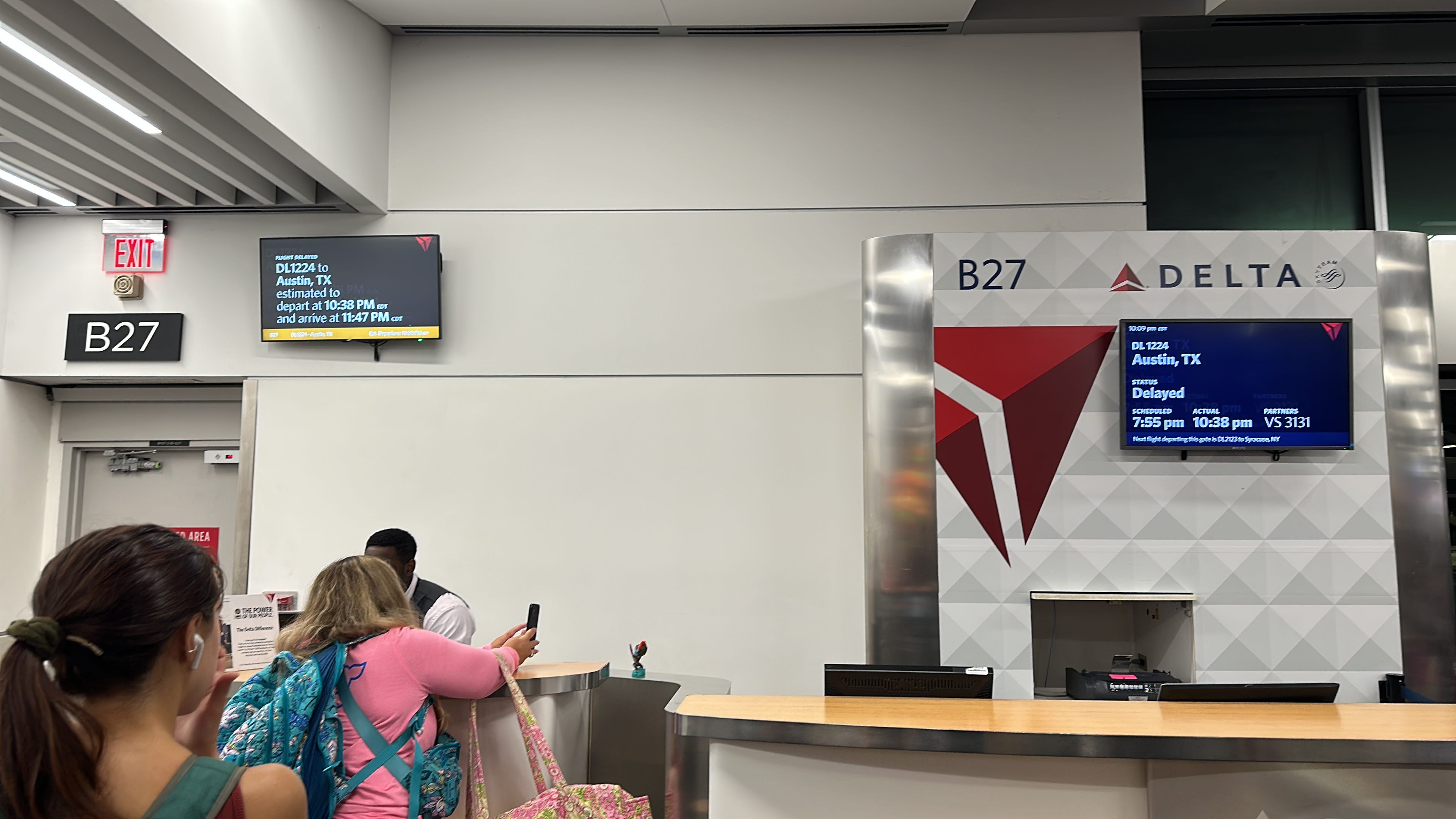
Start with the mechanics, because the word “joint venture” hides most of them. Delta and LATAM launched the arrangement in October 2022, and according to the Delta News Hub release of October 5, 2026, it now covers the United States and Canada on one side and Argentina, Brazil, Chile, Colombia, Ecuador, Paraguay, Peru and Uruguay on the other. In an arrangement like this, the two airlines plan the network together and sell the flights together. The exact economics between them are not public, and I will not guess at them.
What I can describe is the part a traveler touches. The release says members of SkyMiles and LATAM Pass earn miles or points on flights operated by either airline. Eligible members also receive reciprocal benefits, including priority check-in and boarding, seat selection and baggage-related advantages.
That sentence is the corporate-language version of what happened to me on the way to Austin: my status followed me onto an airplane that did not carry my airline’s name.
Regulators had to sign off first. A trade report from November 2022 says the arrangement received approval in September of that year, and the October launch followed. I will not summarize the regulatory conditions, because I did not read the decision itself, but the sequence is worth noticing: the traveler’s smooth day in 2026 rests on a legal process that took time and needed an official green light.
The same release mentions nearly 60 Delta Sky Clubs in the United States and LATAM lounges in Buenos Aires, Santiago, Lima, Bogotá, São Paulo and Miami, with access that depends on cabin, membership status and frequent flyer program. It adds shared terminals in São Paulo (Guarulhos), Santiago and New York (JFK), plus digital baggage tracking.
On those particular trips I did not test the lounges or the shared terminals, so I will not claim an opinion about them. I note them because they show where the work happens. A traveler sees a ticket. Behind the ticket, someone had to put two companies under one roof at an airport.
There is also a quieter piece of cooperation that rarely makes a passenger’s story. The release says Delta TechOps has a separate agreement with LATAM Airlines Brasil for component maintenance and repair on Airbus A320 airplanes, using LATAM’s maintenance facility in São Carlos, in the state of São Paulo. I like that detail.
A hangar in the interior of São Paulo state is now part of an American airline’s supply chain, which says something about how the relationship has grown past the sales desk.
I have written before about what a ticket actually pays for, and one lesson from that piece applies here. When a fare looks simple, a long chain of costs and contracts is hiding underneath it. A seamless connection is the same kind of illusion, a very good one, built from agreements that nobody in seat 14C ever needs to read.
Reading the scoreboard with a skeptical smile
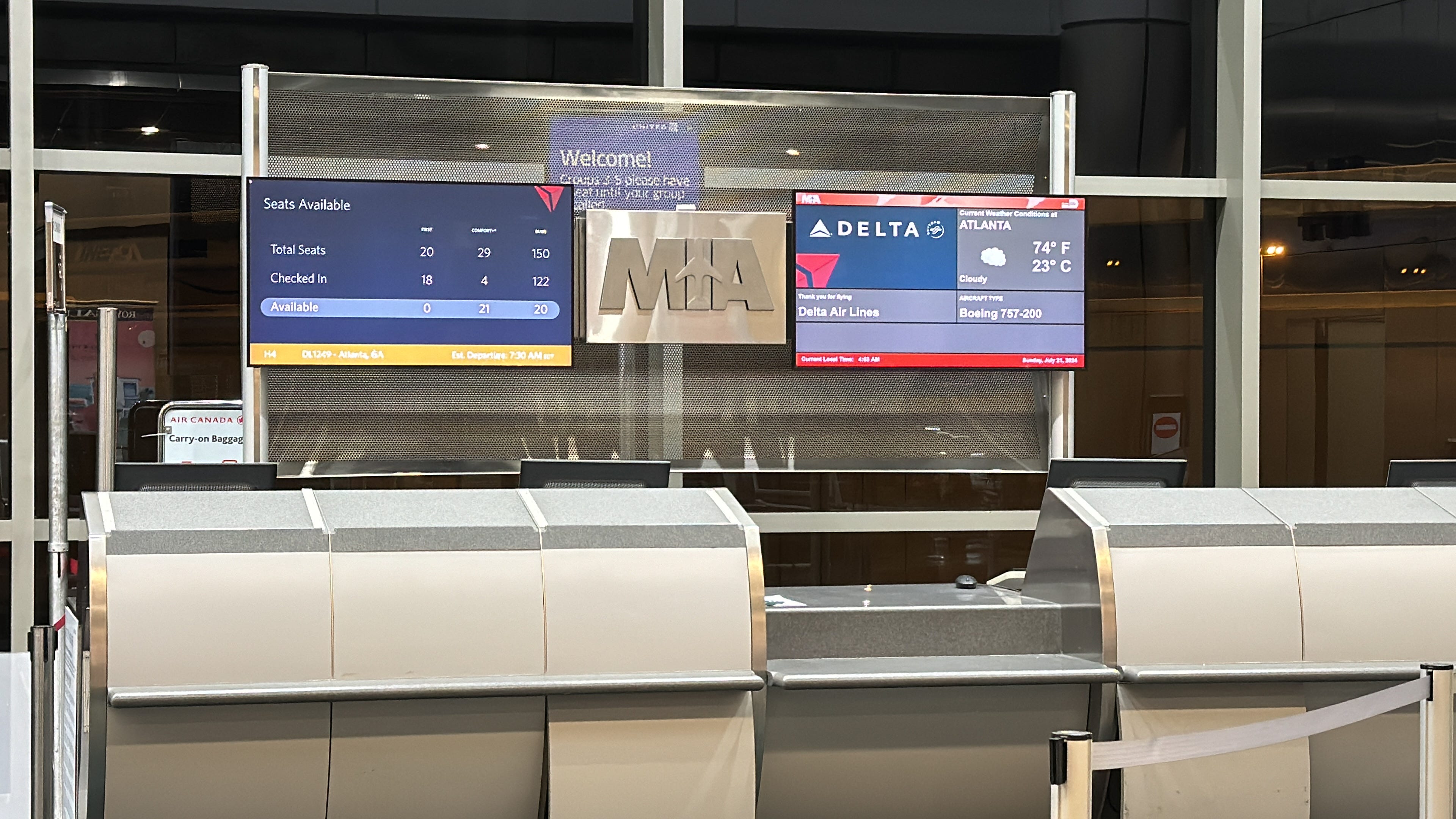
Now to the numbers, which come from Delta and LATAM and have no independent audit behind them. I repeat them as the companies’ own claims. Between October 2022 and July 2026, the release says, the partners jointly operated 83,000 flights, offered 20.8 million seats and carried 17.4 million customers, covering 79.1 billion available seat miles and 298 million miles flown.
If you divide 17.4 by 20.8, you get roughly 84 passengers for every 100 seats offered. That is my arithmetic, and I would not call it a load factor in the strict sense, because the release does not say whether a “customer carried” means a person, a segment or a trip. Still, as a rough sense of scale, it suggests airplanes that fill up, which is the kind of problem every airline wants to have. If you want to see how thin the margin usually is when planes do not fill, I wrote about how an airline barely makes money on a ticket.
The growth numbers are more interesting. Combined capacity in 2026 stands roughly 31% above 2023. Brazil leads the large markets with nearly 33%, Ecuador shows 64%, Peru 25%, and Colombia and Chile about 10% each. Argentina joined in 2025, and the release says combined capacity there grew almost 47% in 2026 compared with 2025. Argentina deserves a note of its own. It entered the partnership in 2025, three years after the launch, and the release treats its 47% jump as a result.
A late entrant growing that fast in a single year says something about how much room existed once the two networks could be sold together. It could also reflect a low starting point, and the release does not say which.
Two other things strike me about this list. First, the baseline matters: 2023 is the year the venture was already running, so the growth describes expansion inside the partnership and says nothing about the market as a whole. Second, a single percentage hides the starting size. Ecuador’s 64% and Brazil’s 33% are very different amounts of metal.
The release also counts 28 joint routes and names a handful as examples: São Paulo to Los Angeles, Bogotá to Orlando, Guayaquil to New York, Buenos Aires to Miami, Atlanta to Cartagena, Rio de Janeiro to New York and Lima to Salt Lake City. It does not say which of them are new, and it gives no frequencies, so I will not rank them.
InsideFlyer’s summary repeats most of these figures and mentions that growth could draw on LATAM’s A321XLR and on Delta’s fleet upgrades for thinner long-haul routes, but it credits another outlet as its source, so I treat that as a hint and not as a plan.
One more number deserves a raised eyebrow, and a fair one. LATAM’s chief commercial officer, Ramiro Alfonsin, says the share of passengers who would recommend traveling with LATAM and Delta has increased by 50% since the partnership launched. The release does not give the survey, the sample or the starting point. A 50% increase from a low base and a 50% increase from a high base tell very different stories.
I have no reason to doubt the claim, and I have no way to check it, so it stays in the column labeled “claimed by the people who run it.”
The map had a hole in California, and then it did not

Here is where I think the venture shows its value most clearly, and it is a route I care about. In November 2022, the two airlines announced a nonstop flight between São Paulo and Los Angeles as the venture’s first new market.
Travel press at the time reported that LATAM would be the only airline operating a nonstop flight between Brazil and Los Angeles, with a Boeing 777-300ER and three weekly frequencies. The first flight went out on August 1, 2023, and the Spanish-language trade outlet Aviacionline described it as the return of flights between Brazil and the west coast of the United States.
Three years later, the route has grown. According to Aviación al Día, LATAM planned one extra weekly frequency to reach five a week from June 2026. I looked for any other nonstop flight between Brazil and California in LATAM’s 2026 plans and found none, and Los Angeles is the only California destination in that announcement.
So the careful way to say it is this: the only nonstop flight between Brazil and California that I could find is the one that exists because of this partnership. I cannot prove that nobody else flies the route, and I would not want a reader to quote me as if I had.
I should say here that VOLL has been a commercial partner of both Delta and LATAM for more than ten years, so I am not a neutral reader of an anniversary release from either of them. I tried to keep that in mind while checking every claim, and I leave the weighing to you. I also have no VOLL booking data to add to this piece, which is a deliberate choice. What I have is a view of the route from the other side of the screen, where people build trips and ask for the shortest path to a meeting.
For a corporate traveler, a California nonstop changes the arithmetic of a trip. Silicon Valley, the studios, the ports and a long list of companies sit in a time zone that many São Paulo teams reach through a connection in Miami, Atlanta or Houston. A direct flight takes away a stop, a second boarding and a margin for error.
Many travelers will still choose a connection for price or schedule reasons, and that is fine. The value of the route is the option itself. A network is richer when the traveler has a choice about how many airplanes to trust.
Boston was already there, and that is the point

The second route I wanted to look at is São Paulo to Boston. Here I need to be exact, because it would be easy to give the venture more credit than it deserves. One Mile at a Time reports that LATAM has flown Boston to São Paulo since 2018, four years before the joint venture began.
The route is older than the partnership. In early 2025, Delta operated it for a limited period, from January 6 to March 27, replacing LATAM with the same timings, and LATAM then returned. According to Aviación al Día, LATAM planned four weekly frequencies to Boston from May 2026.
I find this story more instructive than a clean success story would be. The release lists the routes it celebrates and Boston is not among them, so I will not say the venture created the route. What the Delta swap shows is the part of the partnership that travelers rarely see: the two carriers can trade a flight, keep the schedule, and let the customer carry on. A passenger booked on that route in January 2025 could have flown a Delta airplane where a LATAM airplane had been, and the trip still made sense. That flexibility belongs to the partnership even when the route does not.
The destination also matters on its own. According to a report by The Boston Foundation, published in October 2024 with the Instituto Diaspora Brasil, Massachusetts has the second-largest Brazilian population in the United States, behind only Florida. The page I read does not give the headcount or the dataset, so I will not quote numbers. The qualitative point is enough.
I imagine a route to Boston serves a mix of people: families visiting relatives, students and researchers, and professionals on business, all sharing the same cabin. I have no passenger data to prove that mix, so take it as the guess of someone who works in travel. A blend of purposes is what usually keeps a long route alive between the busy weeks.
A route that predates the partnership and still benefits from it is, to my mind, the best argument for the model. It is easy to be impressed by a launch. It takes more to make an existing flight better, with a partner that can step in, share the loyalty experience and keep the booking in one place.
What a travel manager can take from two airlines behaving like one

Let me turn this into something a company can use, without prescribing anything. A joint venture of this kind changes at least three things in the way a corporate program thinks about air travel in the Americas.
The first is loyalty. When an employee’s status travels across two airlines, the employee has a reason to stay inside the pair, even when a competing fare looks a little cheaper. I wrote before about what happens to loyalty programs, and the lesson here is that a program with a partner is a larger program, with more flights that count. A policy that ignores that fact may be asking travelers to give up something they value in exchange for a saving that is hard to see on the invoice.
The second is the idea of the preferred carrier. A company that thinks in terms of a single airline for a corridor now has a pair to think about. The release does not describe any corporate agreement, so I cannot tell you how those deals are structured, and I would not pretend to. I would only say that the buyer’s question changes from “which airline?” to “which network?” when two networks behave as one for the traveler.
The third is the traveler’s tolerance for friction. People already put up with a lot, and I have argued in the past that what the traveler wants from an app is a trip that simply works. A joint venture is that same principle applied at the scale of airlines. The ticket, the miles and the benefits behave as one; the operation stays with whoever flies the leg. When it works, the traveler remembers nothing, and in this industry forgetting is the highest compliment.
A fair reading also needs the limits. In my own trips, the flying and the airport check-in stayed separate, each handled by the company operating the leg. That is a reasonable division of labor, and it tells a travel manager where the seams still are. When a delay hits the second airplane, the airline operating that leg is the one running the operation, and the traveler is better served if the company’s duty-of-care process knows both names.
I would ask the team that supports travelers, whether internal or external, a simple question: when a connection spans two carriers, who calls the traveler, and in which language, at which hour? The answer will tell you more about your program than any anniversary figure.
There is a regional angle I like, and it deserves its own sentence. This venture is a case of a Latin American airline sitting at the table as a full partner of a large American carrier, with a growth rate in Brazil that the release puts at nearly 33% in three years. I wrote in October about a Latin American airline and the consultancy advising it, and the same idea applies: the region keeps producing models that other markets now study.
The number under the number
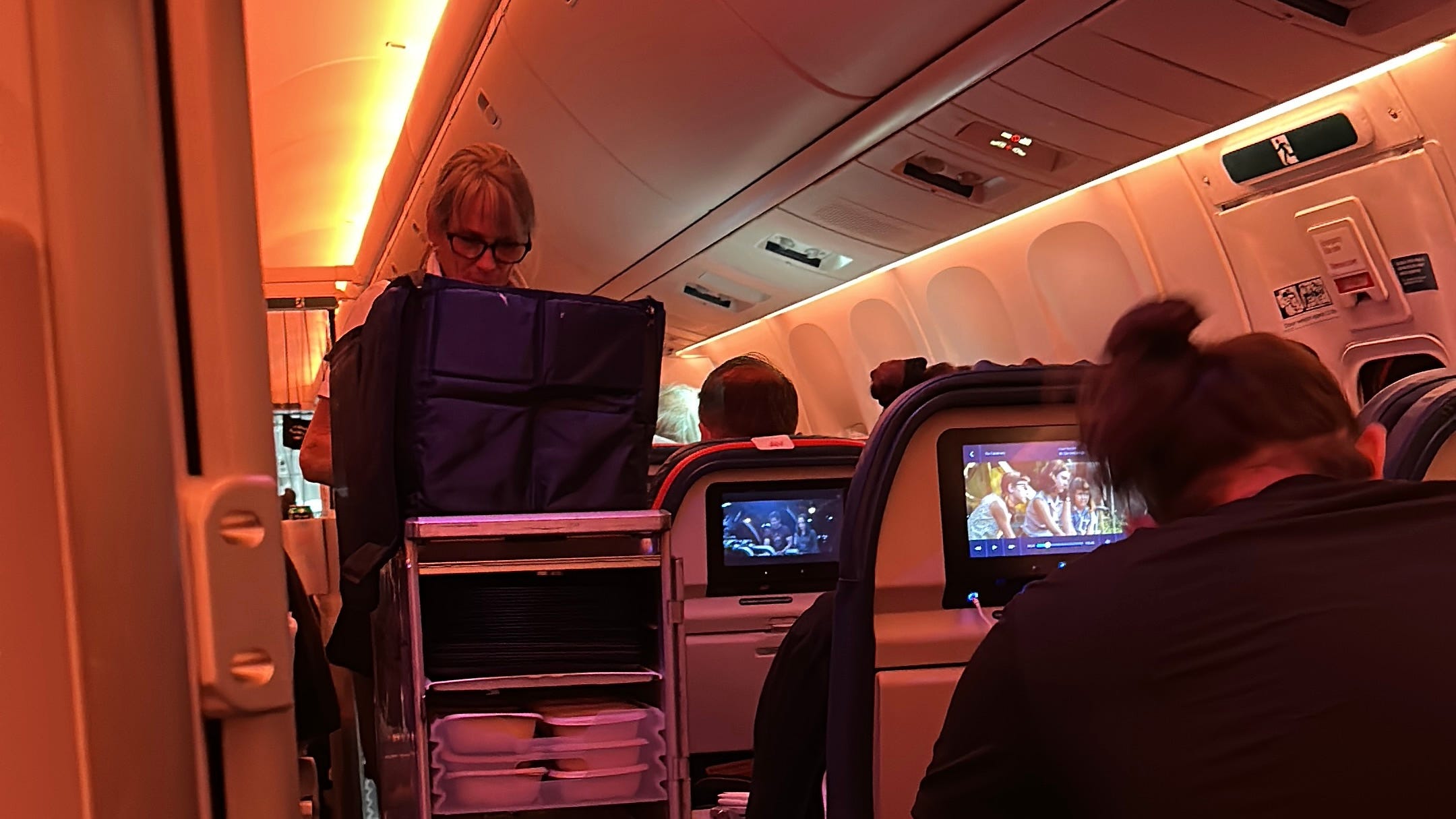
I started with a ticket and I would like to return to it, with the 17.4 million in mind. It is a large number, and I have just spent a few thousand words handling it with care, because the airlines reported it and nobody outside them has audited it. Under it sits a simpler fact. Every one of those customers stood at a gate at some point and boarded an airplane without having to ask whose airplane it was.
I do not know how many of the 17.4 million were mine. I know that the ones I remember are the ones where there is almost nothing to remember: a booking, two airplanes, one trip, and status that came along without being asked. If the next four years go as the airlines hope, with more routes, more frequencies and, perhaps, newer airplanes for the thinner markets, the best result will be that more people forget which of the two companies they flew with.
That would be the proper measure of a joint venture, and it will never appear in a press release like the one that started this piece.
About me

I am an entrepreneur with over 20 years of experience at the intersection of tourism and technology. I am co-founder and Chief Business Officer of VOLL, the largest mobile-first corporate travel and expense management platform in Latin America, where I lead the commercial strategy behind our AI adoption.
A first-cohort graduate of The AI-Powered Organization at Stanford Graduate School of Business and a Marketing specialist from Fundação Dom Cabral, I serve on the Tourism Council of FecomércioSP and on the Executive Council of the Latin American Association of Corporate Events and Travel Management (Alagev). I write and speak about innovation, digital transformation, entrepreneurial leadership, and the future of corporate travel.
Discussion about this post