A Latin American airline says it fit itself into your pocket. I believe the ambition more than the arithmetic
A big Latin American carrier rebuilt around AI and posted dazzling numbers. The rebuild convinces me more than the metrics do.

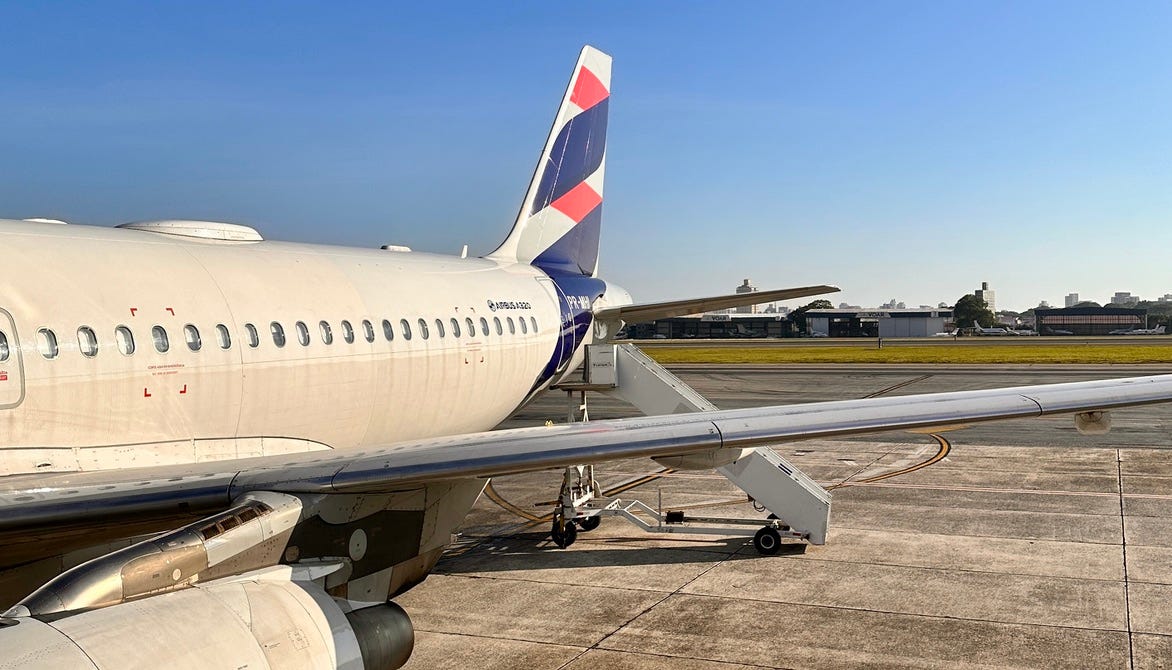
There is a particular kind of corporate story that arrives wrapped so neatly that your first instinct should be to unwrap it slowly. A consulting firm publishes a case study about a client, every chart points up and to the right, and the transformation sounds less like a hard decade of work and more like a light being switched on. I read one of these this week, and I read it twice, because the subject genuinely interests me and the framing genuinely does not.
The subject is LATAM Airlines rebuilding itself around digital and AI, described in a McKinsey case study as becoming, in its own phrase, an airline in your pocket. The framing is the usual tidy triumph, and the gap between those two things is where the interesting conversation lives.
I want to be clear about my own position before I start poking at it. I love aviation, I fly the carriers of this region constantly, and I run a company on the corporate side of travel, so a Latin American airline reinventing itself around technology is exactly the kind of story I am predisposed to cheer for. That is precisely why I am making myself slow down. The admiration is easy. The useful part is separating what actually happened from how it is being sold, and asking what, if any of it, travels beyond one airline’s annual-report glow.
What the airline actually rebuilt
Strip away the polish and the substance underneath is real, and more interesting than the slogan. The case describes an airline that concluded its problem was not any single aging system but how its systems and its teams worked together, and chose a holistic rebuild over another round of incremental patches. That is a genuinely mature diagnosis, and a rare one, because the incremental patch is always the cheaper quarter’s decision. According to the figures LATAM reports, the result is an operation where more than 90 percent of changes, refunds, and check-ins now happen automatically, across a network of roughly 1,600 daily flights and more than 80 million passengers a year.
The honest version of this story is that the airline moved an enormous amount of routine work off human desks and onto software, and let customers serve themselves for the things software does well. I have argued before that the traveler was never really begging for another app to fight with, and the nuance here matters. Self-service is a gift only when the machine genuinely handles the task, and a quiet insult when it dumps the task back on you with a chatbot’s smile.
The reported reduction in people phoning the airline suggests LATAM landed mostly on the right side of that line, which is harder than any press release makes it sound. Rebuilding the plumbing of a carrier this size without the whole thing leaking is a serious engineering achievement, and it deserves to be named as one before anyone argues with the scoreboard.
The numbers are dazzling, which is why I slowed down

Now the scoreboard. The case study reports ancillary revenue up more than 70 percent, customer contact rates down about 60 percent as travelers shifted to digital channels, a satisfaction score that climbed to 65, and, my favorite of the bunch, more than 1,400 additional aircraft days recovered through smarter maintenance, which the study frames as the rough equivalent of adding three planes to the fleet without buying any. On the cargo side it cites product cycles shrinking from months to days. Read quickly, it is a flawless run.
Read slowly, a few habits of mine kick in, and none of them are cynicism. The first is simply the source of record. These are the airline’s own numbers, presented by the consultancy that helped produce the transformation, in a document whose quiet purpose is to attract the next client.
That does not make the figures false. It makes them unaudited and selectively framed, which is a different thing, and the right response is not to dismiss them but to hold them at arm’s length and read the sponsorship the way you would read any marketing. A satisfaction score that rose to 65 invites the obvious question of where it started, which the case does not say. A 70 percent jump in ancillary revenue is impressive and also the metric an airline most wants to grow, so it is worth asking how much of it is better service and how much is simply more things to click yes to on the way to checkout.
I am not accusing anyone of anything. I am saying that a number designed to be quoted should be quoted with its context attached, and transformation metrics that arrive without a baseline are a direction, not a measurement. The achievement can be real and the scoreboard can still be a sales document. Both are true at once.
Why a Latin American carrier doing this matters
Here is where I stop being a skeptic and start being, frankly, a little proud. Set the self-reported gloss aside, and what remains is a flag carrier from this region attempting a technological rebuild at a scale that the older narrative says should come from somewhere else first. That narrative is wrong, and stories like this one are part of why I keep saying so. I have made the case repeatedly that Latin America is an unusually good place to be building right now, and the reason is visible in exactly this kind of project.
The region does not lack ambition or talent. What it has lacked is the habit of telling its own reinvention stories loudly enough that they shape expectations.
A Latin American airline deciding its core problem was organizational rather than cosmetic, and then spending years rebuilding accordingly, is a data point worth more than any single revenue figure. It says the appetite for deep structural change exists here, not as a slogan but as a budget and a roadmap. The lazy framing would call this the region catching up. I would call it the region doing the work, under harder conditions than the markets it is usually compared to, and getting somewhere real.
The number I would actually celebrate is not the 70 percent. It is the decision, early on, to treat the whole operating model as the thing to fix, because that decision is the one most companies anywhere are too impatient to make.
Automation is the easy half, autonomy is the point

The slogan that stuck with me was not any statistic but the idea of the airline in your pocket, and underneath it sits a distinction I think about constantly. Automation moves a task from a person to a machine. Autonomy hands the decision back to the customer, so the traveler reschedules the flight, finds the fare, fixes the booking, without asking anyone’s permission or waiting in anyone’s queue.
The case frames the whole effort around that second idea, and even borrows a line from its CEO about customers experiencing the change as, in his phrase, the absence of friction. It is a good phrase, and it points at the right target.
It also happens to be the harder target by a wide margin, which is why I trust the ambition even where I question the metrics. Removing friction from an airline is brutally difficult, because an airline is a machine for generating friction: weather, delays, missed connections, aircraft swaps, the thousand small ways a journey deviates from its plan.
I have written about how the real triumph in aviation has always been making distance itself stop feeling like an obstacle, and frictionlessness is the modern version of that same quiet magic. When it works, you do not notice it, which is the entire point and also the reason it is so easy to undervalue. An airline that genuinely gives its travelers autonomy over the routine ninety percent of their journey has done something that no satisfaction score fully captures, for better and occasionally for worse.
What the frictionless story leaves out
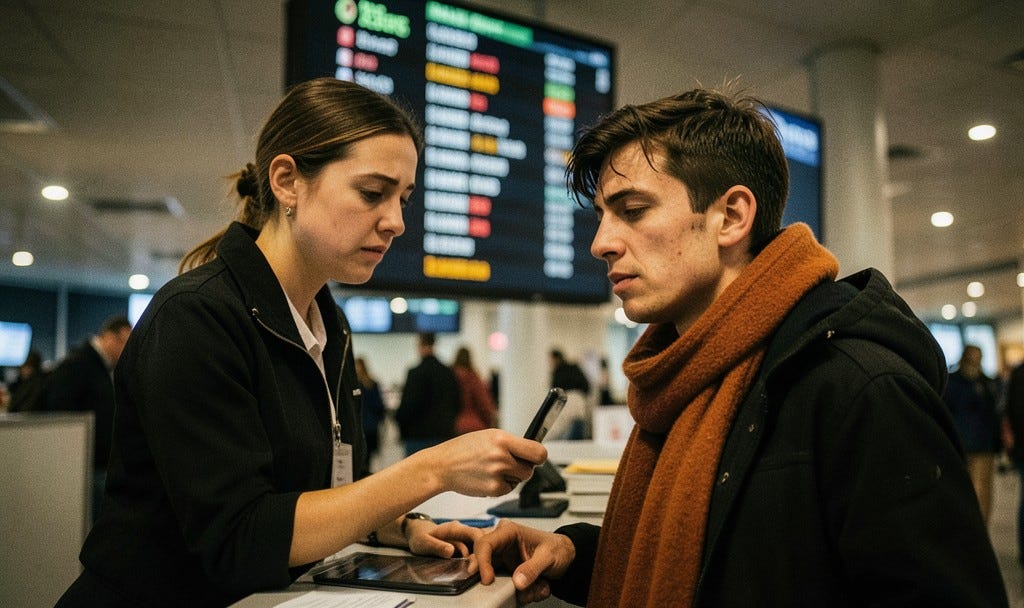
Every frictionless narrative has a part it would rather you skim, and this one is honest enough to include it, if you read closely. The same transformation story acknowledges that when operations break down, the result was long queues, manual workarounds, and frustrated passengers. That admission is the most useful sentence in the whole document, because it quietly concedes the limit of the entire project. Automation is spectacular at the routine and exposed at the exception, and travel is a business defined by its exceptions.
This is the piece the technology narrative always undersells. When your flight is cancelled at eleven at night in a city you did not plan to sleep in, the airline in your pocket can rebook you, but it cannot read the particular shape of your bad day, cannot decide that this traveler, this time, needs the rule bent.
That judgment is human, and it does not get cheaper or more abundant just because the routine work around it got automated. I have written about what a great front-desk person understands that no algorithm has yet replaced, and the lesson applies at 35,000 feet exactly as it does at a hotel counter.
The airlines that win the next decade will be the ones that use automation to clear the routine work off their people’s plates precisely so those people are free and rested and present when the exception arrives. The frictionless app is the easy half. The human waiting behind it, for the moment the app cannot handle, is the half that actually earns loyalty.
Where I sit, and what travels from an airline to a travel program
I will declare my interest plainly, because the lesson here lands close to my own work. The company I helped build spends its days putting this same kind of intelligence into corporate travel and expense management, so when I read a transformation story like LATAM’s, I am reading it partly as a practitioner looking for what generalizes.
And the thing that generalizes is not the technology. It is the diagnosis.
The reason that airline’s rebuild is interesting is that it started by deciding the problem was the whole operating model, not a missing feature, which is the same conclusion I keep reaching about corporate travel. I have argued that the real value in this business hides in the structure underneath rather than the interface on top, and LATAM’s story is that argument told at the scale of a continental airline.
A travel program that bolts an AI chatbot onto a broken process gets a faster path to the same mess. A program that does what that airline claims to have done, rebuilding how the systems and the people actually work together, gets something that compounds. The unglamorous truth, the one no case study leads with, is that the technology is the easy part and the organizational redesign is the whole job.
That is as true for a mid-size company’s travel policy as it is for a carrier flying eighty million people a year. The tools are increasingly commodity. The willingness to rethink the structure underneath them is still rare, and still the only thing that separates a real transformation from an expensive new login screen.
The ambition is the real headline
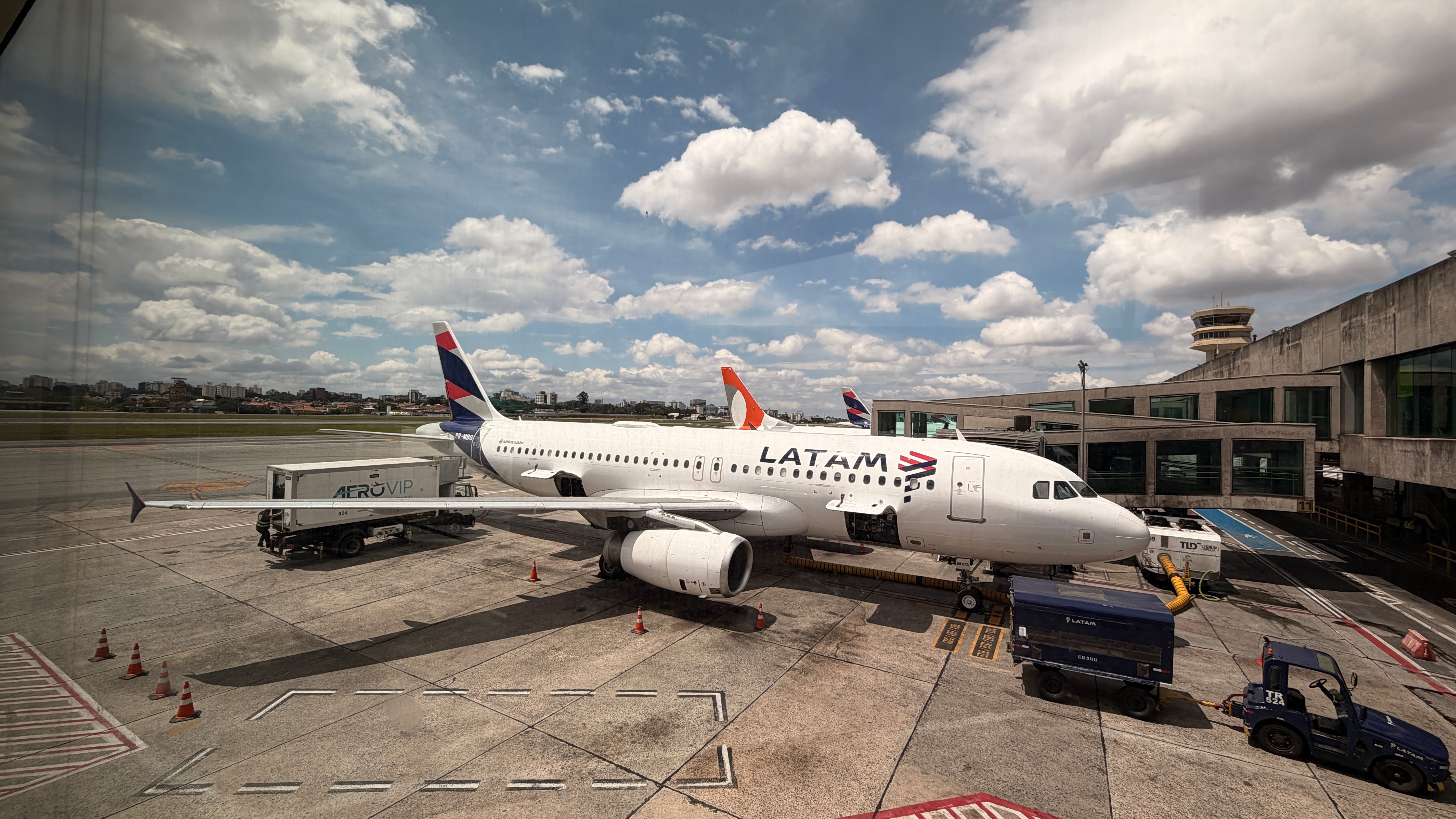
So I come out of this story admiring it and distrusting the way it is packaged, which is not a contradiction. The metrics are a sales document and should be read as one, with their missing baselines and their flattering framing noted politely and set aside.
The ambition underneath them is the real news, and it is genuine. A Latin American airline looked at its own aging machinery, decided the honest fix was the hardest and slowest one, and spent years on it rather than buying another quick feature to paper over the cracks. That is the headline I would run, and it has nothing to do with any percentage.
For the rest of us, the ones building travel programs and companies and products in this region, the lesson is not to chase the airline in our pocket. It is to copy the diagnosis, not the demo. Fix the structure, give people genuine autonomy over the routine, and keep your best humans rested and ready for the exceptions that no amount of automation will ever absorb, because the exceptions are where the experience travelers refuse to give up is won or lost.
The airline put a version of itself in your pocket, and that is a real achievement. What it could not fit in there is the part that will always matter most, which is the human judgment waiting for the moment the pocket-sized version runs out of answers.
About me

I am an entrepreneur with over 20 years of experience at the intersection of tourism and technology. I am co-founder and Chief Business Officer of VOLL, the largest mobile-first corporate travel and expense management platform in Latin America, where I lead the commercial strategy behind our AI adoption.
A first-cohort graduate of The AI-Powered Organization at Stanford Graduate School of Business and a Marketing specialist from Fundação Dom Cabral, I serve on the Tourism Council of FecomércioSP and on the Executive Council of the Latin American Association of Corporate Events and Travel Management (Alagev). I write and speak about innovation, digital transformation, entrepreneurial leadership, and the future of corporate travel.
Discussion about this post