



For years, the travel industry talked about “bleisure” the way it talks about most things: as a trend, a buzzword, something to put on a conference slide and forget. The blending of business and leisure travel was treated as a nice-to-have, a soft benefit, the kind of thing you mention in a wellness section of the employee handbook. I want to argue that this framing is now obsolete, and that the data has quietly moved bleisure from the margins to the center of how corporate travel actually works.
The clearest way to see this is in the numbers, so let me lay them out before interpreting them.
What the global numbers say
Start with adoption, which has crossed the threshold from minority behavior to majority behavior. According to GBTA, the Global Business Travel Association, bleisure now appears in 60% of US managed business trips, up from 43% in 2019. When a behavior shows up in three out of five managed trips, it is no longer an exception to the business trip. It is a property of the business trip. Other surveys put the appetite even higher: one US study found that 84% of travelers wanted to include vacation time on their next corporate trip, and a Navan and Skift report found that 55% of business travelers took at least two blended trips in a single year.
Then look at the market behind the behavior. The global bleisure market was valued at around $816 billion in 2025 and is projected to reach roughly $962 billion in 2026, growing at a double-digit annual rate. These are not the numbers of a passing fad. They are the numbers of a structural shift in how a very large category of travel is being consumed.
And the demographic signal underneath is the part that should make any employer pay attention. The appetite for blended travel is not evenly distributed. It concentrates sharply among the people entering and rising through the workforce. By one figure, 59% of Gen Z and 65% of millennial workers choose employers specifically for blended travel flexibility. GBTA has found that millennials are the age group most likely to take bleisure trips. This means bleisure has quietly become a recruitment and retention lever, not just a travel-policy footnote. When the majority of your younger talent is factoring travel flexibility into where they choose to work, the design of your travel program has become a question of talent strategy.
So that is the global picture: majority adoption, a near-trillion-dollar market, and a generational pull that ties travel flexibility to talent. Now I want to bring this home to Brazil, because the Brazilian data tells the same story from a different angle, and because the institutions tracking it deserve more attention than they get internationally.
The same story, told in Brazil
The Brazilian corporate travel market is measured carefully, in a partnership between FecomercioSP, the federation of commerce, services, and tourism for the state of São Paulo, and Alagev, the Latin American association for the management of corporate events and travel. Their joint Corporate Travel Survey is the most authoritative read on the market in Brazil, and the recent figures are striking. The sector closed 2025 with a record, around R$147.8 billion in movement, a growth of roughly 6% and the strongest result in a series that goes back to 2011. This is a market not in recovery but in consolidation, as Alagev’s own leadership has put it, having moved past the language of “rebound” into a mature, data-oriented phase.
What makes the Brazilian case relevant to the bleisure argument is the context in which this growth is happening. The same FecomercioSP and Alagev tracking shows that the blending of business and leisure is gaining force precisely as hybrid work models become permanent, and that companies are adopting the practice deliberately, as a strategy to promote wellbeing and retain talent. The Brazilian market is not importing bleisure as a foreign trend. It is arriving at the same destination as the global market, through the same door: a workforce that increasingly refuses to treat the work trip and the personal trip as separate categories.
Now, having laid out the data, I want to do the harder thing, which is to take the consequences seriously, because this is where most discussions of bleisure stop short. If bleisure is structural rather than incidental, then it changes three things about how a company has to think, and none of them are soft.
What changes when the trip blends
The first is cost and demand dynamics. When business travelers extend trips for leisure, and when the majority of trips now carry that extension, the corporate traveler is no longer moving through the calendar on a purely business rhythm. They are increasingly traveling on the same days, to the same desirable places, as leisure travelers. This collides directly with something I have written about before: the competition for inventory. When a business trip gets extended over a weekend, that traveler is now bidding for a Friday or Sunday night hotel room against tourists, in a market where, as the Brazilian data shows, hotel rates in São Paulo can exceed R$900 on high-demand days. The blending of the trip blends the traveler into the leisure demand curve, with all the price volatility that implies. A travel program that still models its travelers as moving on a clean Monday-to-Thursday business rhythm is modeling a traveler who increasingly does not exist.
The second thing it changes is policy and compliance, and this is the part that quietly leaks money. When a trip has a business portion and a leisure portion, someone has to draw the line between them, and that line is where governance gets messy. GBTA’s data is precise on the scale of this: the average bleisure extension is about 2.3 days, and while 71% of travelers who extend pay for the leisure portion themselves, 18% expense incidentals back to the employer in violation of policy. Read that 18% carefully. Nearly one in five blended trips involves a compliance leak, not out of malice but because the boundary between the business expense and the personal expense was never cleanly drawn or enforced. When bleisure was a rare exception, this leak was a rounding error. Now that it appears in the majority of trips, it is a systematic cost, and the only thing that contains it is a travel program with the clarity to separate the two portions automatically rather than relying on the traveler’s honesty and memory weeks later.
The third thing it changes is the most strategic, and it is about why companies travel at all. There is a temptation to see bleisure as travelers taking advantage, squeezing personal benefit out of company trips. The data points the other way. Research consistently links blended travel to outcomes companies actually want. By various surveys, business travelers who add leisure time report markedly better work-life balance than those who do not, a large majority of American business travelers say their travel experiences influence their overall job satisfaction, and a majority of employees say that traveling and seeing new places makes them more productive at work. In other words, the leisure extension is not a leak in the value of the business trip. It is part of what makes the business trip something employees are willing, even eager, to do. In a period where companies are fighting both to justify travel budgets and to retain younger talent, that willingness is not a soft benefit. It is the thing that keeps the whole enterprise of business travel viable.
Put those three consequences together and you arrive at the argument in the title. Bleisure is not a trend you can choose to ride or ignore. It is the new shape of the business trip, and the shape has implications for cost, for compliance, and for talent that a company cannot opt out of simply by not having a policy.
The trip no longer ends with the meeting
The choice is not whether bleisure happens. The majority data settles that. The choice is whether your travel program is designed to handle a blended trip cleanly or whether it pretends, against the evidence, that the business trip still ends the moment the meeting does.
This is why I find the institutional tracking so valuable, and why I keep pointing people toward bodies like GBTA globally and Alagev and FecomercioSP in Brazil. They are doing the unglamorous work of measuring a shift that is easy to dismiss anecdotally and hard to dismiss once you see the numbers. GBTA reports that 43% of travel programs now have formal bleisure policies, up from almost none a few years ago. That figure is rising for a reason. The programs adding formal policies are the ones that have understood that an unmanaged majority behavior is just risk, and that the way to turn bleisure from a liability into an asset is to design for it deliberately.
I will end with the reframing I find most useful. For a long time, the implicit model of the business trip was a transaction: the company buys the travel, the employee delivers the work, the trip ends, everyone goes home. Bleisure breaks that model, and the data says it has already broken it for most trips. The new model is not a transaction but a blend, where the company’s interest in a productive, retained, willing employee and the employee’s interest in a life that does not end at the airport are no longer in opposition but woven together.
The companies that see this clearly will design travel programs that handle the blend with precision: separating the expenses cleanly, planning around the new demand dynamics, treating the leisure extension as a retention asset rather than a compliance headache. The companies that do not will keep running programs built for a traveler who clocked out the moment the meeting ended, and who, according to the majority of the data, no longer exists.
Bleisure is not a trend. It is the shape of the thing now. The only question left is whether your program has noticed.
About me
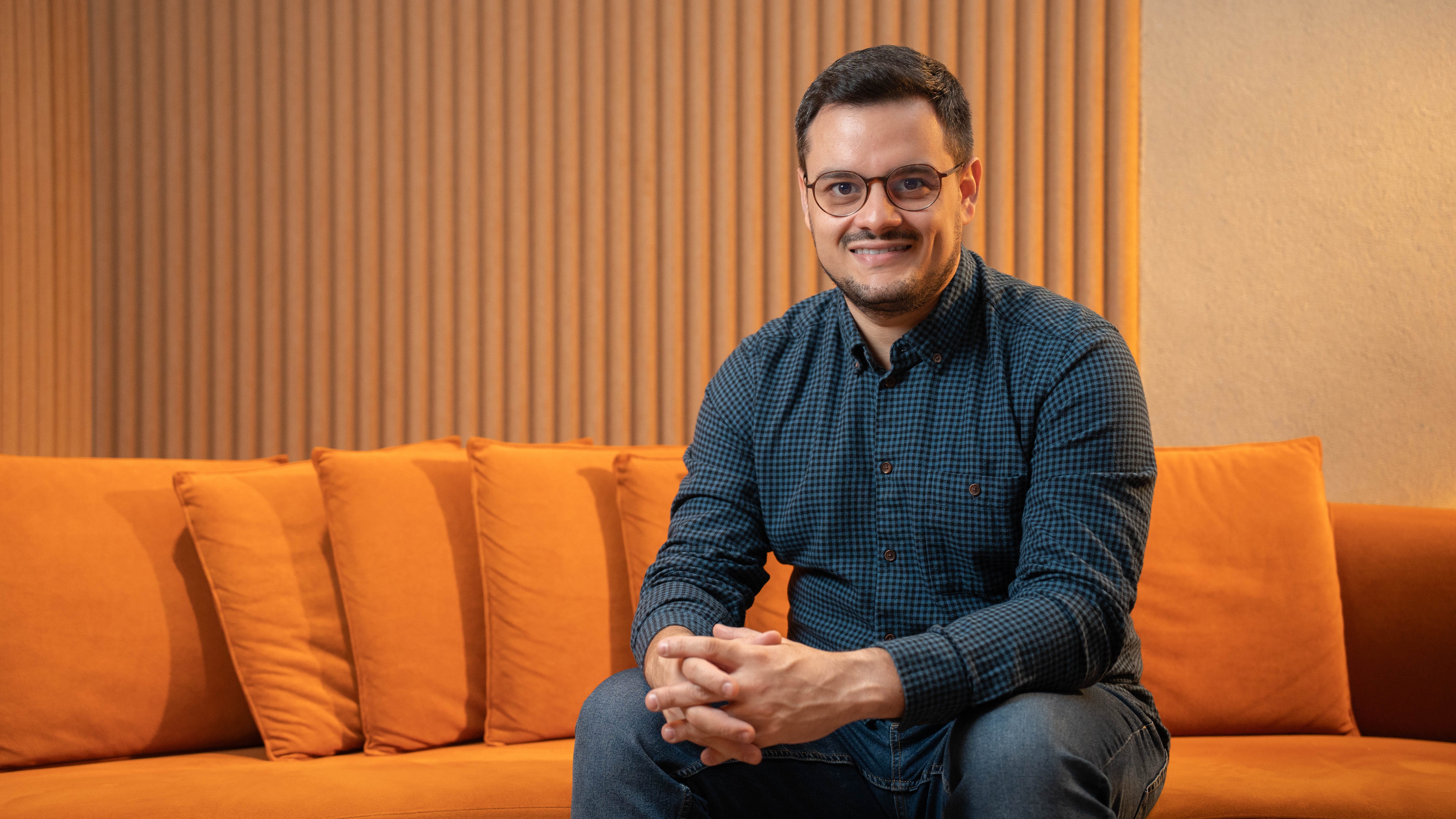
I am an entrepreneur with over 20 years of experience at the intersection of tourism and technology. I am co-founder and Chief Business Officer of VOLL, the largest mobile-first corporate travel and expense management platform in Latin America, and a recognized reference in the development of the corporate travel industry.
A Marketing specialist from Fundação Dom Cabral, I serve on the Tourism Council of FecomércioSP and on the Executive Council of the Latin American Association of Corporate Events and Travel Management (Alagev). A frequent traveler and close observer of human behavior in motion, I write and speak about innovation, digital transformation, entrepreneurial leadership, and the future of corporate travel.