


Finally, an actual conversation
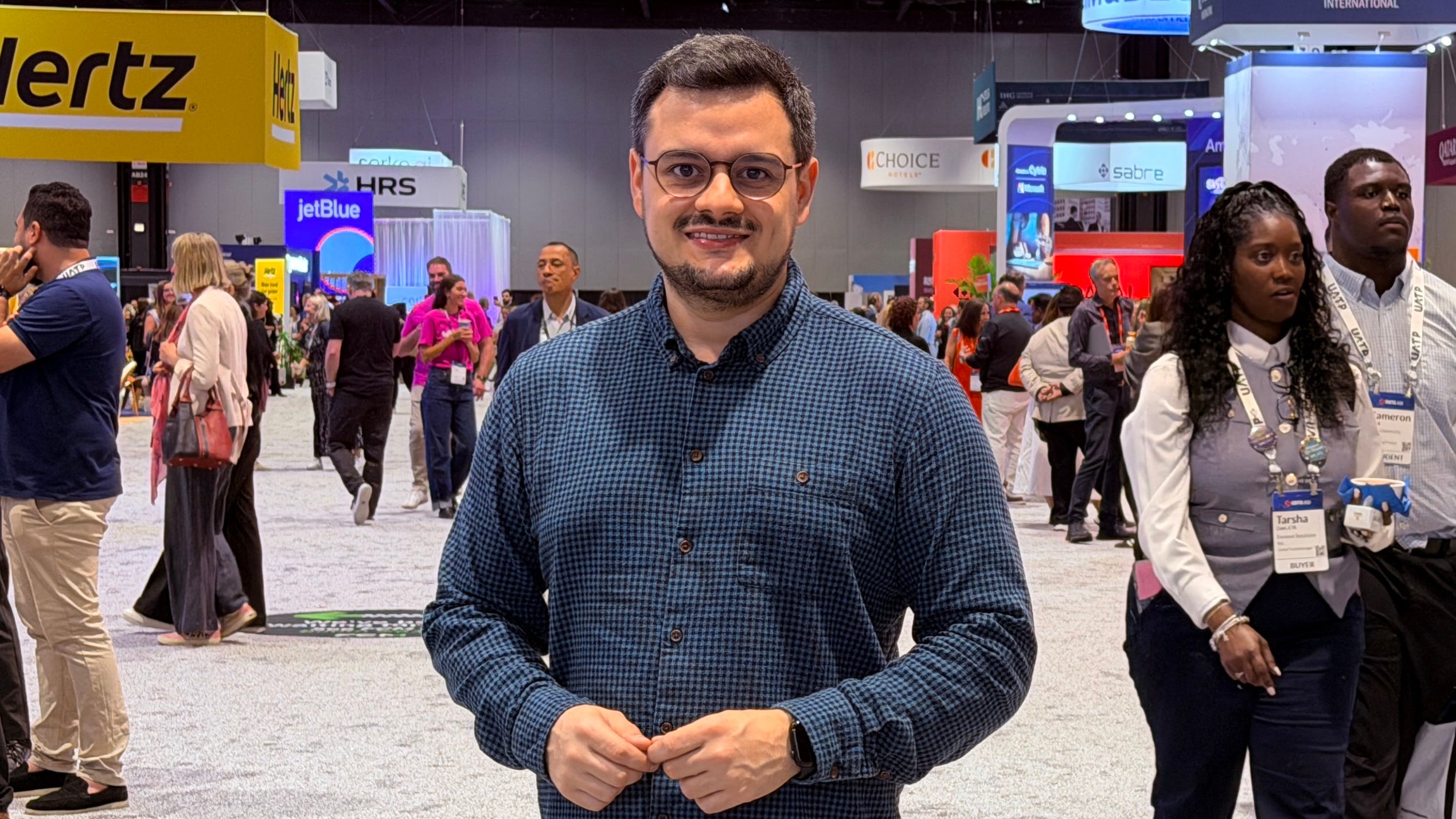
I had seen Jennifer Steinke present at GBTA conventions in Dallas, in Atlanta, in Denver, always from a few rows back, always taking notes. This year, in Chicago, I finally sat down and talked with her directly.
You notice it within minutes of being near her. There is a cognitive sharpness that is obvious even in casual conversation, and a depth of knowledge about corporate travel that goes well past program mechanics into how the entire industry actually works underneath. You also feel the weight she carries. Running the travel program for a company the size of Moderna is not a small job, and it shows in how carefully she talks about the decisions she has made.
I caught her on a panel that week, alongside another travel manager and a vendor building AI for travel agencies, discussing where artificial intelligence is actually heading in corporate travel. Both women on that stage were sharp, and the exchange was one of the more substantive conversations on AI I have heard at an industry event this year. One line from Steinke stuck with me. As I recall it, she said something close to this: change is inevitable, and she does not want to be caught flat footed by it. She would rather already have her own tests, her own validations, her own experience in hand by the time agentic AI adoption becomes something every program has to do.
That is not the language of someone reacting to a trend. It is the language of someone who has decided the trend is coming regardless of her opinion of it, and who would rather spend the runway before it arrives building evidence than spending it forming an opinion.
What she has actually built
The scale of what is behind that attitude became clear when Business Travel News named her its 2026 Travel Manager of the Year at an award ceremony in Chicago in early August, the same city where I finally met her weeks later. The system she built, which she calls Tami, for Travel and Meetings Intelligence, sits behind a natural language interface and coordinates three separate partners: an AI-first booking tool called BizTrip.ai, a data platform called Cerebri.ai, and a mid-size travel management company, Cain Travel, that handles fulfillment.
BizTrip.ai itself launched in July 2025 at the GBTA convention in Denver, one of the very conventions where I had watched Steinke present from the audience. Skift’s coverage of the launch noted that Moderna was already piloting the tool at launch, alongside travel management company Cain Travel, with backing from Andrew Ng, the Google Brain cofounder. Steinke was not an early adopter reacting to a finished product. She was in the room helping shape it before most of the industry had heard the company’s name.
The concept she built on top of that infrastructure is what she calls Policy of One. In an earlier profile, BTN described how the system assigns real monetary value to the perks tied to a traveler’s loyalty status: what lounge access is worth against a meal budget, how upgrade probability factors into whether a slightly pricier fare is actually the cheaper choice once the loyalty math is done, how a baggage fee gets absorbed by status. BTN’s vice president of content, Elizabeth West, put it simply while presenting the award: Steinke has not just implemented a program, she has provided a model for the industry.
What that model replaces is the blunt instrument most travel programs still run on, the lowest logical fare rule that technically saves money on paper while quietly making experienced travelers resent the program enforcing it. Steinke’s system can show a traveler, and their finance team, exactly why a fare that looks two hundred dollars more expensive is actually the better total-cost choice once status benefits are priced in.
The parts that do not make the highlight reel
The version of this story that circulates in industry recaps tends to stop at “she built an AI travel assistant.” What actually happened underneath that headline is less flashy and more instructive.
Steinke did not start with a vendor pitch. She started in October 2024 by manually uploading a year and a half of program data into spreadsheets, building the raw material for what she wanted Tami to become before any AI vendor was involved. Only once that foundation existed did she bring in a data specialist, Cerebri AI, to curate and normalize it, feeding it back into Tami through an API. Cerebri’s own CEO, Jean Belanger, has said the goal was giving the system access to up-to-the-minute data, since an agentic booking tool is only as good as the data foundation underneath the conversation layer.
That foundation now does things a standard travel policy cannot. When a Moderna traveler books a flight to a destination they rarely visit, say Warsaw, Tami can compare the fare against Moderna’s own historical average for that route and flag it if it comes in unusually high, suggesting an alternate day or a connecting flight instead. Steinke has described herself as a believer in internal benchmarking over generic market rates, on the logic that what matters is what a trip should cost this company, based on this company’s own travel pattern, not an industry average that has never seen Moderna’s data.
The system also reaches into hotel sourcing in a way most managed travel programs do not attempt. Moderna has two primary hotels near its Cambridge headquarters, one within walking distance and a second, cheaper option requiring an Uber or shuttle. Rather than simply mandating the cheaper property, Steinke worked with that hotel to build in extra incentives, additional loyalty points, food and beverage perks, so Tami can show travelers exactly how much they personally save the company by choosing it, alongside what they gain for choosing it. Kelvin Woo, director of national sales at the Hyatt Regency Boston Cambridge, one of Steinke’s supplier partners, described the relationship as one where she has been explicit about what she needs and the hotel has learned to anticipate it before being asked.
There is also a small human detail buried in the BTN coverage that says something about how the tool actually lands with travelers. As the pilot expanded past its initial twenty users toward the more than two hundred using it today, Steinke noticed travelers referring to Tami by name, the way you would talk about a colleague. One traveler told her Tami had become one of her best friends, and specifically praised being able to drop a conference agenda or an email into the system and have it handle the booking without further instruction. That is a strange thing to hear about a piece of enterprise software, and it is also exactly the outcome Steinke was building toward: an assistant good enough at understanding context that using it stops feeling like operating a tool.
She is not building this alone in the industry
It would be easy to read Steinke’s award as a story about one unusually capable person outpacing everyone else in her field. The same ceremony that named her Travel Manager of the Year also recognized three Best Practitioners, and looking at what they were rewarded for makes clear this is a broader inflection point in corporate travel, not a single outlier.
Google’s head of travel, Rob Bray, spent the past year working through the technical detail of integrating a large, complex travel program onto a new joint platform from Amex GBT and Concur, pushing on content and NDC connections to bring consumer-grade booking parity to a corporate tool. McDonald’s global travel manager, Koreen Barbara, took the opposite approach from consolidation, deliberately keeping two travel management partners rather than one, so she could place a majority of the program on newer, innovation-forward platforms while those tools were still maturing toward full global capability. Adobe’s Kathy Burdge inherited a contract with a travel platform still facing industry skepticism and, according to the vendor’s own head of travel marketplace, effectively became the enterprise voice pushing that product toward the reporting and workflow improvements that made it credible for larger, more complex programs.
None of those three stories is really about AI as a feature. They are about travel managers willing to sit inside a vendor relationship long enough, and specifically enough, to shape the product rather than simply adopt it. Steinke’s version of that same instinct just went further, because she had already spent nearly a decade building the internal discipline, the data, the sense of what her travelers actually needed, that made her ready to co-build a tool from the ground up rather than wait for one to arrive finished.
The throughline nobody mentions
What most coverage of Steinke’s award misses is that this is not a sudden pivot toward artificial intelligence. It is the same three priorities she has been building around for close to a decade, executed with tools that finally exist.
Back in 2017, when Steinke ran the corporate travel program at Dycom Industries and won a different industry recognition, the pillars she had already organized her program around were safety, service, and savings, with a duty of care communication network built specifically to protect travelers during disruption across dozens of company locations. There was no AI available to her then that could do what Tami does now. What she had instead was a clear model of what a travel program owed its travelers, built years before the technology existed to fully deliver on it.
That is the part of her story I find most instructive, more than the AI itself. The technology changed. The underlying judgment about what a good travel program protects did not.
Why this matters beyond one company
I have written before about the difference between augmentation and automation, a distinction I picked up hearing about at Stanford this year: augmentation is AI that extends human judgment, automation is AI that replaces it. Steinke’s system is a clean example of the former. The traveler still decides. The system just makes the tradeoff visible in a way it never was before, in real time, at the exact moment the decision is being made.
That has a direct implication for how a company should think about building or buying its own version of this. The hard part was never the language model. It was building a data foundation clean enough, and a loyalty and policy structure detailed enough, to feed it something worth acting on. Steinke spent years accumulating that foundation before the interface existed to make use of it.
Every regional dataset I work with at VOLL, the corporate travel and expense management platform I cofounded, points to the same lesson from a different angle. Latin American companies adopt new travel technology quickly, often faster than their US counterparts, but the data discipline underneath it tends to arrive later. Steinke’s decade-long build suggests the order matters more than the speed. The data foundation has to come first, or the AI layered on top of it has nothing real to work with.
This is already showing up in Brazil, not just in theory
The same pattern Steinke is proving out at Moderna is starting to show up, on a smaller scale, among corporate clients in Brazil. At VOLL, we launched a marketplace of narrow, single-purpose AI agents last year called VOLL SmartHub, covered at launch by Brazil Journal, a piece of sponsored content we published rather than independent reporting, so I want to be upfront about that distinction. One of those agents, RatesAudit, continuously tests whether hotels are actually honoring the negotiated rates a company signed, since a rate that looks locked in on paper can quietly disappear from availability without anyone noticing until someone pays full price.
Cogna Educação, one of the clients running RatesAudit, published its results through the Brazilian trade outlet PANROTAS: 92 percent of its bookings now issue online, a traveler satisfaction score of 93, and more trips taken without an increase in budget. None of that is Steinke’s scale of system-building. It is a single narrow agent doing one job continuously that no finance team was ever going to check by hand. But it is the same underlying bet: that the useful version of agentic AI in corporate travel is not a general assistant, it is a specific, auditable worker assigned to the one blind spot a human team could never watch closely enough.
Back in Chicago

I have written before about what three days in Chicago taught me this year, and about a number that ended up on a screen there. Meeting Steinke in that same city, after years of watching her from a conference audience, felt like a fitting place to finally close the loop.
Watching someone build toward a vision for a decade before the tools exist to realize it is rare enough to notice when it happens. Watching them then win the industry’s biggest individual award for finally getting to use those tools is rarer still. Steinke’s answer to a technology arriving faster than anyone expected was not to catch up. It was to already be ready, because she had never stopped building toward it.
About me
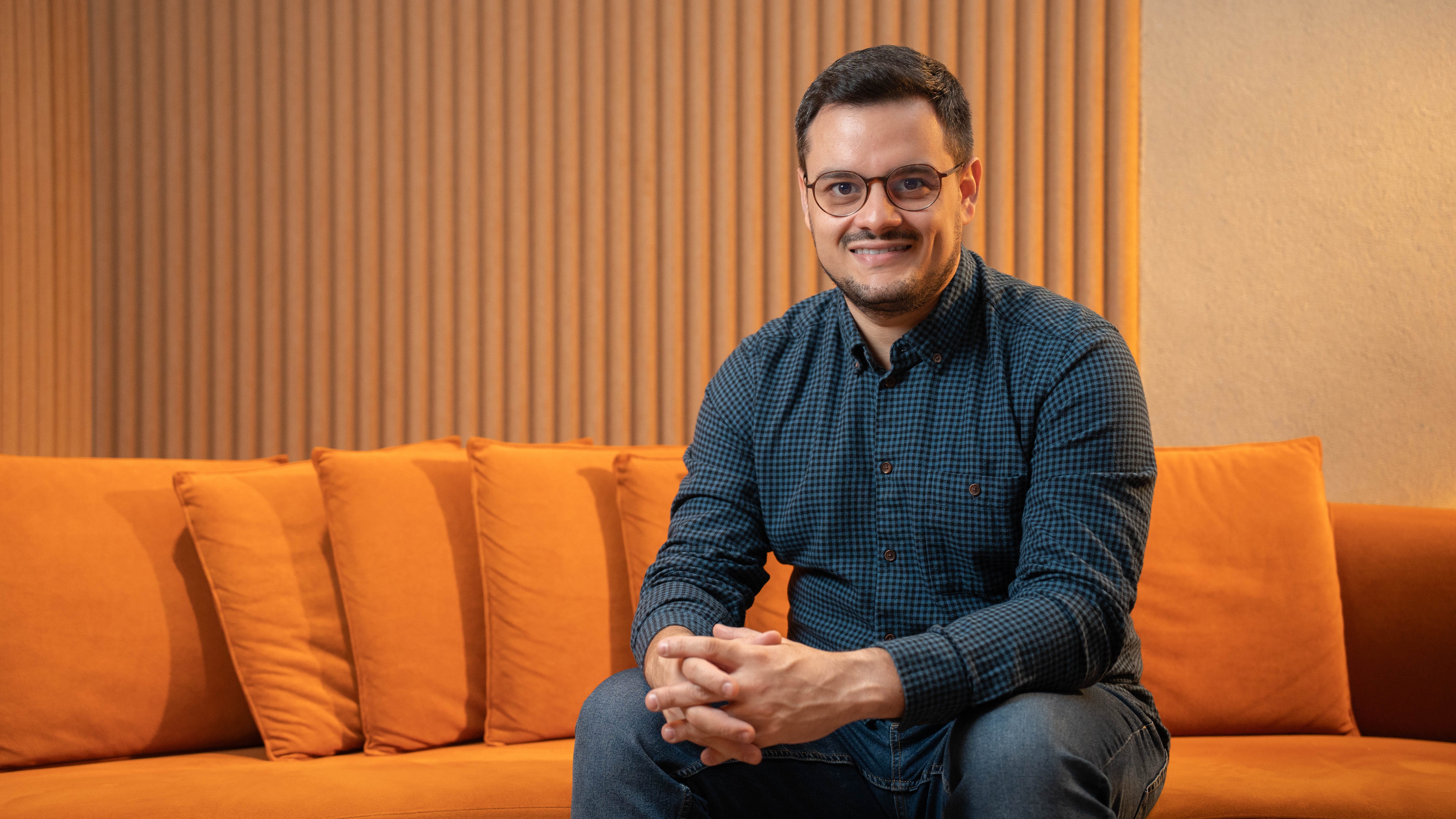
I am an entrepreneur with over 20 years of experience at the intersection of tourism and technology. I am co-founder and Chief Business Officer of VOLL, the largest mobile-first corporate travel and expense management platform in Latin America, and a recognized reference in the development of the corporate travel industry.
A Marketing specialist from Fundação Dom Cabral, I serve on the Tourism Council of FecomércioSP and on the Executive Council of the Latin American Association of Corporate Events and Travel Management (Alagev). A frequent traveler and close observer of human behavior in motion, I write and speak about innovation, digital transformation, entrepreneurial leadership, and the future of corporate travel.