


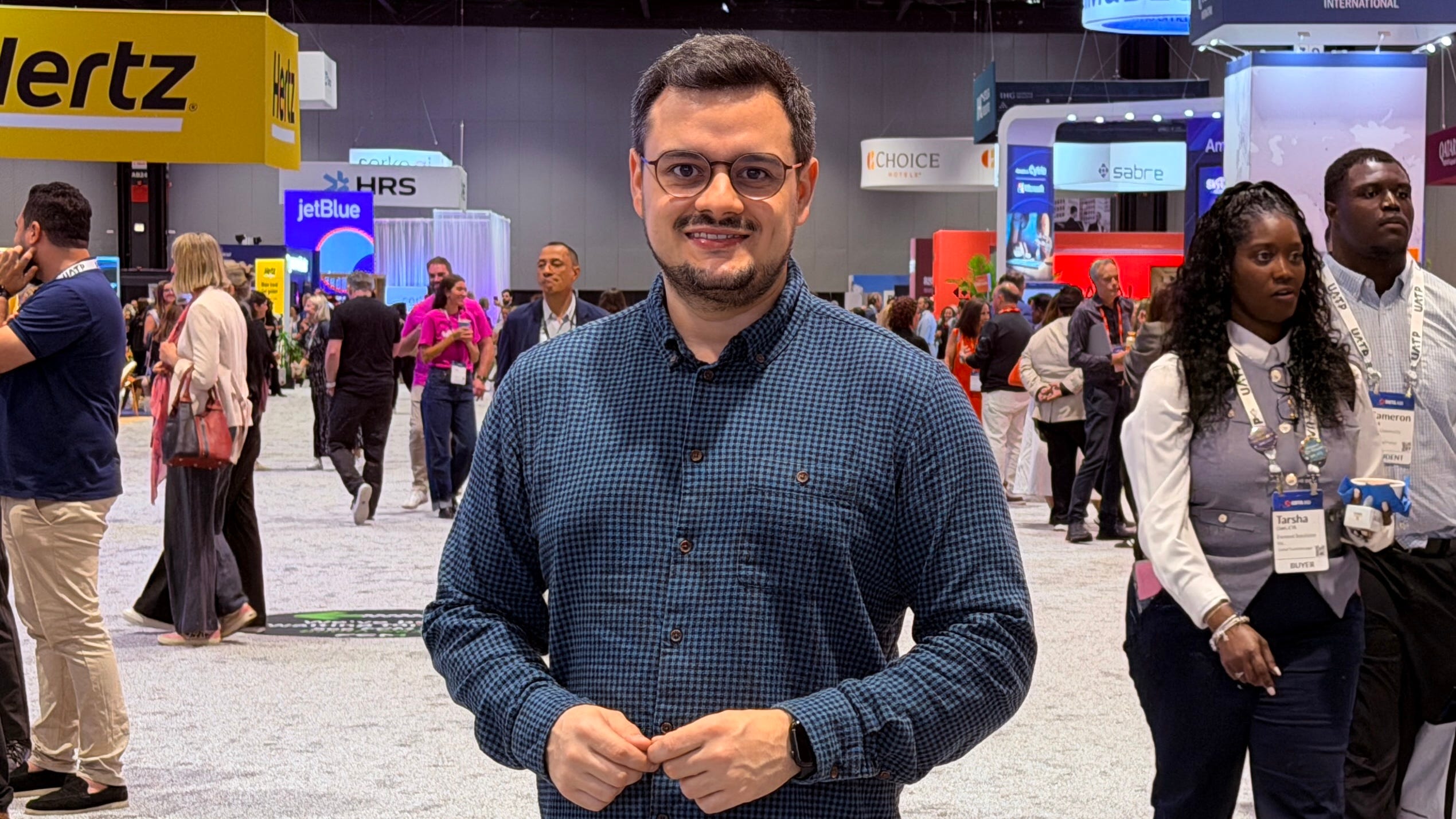
The room in Chicago went quiet for the regional slide, which is the part of the Business Travel Index presentation almost nobody photographs.
I have sat through this session in three other cities, and the pattern is always the same. People lean forward for the global headline number, they lean back for the regional breakdown, and somewhere in that second half is the part I actually came for. This year the second half had something in it I have been arguing about in this newsletter since its first month, except this time it was on a screen with the association’s own logo on it.
Brazil is the tenth largest business travel origin market in the world, and it is growing faster than any of the fourteen markets above or around it.
What the index reported on the main stage

GBTA CEO Suzanne Neufang presented the figures from the main stage at the opening session, ahead of the full report going out the same day. The headline first, because it sets the frame for everything else.
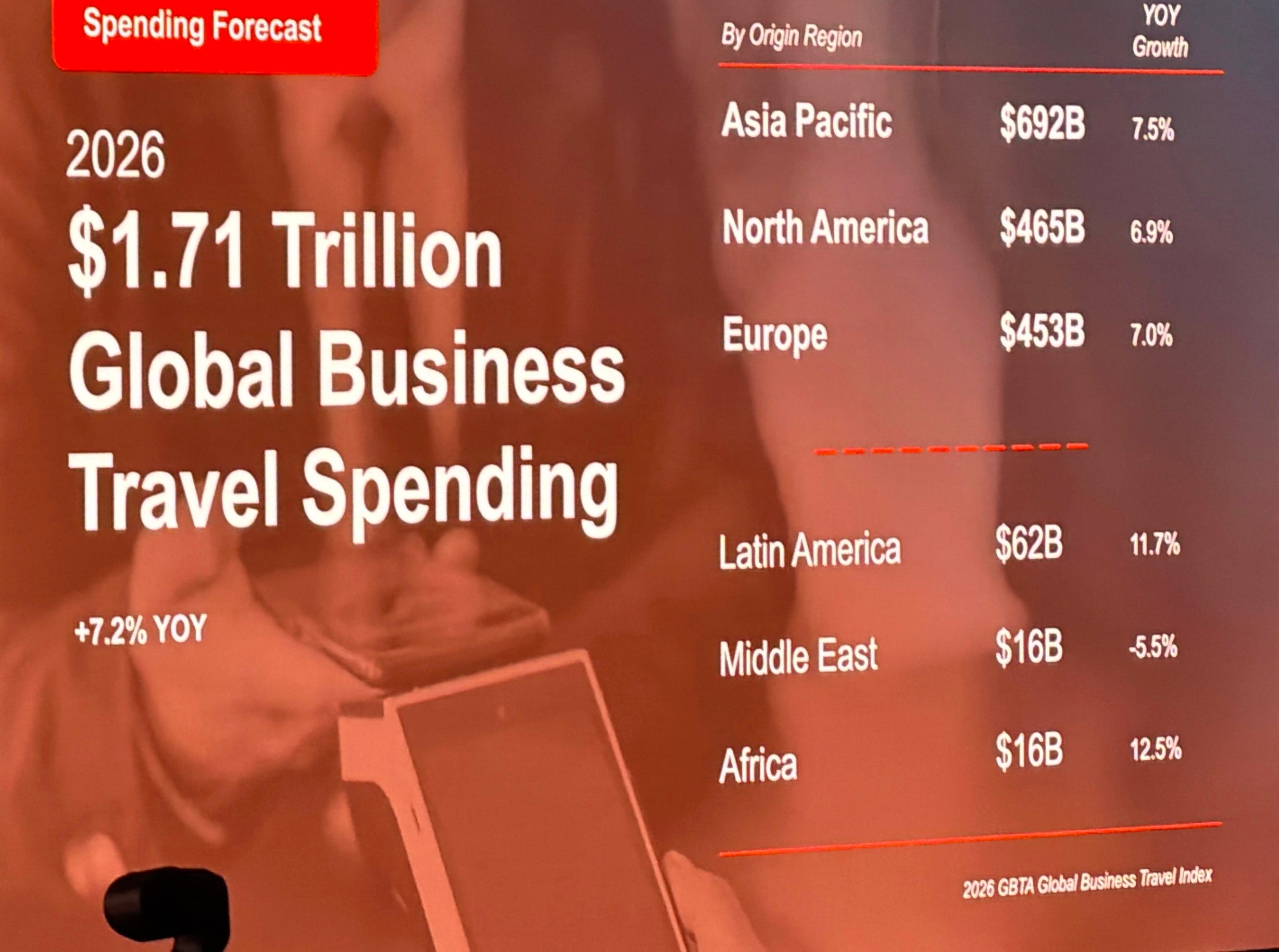
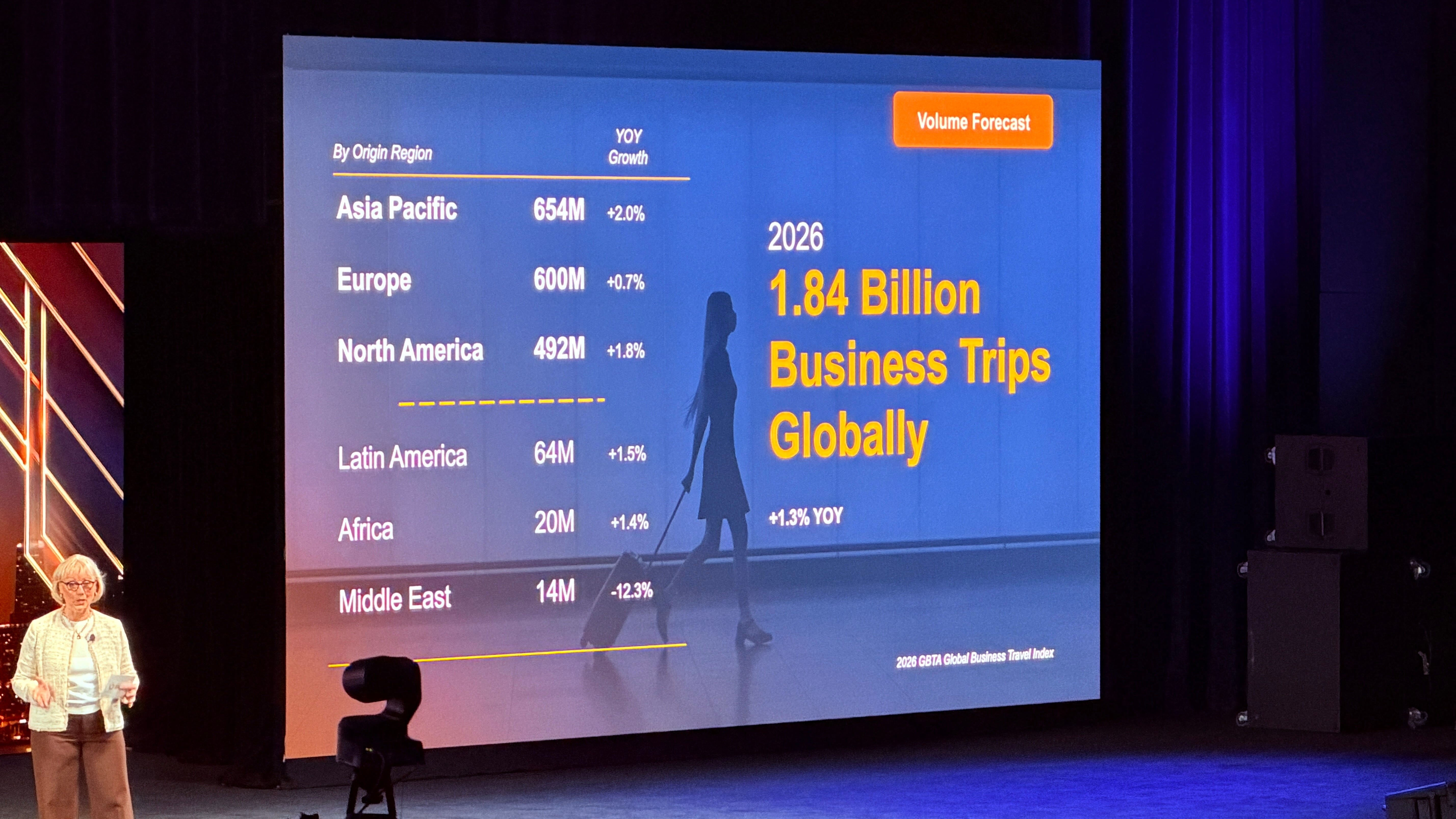
Global business travel spending is projected to reach 1.71 trillion dollars in 2026, up 7.2% over the previous year. The index now runs a volume forecast alongside the spending forecast, and that second number is the one that should have made people sit up: 1.84 billion business trips globally, growing 1.3%.
Read those two lines together and the story of this industry in 2026 tells itself. The money is growing more than five times faster than the trips. Whatever is expanding this market right now, it is not people flying more often.
The forecast beyond this year describes a slower, steadier climb: 1.80 trillion in 2027, reaching 2.06 trillion by 2030, with annual growth rates decelerating from 7.2% toward the mid single digits. The association framed the current phase as adaptive growth, and put it on a timeline next to every shock this industry has absorbed since the early 2000s. The pandemic drop was 54%. The recovery was 47%. What comes now is smaller, calmer, and considerably harder to explain in a single slide.
The gap gets wider the further south you look
Now the regional cut, and this is where the argument starts.
By origin region, Asia Pacific leads spending at 692 billion dollars, followed by North America at 465 billion and Europe at 453 billion. Latin America accounts for 62 billion, which is a small share of the global total and exactly the number people quote when they want to justify not paying attention to the region.
Then the growth rate: Latin American business travel spending is growing 11.7% this year, faster than every larger region measured. Asia Pacific grows 7.5%, North America 6.9%, Europe 7.0%.
And then the number underneath it, which almost nobody quotes: Latin American trip volume is growing 1.5%. Sixty four million trips.
So in this region, the money is growing nearly eight times faster than the travel. The global gap is wide. Ours is a canyon.
I want to be careful here, because the index reports the numbers and does not fully explain the mechanism, and I would rather flag an interpretation than dress one up as a finding. Some of that gap is airfare inflation, which anyone who has looked at a Brazilian domestic fare this year already knows. Some is currency. Some is the migration of travel into international and higher cost itineraries. And some, I would argue, is the slow conversion of informal, unmanaged travel into travel that finally gets counted at all, which is the argument I made about this region months ago and which this year’s data neither confirms nor rules out.
Where Brazil actually sits
The market ranking is where the presentation stopped being abstract for me.
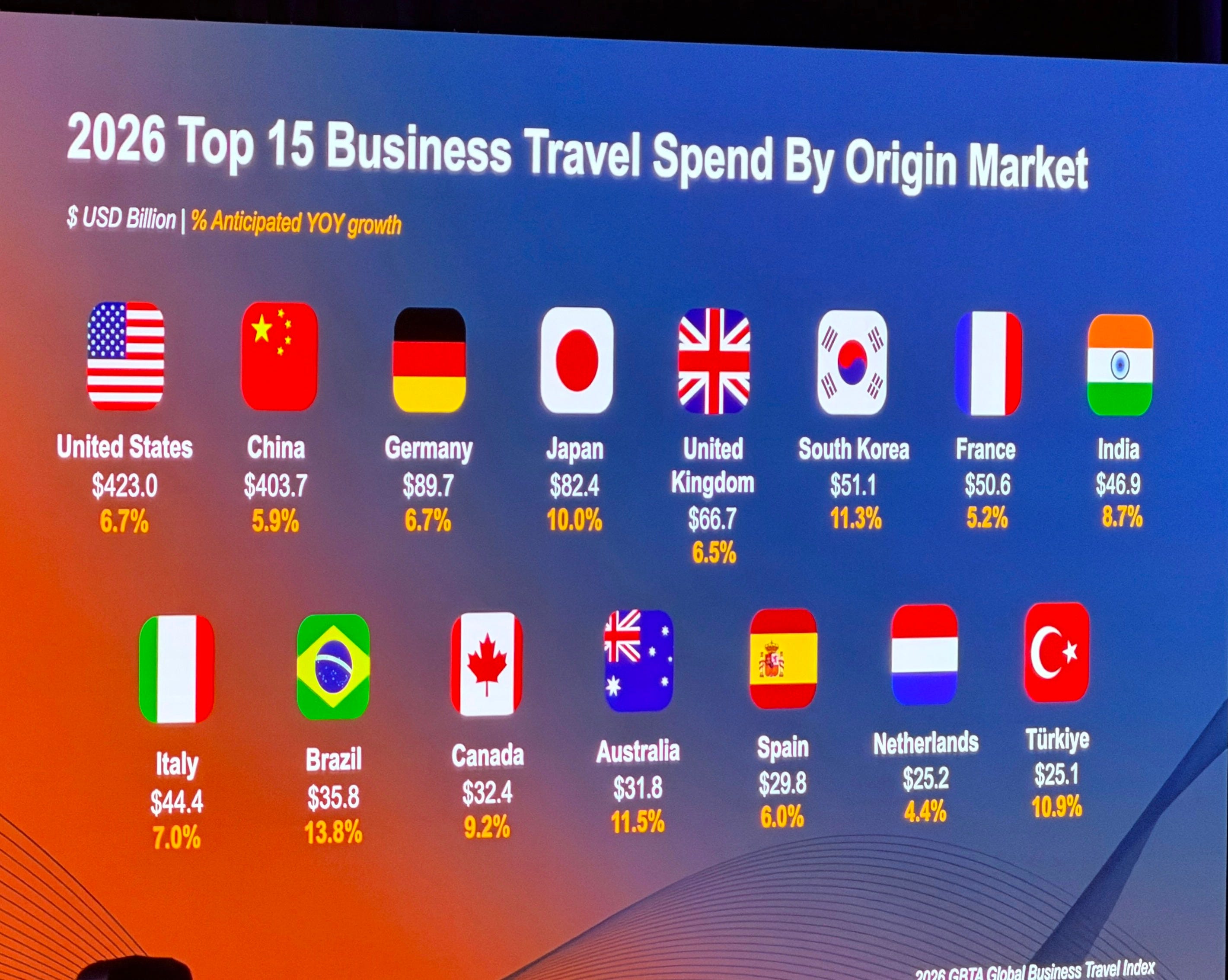
Brazil is the tenth largest origin market for business travel spending in the world, at 35.8 billion dollars in 2026. That places it inside the same list as the largest economies on earth, ahead of Canada, ahead of Australia, ahead of Spain.
And on growth, Brazil leads the entire list. A projected 13.8% increase this year, the highest among the fifteen largest markets measured. The United States grows 6.7%. Germany grows 6.7%. Japan grows 10.0%. South Korea, the closest challenger, grows 11.3%.
I have spent a lot of words in this newsletter arguing that this region gets read through a share of spend that describes the present and a forecast that assumes the present continues. A market ranked tenth in the world and first in growth is not a market anyone should be treating as a rounding error in a global program. That is not my opinion about the data. That is the data.
What I will say as opinion is this: the gap between where Brazil sits in these tables and where Brazil sits in the attention of global suppliers is wider than the gap in any of the numbers above.
The slide that bothered me
There was one more chart, and it is the one I have not stopped thinking about since.
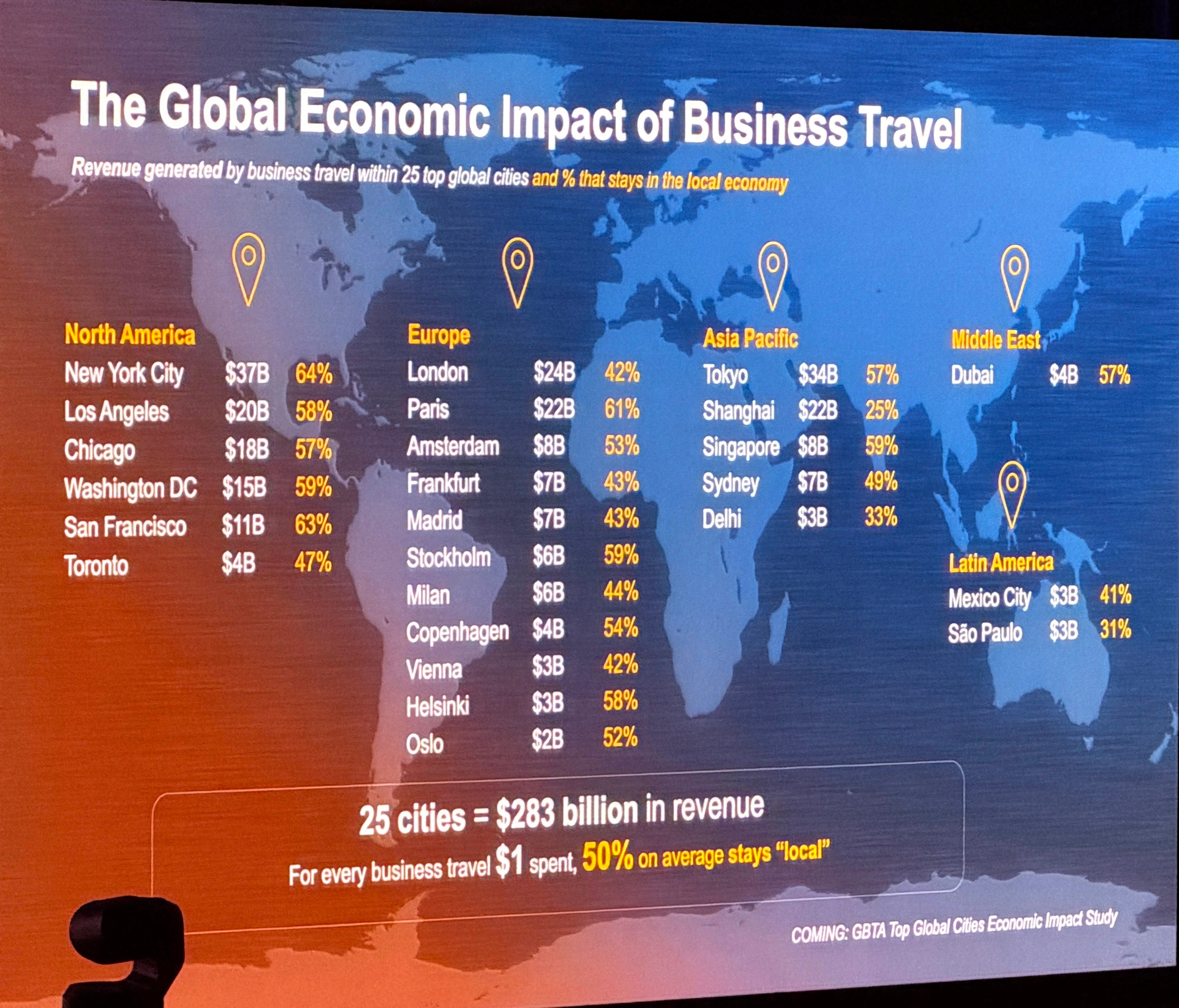
The association previewed a study on the economic impact of business travel across 25 top global cities. Together those cities generate 283 billion dollars in business travel revenue, and on average half of every dollar spent stays in the local economy.
São Paulo made the list, at 3 billion dollars. Mexico City made it too, at the same 3 billion.
Then the retention column. New York keeps 64% of that money locally. Paris keeps 61%. Singapore keeps 59%. Mexico City keeps 41%. São Paulo keeps 31%, the lowest figure on the entire list of 25 cities.
I do not have the methodology in front of me yet, and I want to see it before I build a full argument on top of a single column. Leakage in these models usually reflects imported goods and services, foreign ownership in the hospitality chain, and how much of the supply chain sits outside the city. But the direction is hard to misread. São Paulo is large enough to be counted among the twenty five most important business travel cities in the world, and worse than all of them at keeping the money that travel brings in.
That is a different problem from the one I usually write about. It is not about whether the region gets measured. It is about what happens to the value after it arrives.
What travelers said, in their own words
One last piece from the opening, because it complicates the tidy version of this story.
The index surveyed 4,700 business travelers worldwide in May of this year. Seventy four percent report traveling the same amount or more than before. International travel has largely returned. Digital tools are reshaping how the managed journey actually works. And the summary line the association put on the screen was that travelers are traveling smarter to get more done.
Set that against the volume number and something interesting appears. Trips are up only 1.3% globally, but three quarters of travelers say they are traveling as much or more. Those two facts can coexist, since a survey of business travelers is not a census of trips, and the people who answer these surveys skew toward the ones who travel most. But it does suggest that whatever is being compressed in this market, it is not being compressed evenly across the people doing the traveling.
What I am taking home from day one of GBTA 2026 annual convention

So here is my honest read, from a chair in a room in Chicago, before the sessions have even really started.
The industry is growing in value and standing still in volume, and every conversation about proving the worth of a trip gets harder in exactly that condition. When the number of trips holds flat and the cost of each one climbs, the pressure to justify each one climbs with it. That is the ROI problem I have written about before, arriving with a bigger price tag attached.
Brazil is not a small market. It is the tenth largest in the world and the fastest growing among the largest. I have been arguing that this region is undermeasured rather than unimportant. The index just put a number on the second half of that sentence.
And São Paulo, the city I work from, keeps less of the money business travel brings than any other major business travel city on the planet. That one I need to sit with, and probably write about properly once the full study is out.
Two days left. The sessions start tomorrow.
About me

I am an entrepreneur with over 20 years of experience at the intersection of tourism and technology. I am co-founder and Chief Business Officer of VOLL, the largest mobile-first corporate travel and expense management platform in Latin America, and a recognized reference in the development of the corporate travel industry.
A Marketing specialist from Fundação Dom Cabral, I serve on the Tourism Council of FecomércioSP and on the Executive Council of the Latin American Association of Corporate Events and Travel Management (Alagev). A frequent traveler and close observer of human behavior in motion, I write and speak about innovation, digital transformation, entrepreneurial leadership, and the future of corporate travel.