


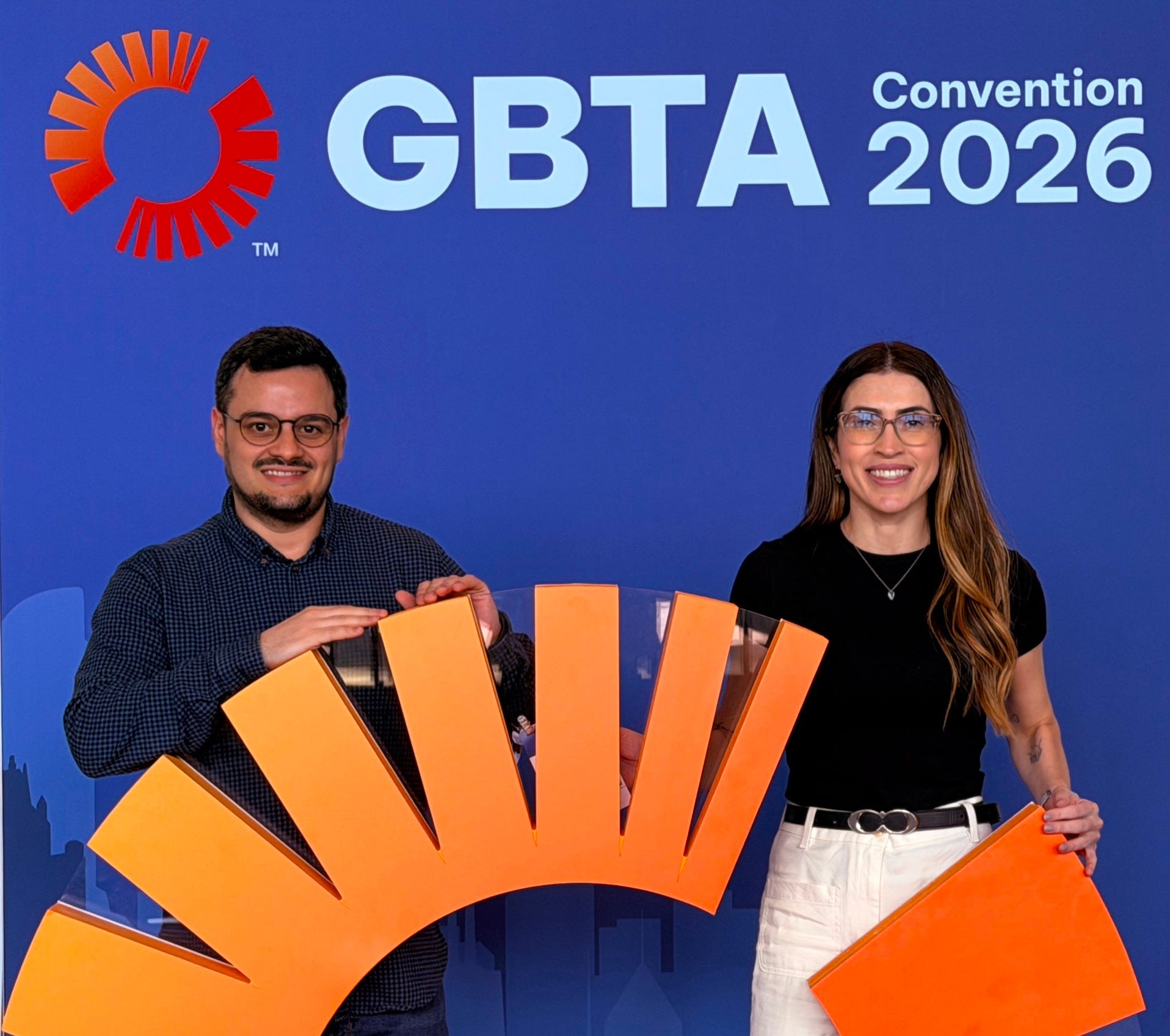
The convention is over, the badge is in my bag, and I am writing this from an airport, which is the most honest possible place to write about business travel.
This was my fourth GBTA Convention. Dallas, Atlanta, Denver, and now Chicago. And it was different from the other three, for a reason I will get to, but I want to start with the thing that will outlast the badge and the data and the sore feet, which is what this week actually confirmed about the industry I have spent my career inside.
The number that framed the whole week
Let me start where the main stage started, because it set the tone for everything after.
On opening day, GBTA CEO Suzanne Neufang presented the headline figures from the eighteenth Business Travel Index, and Scott Kirby, the chief executive of United Airlines, offered the line I keep coming back to. Demand is strong, he said, but corporate travel has not fully returned to where it was before the pandemic. There are still fewer trips than there used to be. Airlines, he added, are one of the best real-time economic indicators in existence, because travel is the first thing a company cuts when things tighten and the first thing it restores when they recover.
Then the data made his point for him. Global business travel spending is projected to reach 1.71 trillion dollars in 2026, up 7.2%. The number of trips is projected to grow just 1.3%. For the first time in eighteen editions, the index measured both, and the gap between them is the story of this industry right now. The money is growing more than five times faster than the travel. We are not flying more. We are paying more to fly the same amount.
I have written about this split separately, because it deserves its own examination, but standing in that room and watching the industry absorb it in real time was its own kind of confirmation.
Where my country showed up
And then the slide that I, specifically, came for.
Brazil is the tenth largest business travel market in the world, at 35.8 billion dollars, and the fastest growing among the fifteen largest, at a projected 13.8%. Ahead of every larger economy on the list. I have spent the life of this newsletter arguing that my region is undermeasured rather than unimportant, and this year the industry’s own data put a number on the second half of that sentence.
I will keep my own counsel honest here, the way I try to on this newsletter. That 13.8% is a single acceleration year, not a new plateau. Brazil’s compound growth projected to 2030 is far more modest, and anyone selling this year’s figure as a permanent trend is reading one data point as a trajectory. But even with that caution, the ranking is the ranking. A market that sits tenth in the world and first in growth is not a rounding error in anyone’s global program, however easy it has been to treat it as one.
There was a harder number too, and I am still sitting with it. In a preview of a study on 25 major global cities, São Paulo showed the lowest local revenue retention of the entire list, keeping a smaller share of the money business travel brings in than any other major business travel city measured. I do not have the full methodology yet, so I am holding my interpretation loosely. But the direction is hard to misread, and it is a different problem from the one I usually write about. It is not whether the region gets counted. It is what happens to the value after it arrives.
The argument underneath the agenda
If you read the program the way I do, looking for the argument underneath the schedule, this year’s convention was organized around a single unresolved tension, repeated across nearly every track.
On one side, the sessions about agentic AI, the ones asking who decides when an autonomous system moves from recommending to acting, and how a buyer tells real capability apart from marketing. On the other, the sessions about proving value, about translating a travel program into the language a CFO actually speaks, about a function too often treated as the department whose only answer is no.
Those two conversations ran in parallel rooms all week, and almost nobody said out loud that they are the same conversation. The question of how much authority to hand an algorithm and the question of how to prove a program’s worth are the same question wearing two different suits. Both are really asking what this industry is willing to trust, and what it needs to see before it extends that trust. A convention that closed its biggest stages not with technologists but with people talking about leadership, judgment, and showing up under pressure was, I think, answering that question in its own quiet way.
The regions that were on the agenda, and the one that was not
I noticed something reading the program that I have not stopped thinking about.
There was a dedicated regional session on Europe, the Middle East, and Africa. There were sessions built around Asia Pacific. There was no equivalent session built around Latin America, no panel asking what a Brazilian or Mexican or Argentine travel manager needs that a program designed for North America does not already assume.
I want to be fair, because a session track is a function of submissions and demand, not a verdict on which region matters. But the region that does not show up cleanly in the data does not show up cleanly on the agenda either, and that is precisely the gap I have spent this newsletter trying to close. The unofficial Latin American presence, though, was impossible to miss. The Brazilian delegation this industry brought to this event has become one of the real, if unofficial, stories of the convention, year over year.
The part that was personal
Now the reason this convention was different from the other three.
This year, GBTA selected me as one of thirteen professionals worldwide to run for three seats on its Global Board of Directors. I was the only Brazilian on that list, and the only founder of a travel management company.
I did not win a seat.
And I want to be honest about how that feels, because the honest version is better than the polished one. I am genuinely, uncomplicatedly glad I did it. Not as a consolation, and not as the thing you are supposed to say when you lose. I mean it.
Running for that board meant spending a week in front of professionals from every corner of this industry, telling them what I believe this business is for, and asking them for their trust. I represented my whole country in that room. I represented my whole region. And in a profession that is, at its core, about connecting people, I spent a week connecting with an extraordinary number of them, one conversation at a time.
I build a company in the business of connecting people to each other. It would be a strange thing to be disappointed by a week that connected me to more remarkable people than I can count. The seat was the occasion. The connection was the point.
Why I keep coming back
So here is what three days in Chicago taught me, or rather reminded me, because I think I already knew it.
This industry is never really about the plane, the hotel, or the expense report. Those are the mechanics. The industry is about people leaving home to make something happen somewhere else, to close the deal, to learn the thing, to build the relationship that only forms in a room. Every one of the 1.84 billion trips in that forecast has a person inside it, with a reason, and usually with someone waiting for them to come back.
I have believed that for a long time, and I believed it more firmly on Wednesday than I did on Monday.
San Diego, one year out
There is one more thing, and it is the kind of coincidence that makes you believe the story is being written by someone with a sense of symmetry.
Next year’s GBTA Convention is in San Diego. Which happens to be the city I moved to at sixteen, alone, halfway across the world from home, to finish high school and, without knowing that was what was happening, to become someone who would spend his life in the business of travel.
So a year from now I will go back to the city where all of this quietly started for me, to a stage in this industry, having spent the year before it running for its global board and not winning, and being completely at peace with that.
The badge is in my bag. The next one already has a city on it. And it is, of all the cities in the world, the one where a sixteen-year-old first figured out that leaving home to see the world might be the whole point.
See you in San Diego.
About me
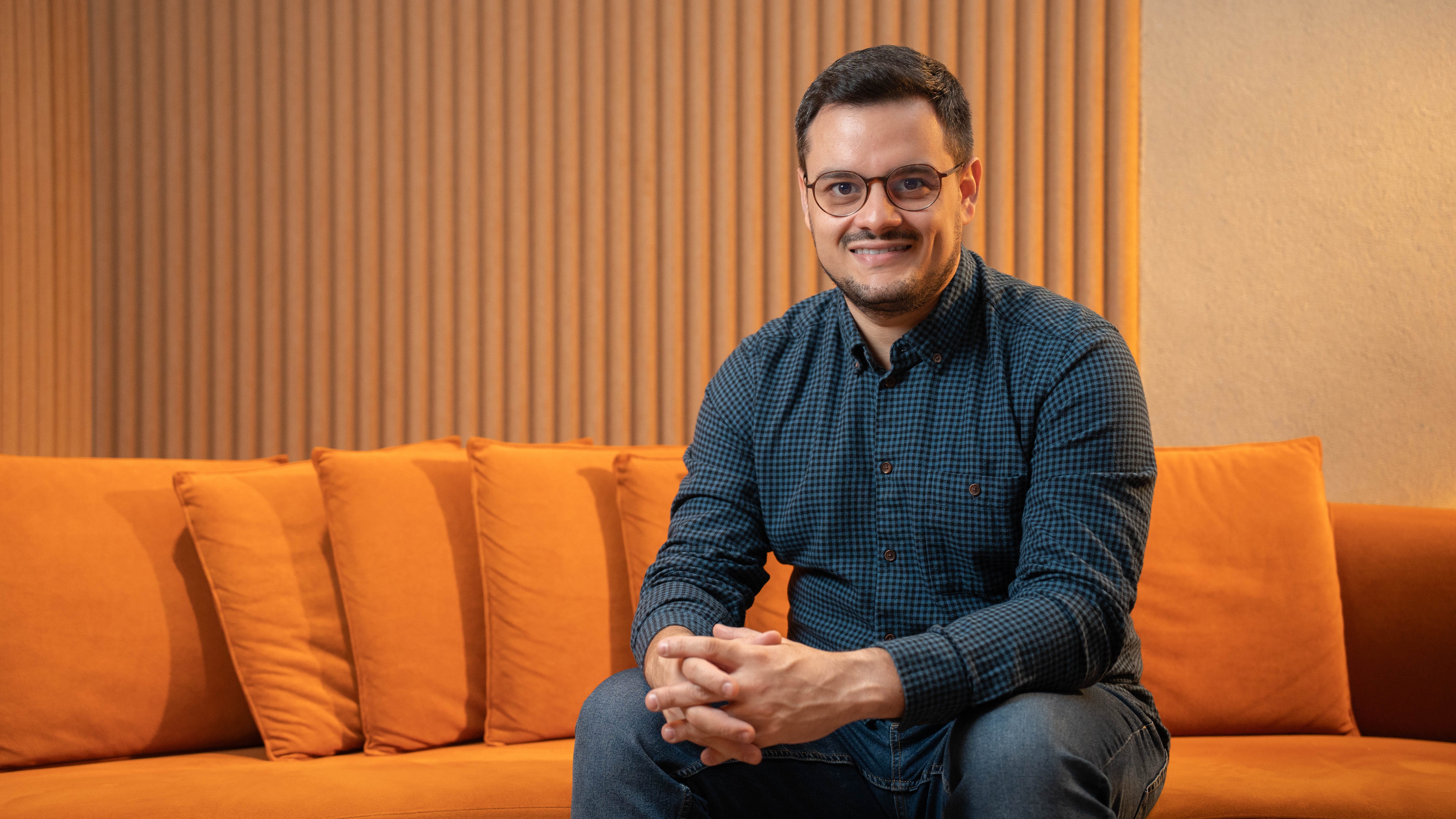
I am an entrepreneur with over 20 years of experience at the intersection of tourism and technology. I am co-founder and Chief Business Officer of VOLL, the largest mobile-first corporate travel and expense management platform in Latin America, and a recognized reference in the development of the corporate travel industry.
A Marketing specialist from Fundação Dom Cabral, I serve on the Tourism Council of FecomércioSP and on the Executive Council of the Latin American Association of Corporate Events and Travel Management (Alagev). A frequent traveler and close observer of human behavior in motion, I write and speak about innovation, digital transformation, entrepreneurial leadership, and the future of corporate travel.