


A disclosure before anything else
I cofounded the company that organizes the event this piece is about, so everything below should be read with that in mind. I have spent months on this blog arguing that vendor-funded research tends to land conveniently on the vendor’s product category, and it would be poor form to write about my own conference without applying the same standard to myself.
What follows is not a pitch. Registration closed at capacity. It is an attempt to read a set of numbers I happen to have unusually close access to, and to ask what they say about a market that global industry coverage still treats as peripheral.
The ladder
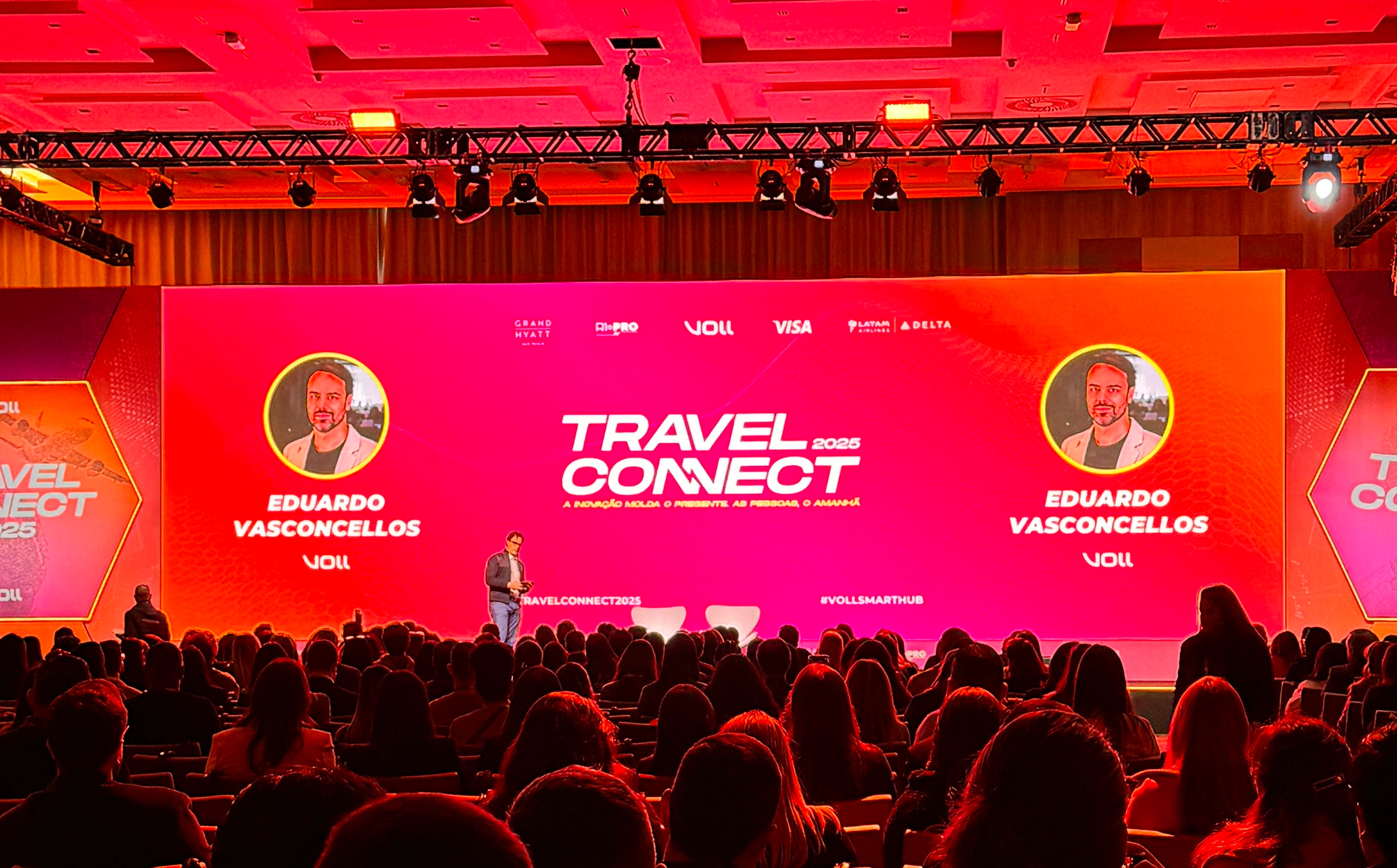
Travel Connect held its first edition in 2022 with 250 attendees. The second, in 2023, drew 400. Then 700 in 2024, and 900 in 2025.
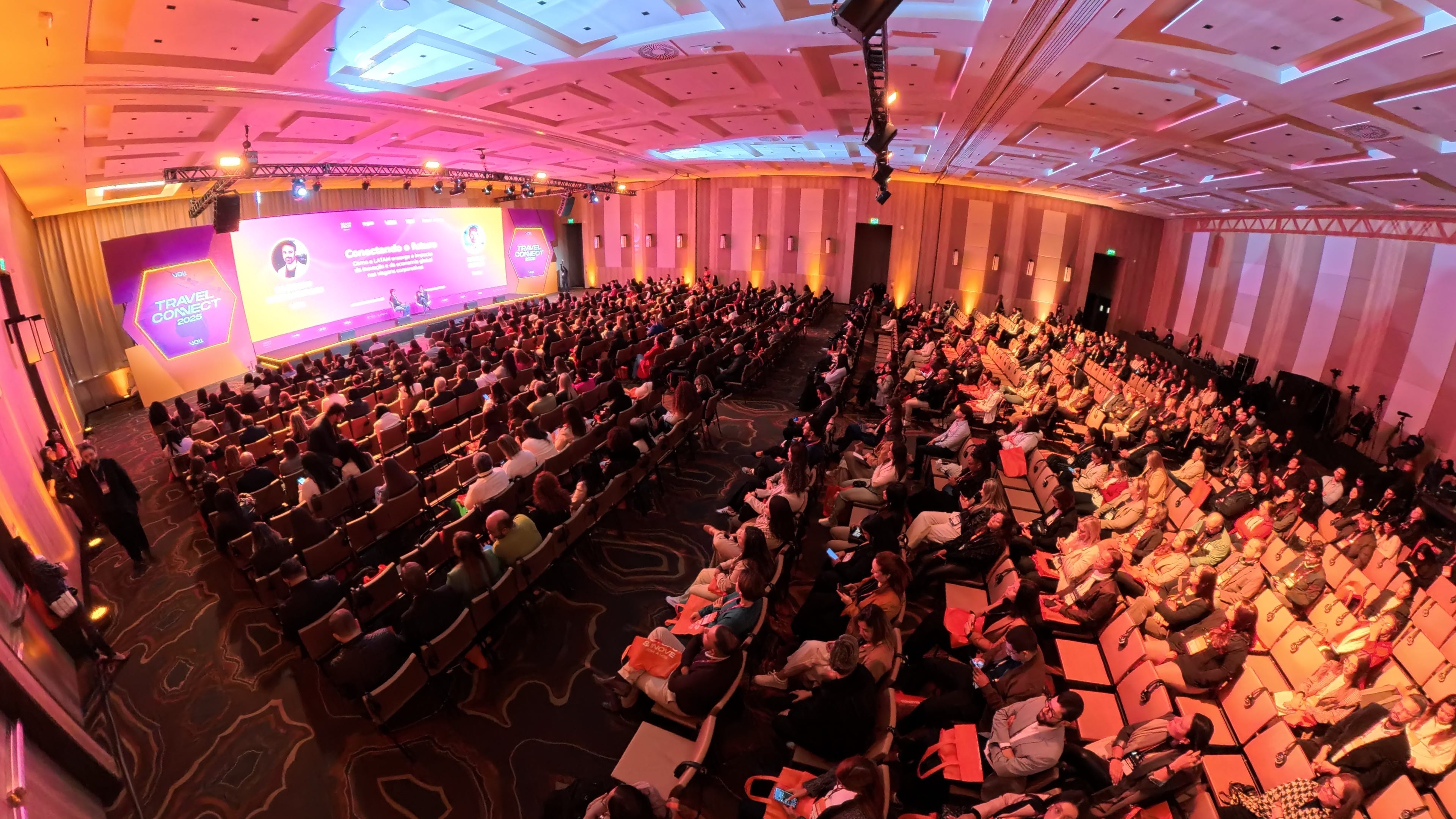
The fifth edition takes place tomorrow, 9 September, at the WTC Golden Hall in São Paulo. Registrations closed at roughly 2,500.
That is a tenfold increase in five years, and the shape of the curve matters more than the endpoint. Growth from 250 to 900 over three years is a healthy event finding its audience. The jump from 900 to 2,500 in a single year is a different kind of signal. Registrations passed 700 within the first week of opening, which is to say the 2025 edition’s entire attendance was matched before most of the program had been announced.
For context on scale, the GBTA’s annual convention, the largest gathering in this industry and now past its fiftieth edition, expects somewhere around 5,800 attendees.
A five-year-old event in São Paulo reaching close to half that number is not a claim that the two are equivalent. It is a statement about latent demand that nobody had measured, in a region where the professional community had never been convened at this scale.
Who is actually in the room
Attendance figures are easy to inflate and easy to misread, so the more useful number is composition.
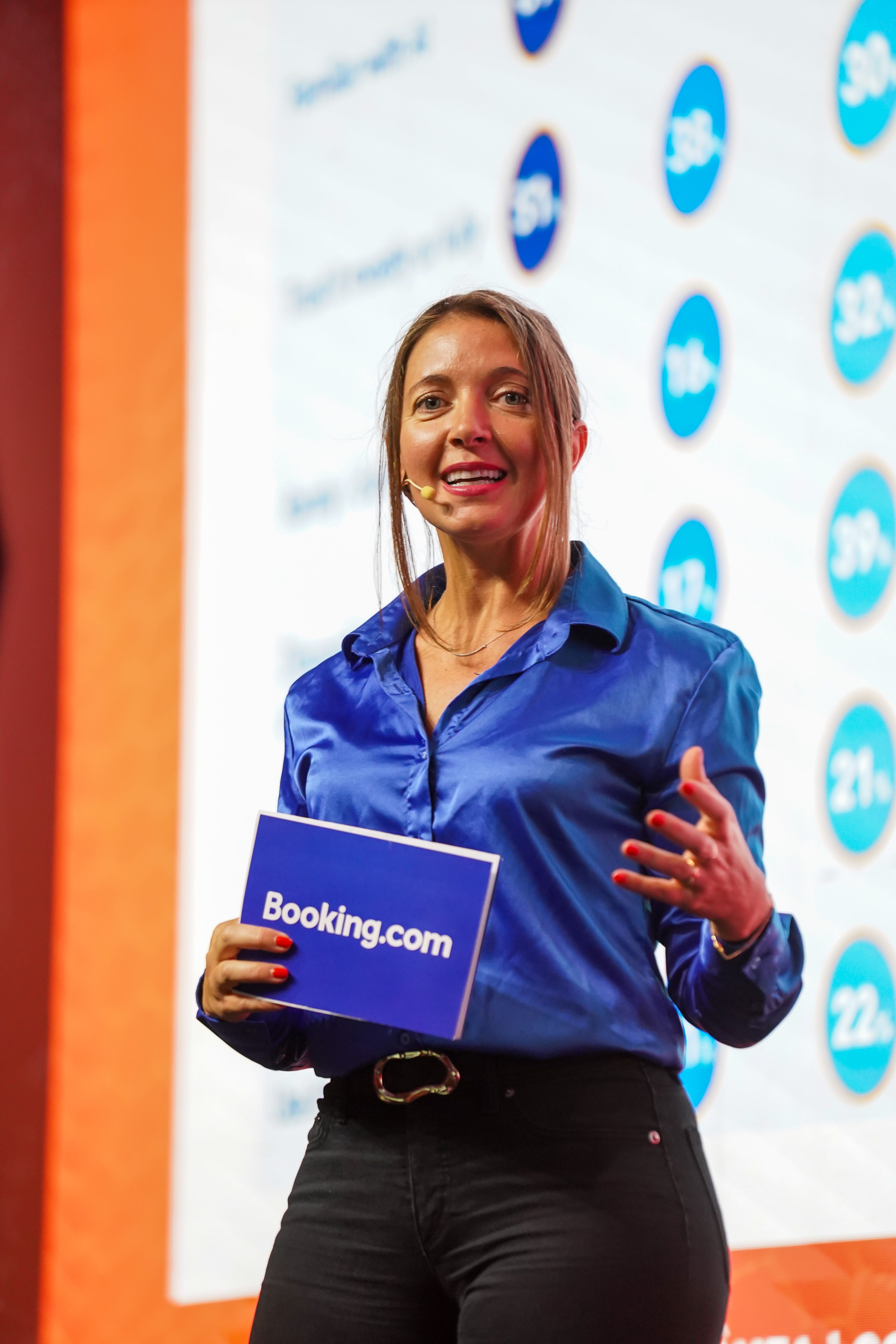
Three quarters of the audience works directly in corporate travel, expense or procurement management. Every registration passes through curation before it is confirmed. That constraint costs headline attendance, and it is the reason the number means something: a room of 2,500 buyers and practitioners is a different asset than a room of 2,500 badge holders.
The corporate names on the program give a sense of the profile. Travel and procurement leaders from Itaú, XP, Ambev, Arcos Dorados, Cogna, iFood, Marisa, Citrosuco, Afya and Vitru are presenting their own work, alongside consultants from Alvarez & Marsal. These are practitioners describing what they built and what broke, not vendors describing what they sell.
Growth forces decisions that are not glamorous
There is an operational side to a curve like this that nobody puts on a slide, and it is worth describing because it is where most events of this kind quietly break.
Doubling an audience does not scale linearly. It changes the venue, the catering, the credentialing flow, the number of simultaneous sessions the program can sustain, and the amount of staff time that goes into curation rather than promotion. The 2026 edition moved to a new home at the WTC Golden Hall precisely because the previous format had run out of room, and the trade press was reporting the event doubling in size and targeting 2,000 managers months before registration closed above that.
The harder decision is the curation itself. Every registration reviewed is a registration that might be declined, and declining registrations is an unnatural act for anyone trying to grow an event. The argument for doing it anyway is that the product being sold to a sponsor and to an attendee is not headcount, it is who else is in the room.
Once that filter comes off, it does not go back on, because the audience composition changes and the people who came for the composition stop coming.
I do not think that decision is unique or clever. Most serious professional convenings reach the same conclusion eventually. It is worth stating because the temptation to abandon it grows exactly in proportion to how well the event is doing, which is to say it is at its strongest right now.
What the program says about where the conversation is
If you want to know what a market is actually thinking about, read the session titles rather than the marketing.
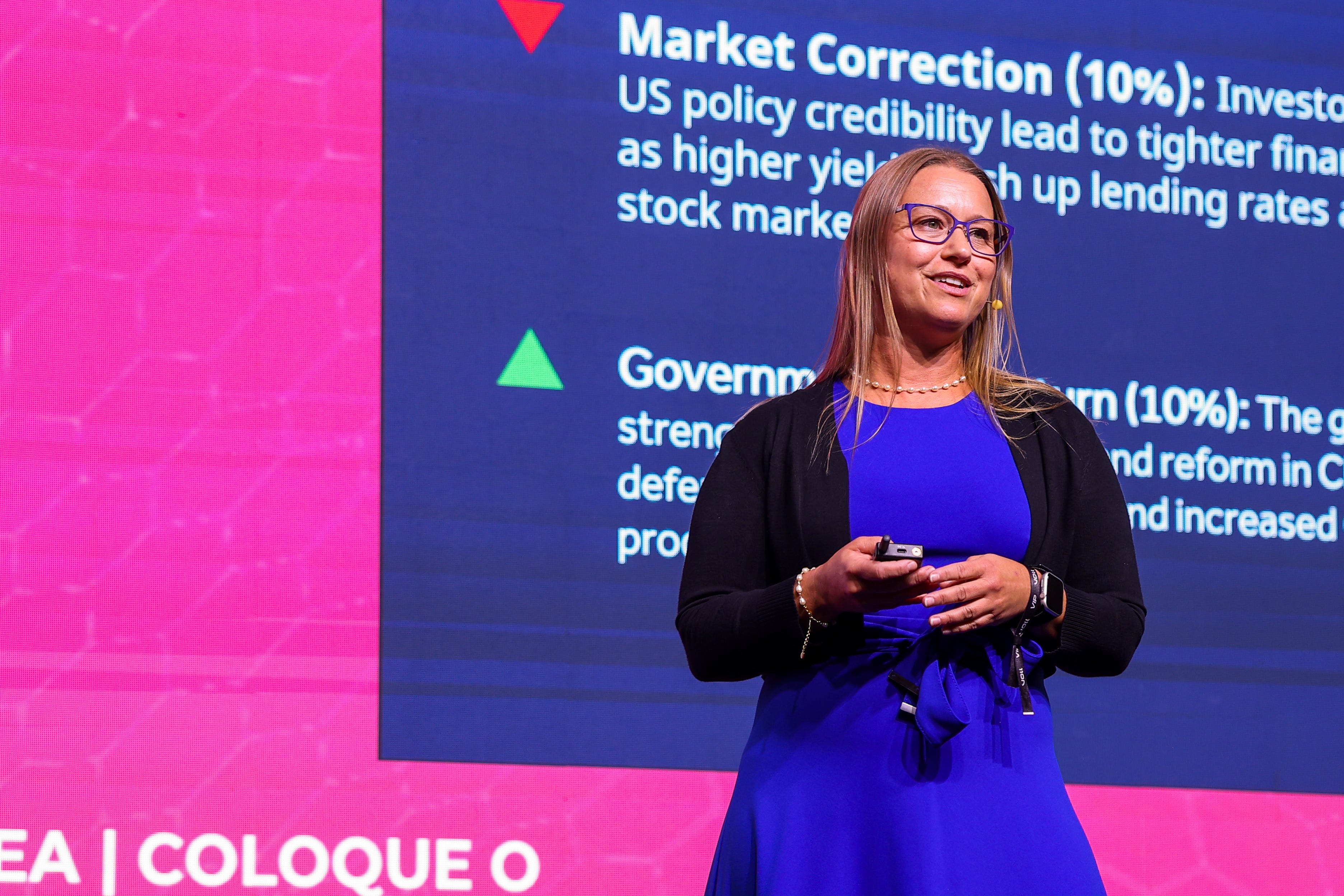
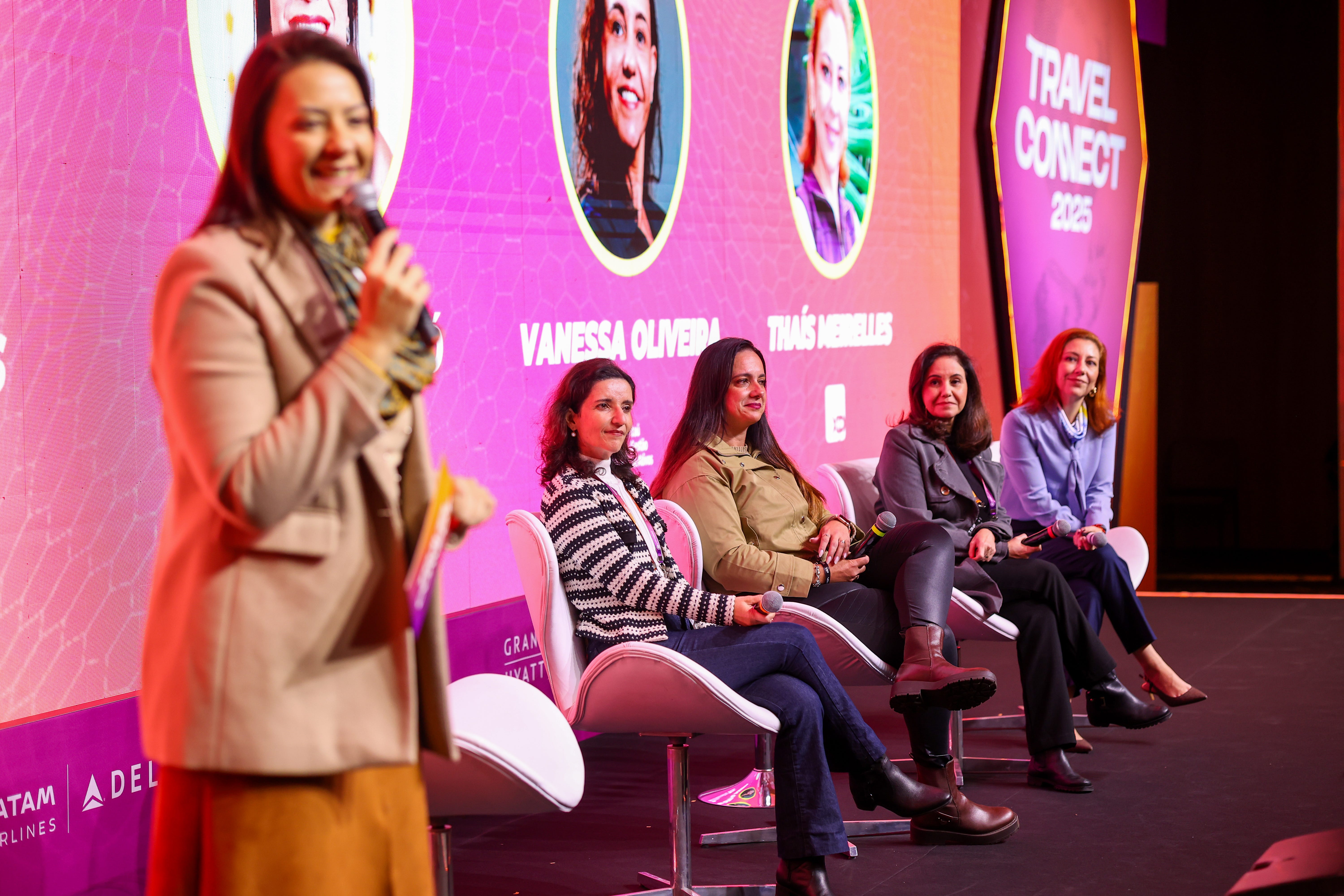
The program runs three simultaneous tracks. One covers the traveler experience, safety and hospitality. One is dedicated to procurement. The third focuses on the people who execute inside companies, including executive assistants, a group whose work rarely gets a stage anywhere in this industry.
Artificial intelligence appears throughout, and the framing is consistently operational rather than speculative:
A session on how AI generates efficiency and scale, presented by a finance operations manager.
A debate on whether the future of procurement will be decided by people or by AI agents.
A closing plenary on integrated experiences in the era of AI agents.
A session on AI agents as amplifiers of travel and expense management, presented by a shared services director.
Notice what is missing. There is no session asking whether AI will arrive, or whether it matters. That question was settled here without much ceremony, and the program has moved on to how it gets governed and who it serves.
The track I find most interesting is the one least likely to appear at an equivalent event elsewhere. It gathers executive assistants and the people who run internal operations, with sessions on what it means to take care of the person making the decisions, and on the choices behind supporting senior executives day to day.
Two of those speakers are executive assistants at large companies presenting their own work.
That is not a token inclusion. In most corporate travel programs in this region, the person who actually books, changes and rescues a trip is an executive assistant or an operations analyst, not the travel manager whose name appears on the policy.
An industry conversation that never puts those people on a stage is describing a version of the job that does not match how the work gets done. Giving them a track is a small structural correction, and one I have not seen replicated at the global events I attend.
The procurement track carries a similar logic. Its opening session is titled procurement beyond savings, which is a direct challenge to how the function is still measured at most companies, and it is being made by a purchasing manager rather than by a consultant selling a maturity model.
The part that has nothing to do with business
One element of this year’s edition sits entirely outside the commercial logic of the event, and I want to mention it without dressing it up as strategy.
The 2026 edition includes a dedicated space run with Desabandone, a nonprofit that has rescued, cared for and rehomed animals since 2012. Attendees can donate and can spend time with rescued animals during the day.
There is no data angle here and no lesson about corporate travel. It is a room full of people who spend their working lives moving other people around, giving a few hours of attention to something with no return attached. I mention it because a conference is also a statement about what its organizers think a professional community is for, and this is part of ours.
I have argued repeatedly on this blog that Latin America adopts new travel technology faster than the markets that invented it. A conference program is a weak form of evidence, but it is evidence of a kind. This one reads like a market past the debate stage.
The international presence, and what it signals

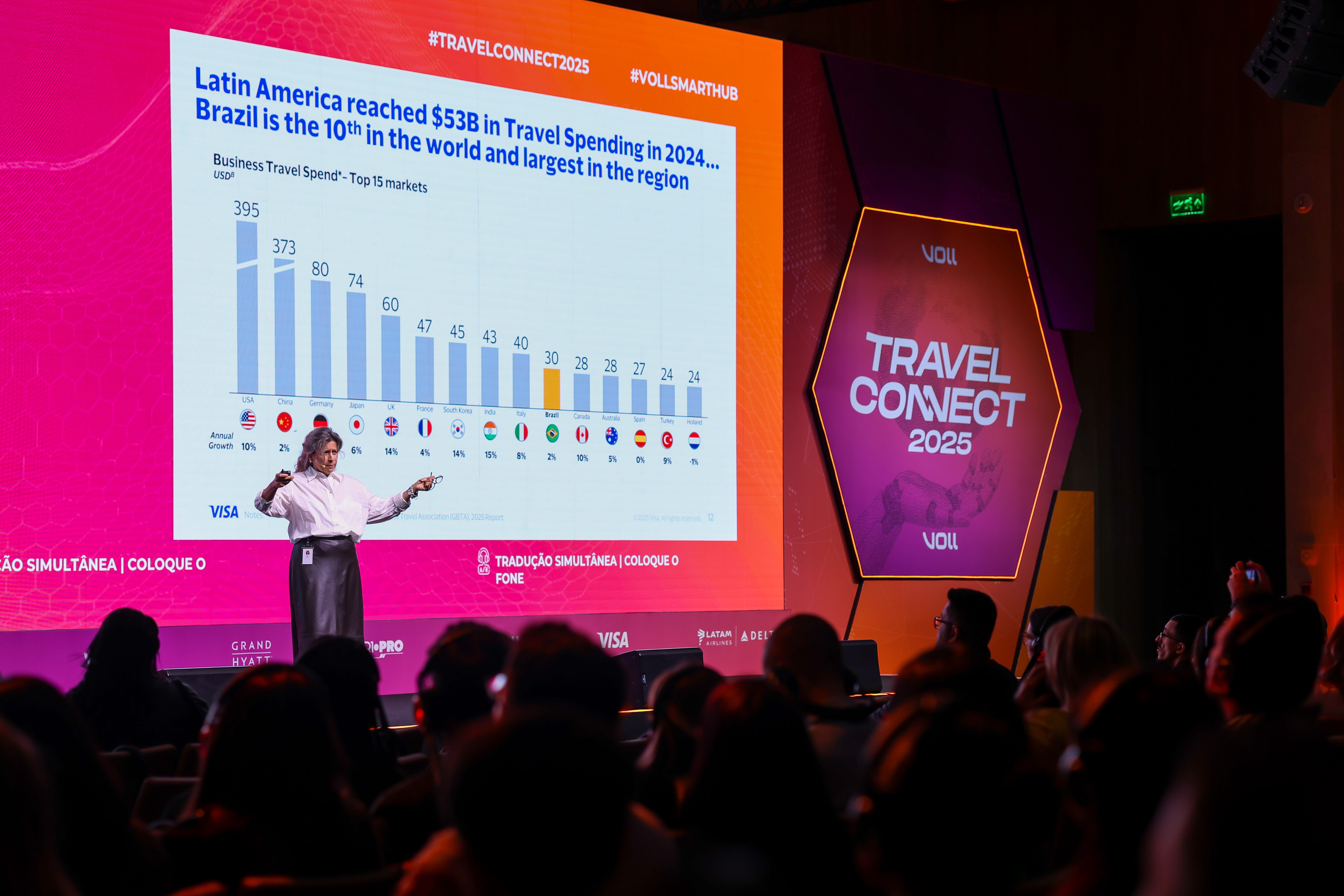
Katharine Farrell, GBTA’s vice president for the Americas, is presenting the global picture, covering the economics and trends shaping the sector.
A Mastercard senior vice president is speaking on global trends in corporate travel, and a global director from the corporate arm of a major ride-hailing platform is presenting on innovation partnerships. Sessions with international speakers run with simultaneous translation.
The commercial side tells a similar story about durability rather than novelty. LATAM renewed as a diamond partner for the third consecutive year, and Visa returned at the same tier for a second.
Sponsors renewing at the top tier year over year is a more reliable indicator than sponsors signing once.
The part I am personally invested in
At 11 in the morning I go on stage to present the Radar Business Travel, a research project we built with PANROTAS and Visa, alongside PANROTAS chief executive Zé Guilherme and editor in chief Arthur Andrade.
I want to be direct about why that session matters to me more than the attendance figures do.
Nearly every piece I have written this year has run into the same wall. The GBTA’s own research on program data consolidation sampled the United States, Canada and Europe. The Christopherson study on booking tools sampled the United States. The Amadeus work on AI trust sampled the United States. Each produced findings I have cited, and each left this region out of the frame entirely.
The honest response to that is not to complain about it. It is to produce the missing data. That is what the Radar is: primary research about this market, conducted here, published here, available to anyone who wants to argue with it.
That gap is not an abstraction, and it produces concrete errors. When I looked at what Brazilian corporate travelers actually pay, a Monday morning domestic departure came in 59.4 percent more expensive than the identical route on a weekday afternoon, a pattern driven by a national work week that no global model was built to capture.
When I looked at where the country’s business aviation actually concentrates, São Paulo’s downtown airport turned out to be structurally unlike the airports it gets compared to, with a single route carrying more than twice the frequency of the next one.
Neither finding is exotic. Both are the kind of thing a program manager here needs to know and a global report will never surface, because the sample was never designed to see it. Multiply that across payment behavior, booking lead times, supplier concentration and policy norms, and the cost of the gap stops being academic.
A conference is a strange place to try to fix a research problem. But it is where the practitioners are, which makes it the only place the questions can be asked at scale and the answers can be tested against people who would know immediately if they were wrong.
What is easy to get wrong about this
Two cautions, since I would apply them to anyone else’s event.
Attendance growth is not the same as market maturity. A conference can grow because a market is consolidating around a genuine professional community, or because it is the only option available.
The honest reading of Travel Connect’s curve is probably some of both, and the interesting test is what happens at the sixth edition, when novelty is spent and the number has to be earned again.
And an event organized by a platform company will always reflect that company’s view of the industry, however carefully the curation is done. Program choices carry a point of view even when no session is a product demo. A track exists because someone decided that subject deserved a room, and the person deciding has a commercial position in the market. The corrective is not to pretend otherwise.
It is a market with several serious convenings rather than one, which is a healthier outcome for the region than any single event growing indefinitely.
There is a third caution worth naming, because it applies to how this piece should be read. An attendance figure is the easiest metric in events and the least informative. What a professional community actually produces is measured in what changes at the companies represented in the room, and that is slow, unglamorous and largely invisible from a stage.
The most useful thing I took from three days at a global convention this year had nothing to do with how many people were there. I have written before about how much of this industry’s real learning happens in rooms rather than in press releases, and rooms plural is better than room singular.
Why the ladder is the actual story
Strip away the program and the sponsors and one fact remains.
Five years ago, 250 corporate travel professionals in Latin America were willing to spend a working day together talking about how this discipline should be practiced. Tomorrow it will be 2,500, with three quarters of them doing the work directly, arriving from across Brazil and from other countries in the region.
That is not a marketing achievement. It is a professional community that did not previously exist in organized form, deciding it wanted to exist. Alagev, the region’s trade association, has been doing the slower version of the same work for 23 years, and the market it helped build is now large enough that a single day can gather thousands of its practitioners.
The global industry conversation still treats this region as a footnote in its research samples. The people in that room tomorrow are not waiting for that to change. They are getting on with it, which is generally how these things get corrected in the end.
About me

I am an entrepreneur with over 20 years of experience at the intersection of tourism and technology. I am co-founder and Chief Business Officer of VOLL, the largest mobile-first corporate travel and expense management platform in Latin America, and a recognized reference in the development of the corporate travel industry.
A Marketing specialist from Fundação Dom Cabral, I serve on the Tourism Council of FecomércioSP and on the Executive Council of the Latin American Association of Corporate Events and Travel Management (Alagev). A frequent traveler and close observer of human behavior in motion, I write and speak about innovation, digital transformation, entrepreneurial leadership, and the future of corporate travel.