


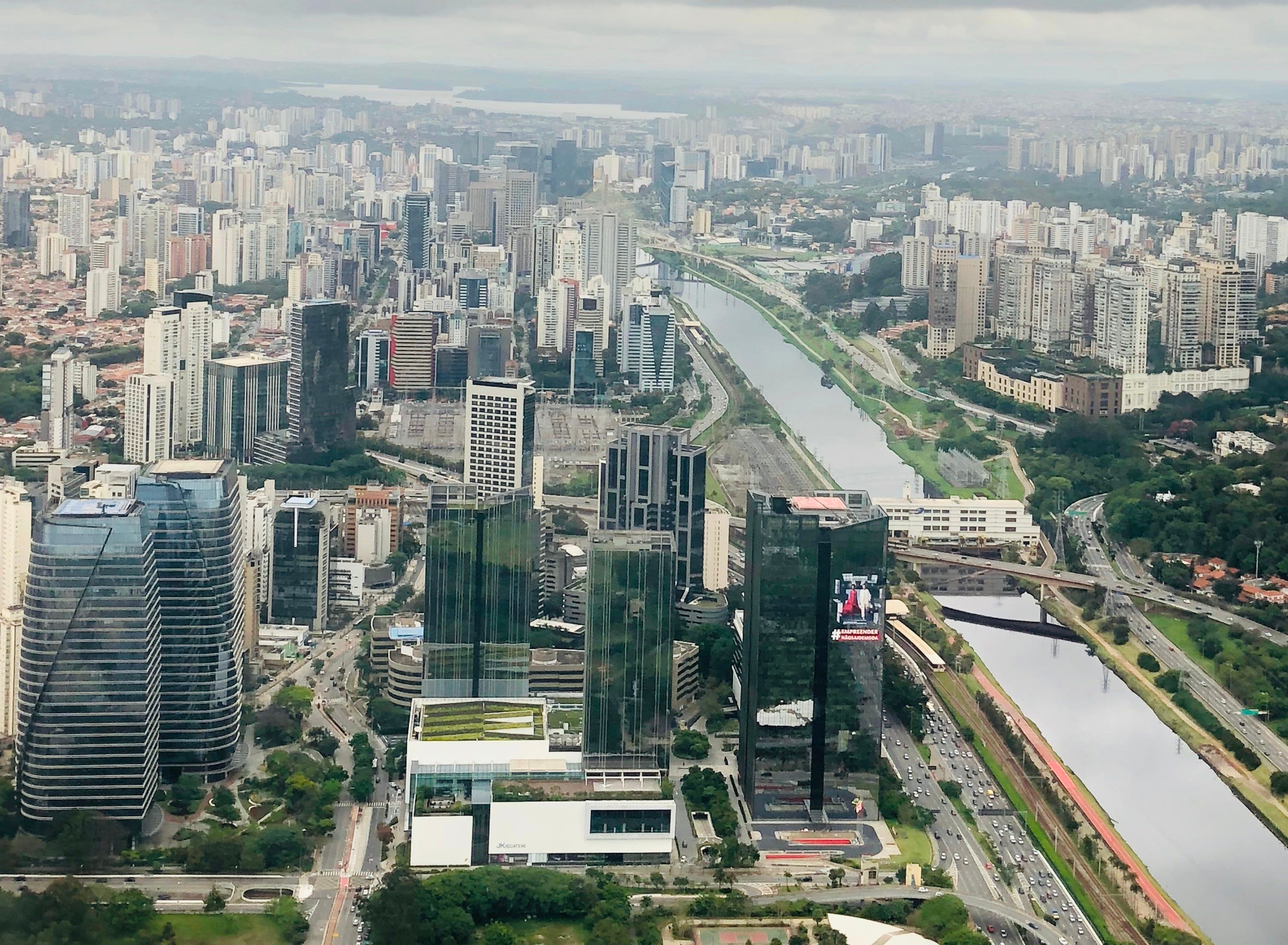
There is a strange kind of accounting happening in Brazil this year, and almost nobody is putting both halves of it on the same page.
On one page, Brazil is having the best year in the history of its oil industry. Production hit a record. Exports hit a record. The country became one of the most important sources of crude in the world, and the money flowing in from that has been extraordinary.
On the other page, the same companies that make this economy run are watching the cost of a domestic flight climb faster than almost anywhere in the world, because the fuel that powers those flights got dramatically more expensive at exactly the same moment.
One country. One energy shock. Two opposite outcomes, depending on which side of the transaction you are standing on. This is the Brazilian paradox of 2026, and I have not seen anyone in my industry describe it plainly, so I will.
The macro win is real, and it is enormous
Start with the good news, because it is genuinely good and genuinely large.
Brazil’s crude output reached a record of roughly 4.24 million barrels per day in March 2026, driven by the ultra-deepwater pre-salt fields in the Santos Basin. The country exports more than half of what it produces, and it is on track to expand those exports significantly this year as global demand for its crude rises.
The economics underneath that are almost hard to believe. Some of Brazil’s most productive fields operate at a breakeven below 35 dollars per barrel, against a global price trading far above that. When the world price of oil spikes, a low-cost producer with barrels to sell does not suffer. It prints.
For the Brazilian macro story, an energy shock that raises the global price of oil is close to the best thing that can happen. The country produces a commodity the world suddenly wants more of, at a cost far below what the world will pay for it.
Hold that thought, because here is where it inverts.
The same shock lands on the travel budget at full force
The fuel that goes into a jet is a refined petroleum product, and its price moves with the same global oil market that is making Brazil rich on the export side. So the identical shock that fills the national accounts also fills the cost line of every airline flying domestic routes.
The numbers are stark. Brazilian jet fuel, known locally as QAV, roughly doubled in price across 2026, moving from around 3.40 reais per liter at the start of the year to well above 6.50 reais by May, the highest level in the entire historical series that the national petroleum agency has kept since 2002. One monthly readjustment alone came in at roughly 55 percent.
And jet fuel is not a marginal line for a Brazilian airline. It moved from roughly 30 percent of total operating cost to something closer to 45 or even 50 percent, depending on the route and the aircraft. When half your cost base reprices upward in a matter of months, there is no absorbing it quietly. It shows up in the fare, and it shows up in the network: carriers suspended thousands of planned flights, with the least profitable routes in the North and Northeast cut first.
So the exporter celebrates and the traveler pays, and they are frequently the same company, sometimes in the same building, occasionally in the same quarterly review.
Why this hits business travel harder in Brazil than almost anywhere
Here is where the paradox stops being a general Brazilian story and becomes a corporate travel story specifically.
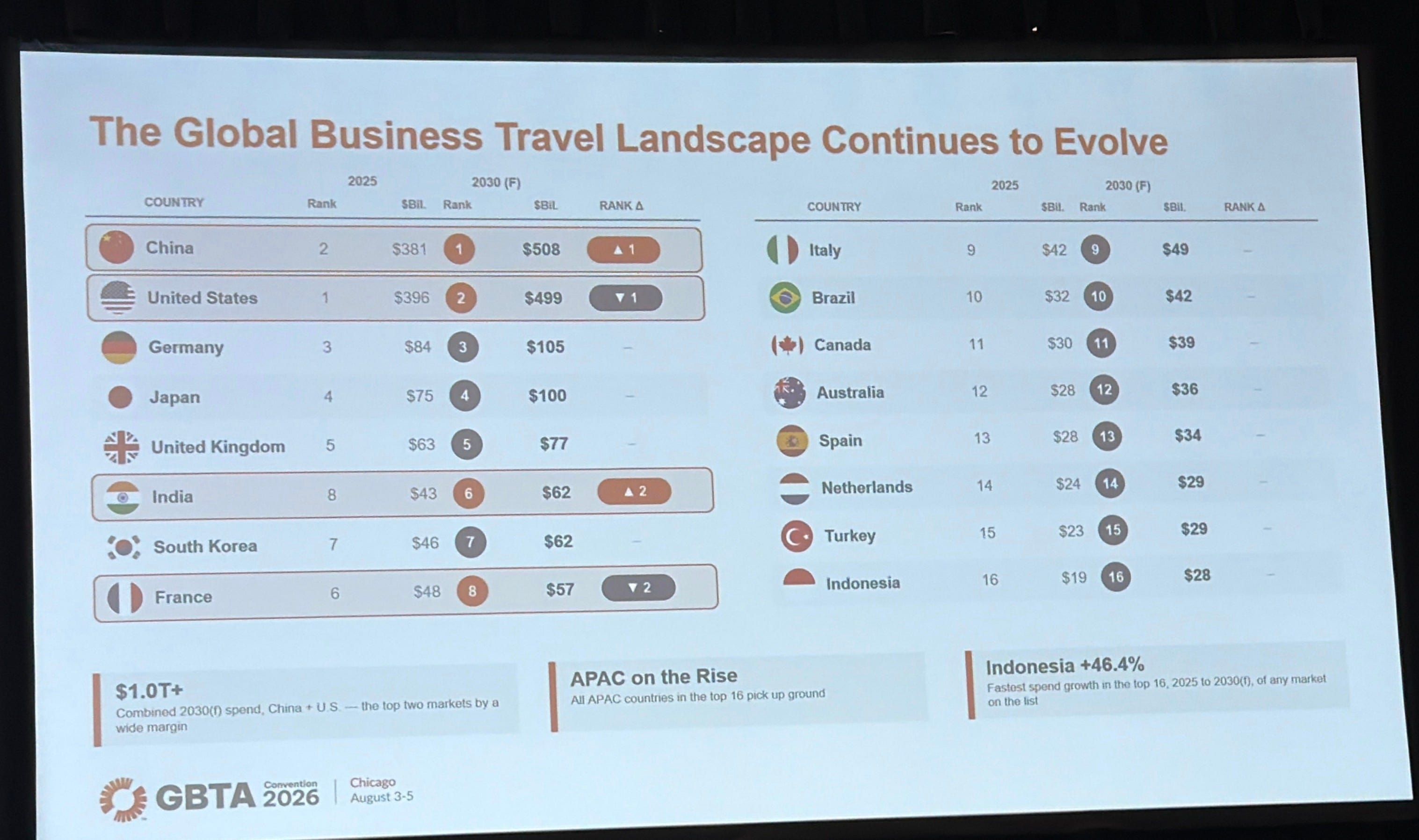
The data GBTA presented in Chicago this year included a cost breakdown by region, and Latin America has a structural feature that turns a fuel shock into a travel-budget shock more violently than in other parts of the world. Air travel makes up a larger share of the cost of a business trip here, around 37 percent of an average trip, against roughly 32 percent globally. Lodging, by contrast, is the cheapest of any region measured. And rail use across the region is the lowest in the world.
Read those three facts together and the exposure becomes obvious. In Europe, a business traveler facing an expensive or cancelled flight has a dense rail network to fall back on, and the trip continues by train. In Brazil, for the distances involved, there is no such alternative. The plane is not one option among several. For most corporate journeys across a country of continental scale, it is the only option.
Which means that when the single most fuel-exposed category is also the single most unavoidable category, a jet fuel spike does not get diluted on the way to the corporate travel budget. It arrives at full strength, with nothing to soften it.
What the forecast says, and what it leaves out
This is the part where I want to complicate the global number with the local one, because they do not fully agree, and the disagreement is instructive.
The GBTA forecast treats Latin American air pricing as one of the calmer stories in its outlook, projecting a relatively modest rise for the region because capacity is growing roughly in line with demand. As a regional average across many different markets, that may well hold.
But the Brazilian domestic reality sits some distance from that regional average. Anac data shows the real domestic airfare, adjusted for inflation, rising 11.2 percent in the twelve months through May 2026, driven almost entirely by fuel. A Brazilian travel manager reading the calm regional projection and then looking at their own fare data would be forgiven for wondering whether the two describe the same country. They do not, exactly, and that gap is the whole point of reading global data with a local lens rather than instead of one.
None of this is a criticism of the forecast, which is measuring a real regional average correctly. It is a reminder that a regional average is built to describe a region, not to describe the largest and most fuel-dependent market inside it on a year when fuel is the entire story.
What a travel leader should actually do with this
If I ran a corporate travel program in Brazil right now, the paradox would change three things about how I work this year.
First, I would stop treating airfare inflation as a negotiation problem. When the cost increase originates in the global oil market rather than in the fare your account manager quotes you, no amount of supplier negotiation reverses it, and the deeper problem is one of information rather than negotiation. The lever moved outside the building. Pretending otherwise wastes the one thing a program has less of this year, which is time.
Second, I would separate, in every report that reaches finance, the part of the cost increase that comes from fuel from the part that comes from anything the program actually controls. If total air spend is up and domestic fares are up 11 percent on fuel, a large share of that increase is macroeconomic weather, not program performance. A program that fails to make that distinction visible will be blamed for a number it did not create.
Third, I would move the intelligence upstream, to the moment of purchase. When the price of the ticket is this volatile between the moment of booking and the moment of ticketing, the value is no longer only in negotiating the fare. It is in continuously monitoring the price after the decision and capturing the better number when it appears, automatically, without asking a human to watch a fare all day. In a stable-price year that capability is a nice optimization. In a year like this one it is the difference between a budget that holds and a budget that does not.
The paradox, stated plainly
So Brazil is, at the same time, one of the biggest winners and one of the more exposed losers of the same energy shock, and the reason nobody describes it that way is that the winning and the losing are measured by different people in different rooms.
The Ministry of Mines and Energy sees the export windfall. The travel manager sees the fare. The finance leader sees a fuel-driven cost increase in the travel line and a commodity-driven revenue gain somewhere else on the same income statement, and rarely connects the two, because the systems that track them were never designed to be read together.
I think connecting them is exactly the job. A Brazilian company that understands it is, in a real sense, paying its own energy windfall back to itself through the airfare line is a company that will manage both sides more deliberately. It will hedge differently, budget differently, and stop treating a macroeconomic cost as a failure of procurement.
The oil price giveth, and the oil price taketh away. In Brazil this year, it is doing both at once, to the same people. The least we can do is put both halves on the same page.
About me

I am an entrepreneur with over 20 years of experience at the intersection of tourism and technology. I am co-founder and Chief Business Officer of VOLL, the largest mobile-first corporate travel and expense management platform in Latin America, and a recognized reference in the development of the corporate travel industry.
A Marketing specialist from Fundação Dom Cabral, I serve on the Tourism Council of FecomércioSP and on the Executive Council of the Latin American Association of Corporate Events and Travel Management (Alagev). A frequent traveler and close observer of human behavior in motion, I write and speak about innovation, digital transformation, entrepreneurial leadership, and the future of corporate travel.