The world is rediscovering the train. Latin America has barely met it
From a new line in the Gulf to Florida’s quiet rail revival, the train is back, and our region’s lag is part geology, part choice.

In late September, a train pulled out of a brand-new station on the edge of Dubai and reached Abu Dhabi in about fifty-seven minutes, moving at up to 200 kilometers an hour, with five departures a day in each direction and a connection to the city’s metro waiting at the other end. Etihad Rail’s new passenger line is the second route to open in the Emirates this year, after a first one in June, and the network expects to carry something like ten million passengers a year once it is complete.
A country that built its modern identity around the airplane and the highway has decided, in 2026, that it also wants the train. I find that genuinely interesting, and not only for the Gulf. It is a small signal of something larger, which is that the train is having a moment almost everywhere, and I keep noticing how little of that moment has reached the part of the world I live in.
I should admit my bias early. I am a lifelong lover of trains and a frequent rider of them, and I run a company that spends its days thinking about how people move for work, so I am neither neutral nor casual about this. But the affection is not the argument. The argument is that rail is quietly proving itself again as serious travel infrastructure, in places both expected and surprising, and that Latin America’s near-absence from that story is a problem worth naming plainly, because it is partly a problem we could choose to solve.
The American experiment that mostly worked

Start with the surprising case, the United States, a country so wedded to flying and driving that intercity passenger rail had been written off for dead. Then came Brightline, the privately built higher-speed line connecting Miami and Orlando, and it has done something American passenger rail was not supposed to do, which is attract riders. Through August of this year, Brightline Florida reported ridership and revenue up 14 percent year over year, which is the kind of growth that says people actually want this when it is done well.
And yet the same month brought the complication. The company announced a financial restructuring, with certain parent entities entering a prearranged Chapter 11 process and stakeholders injecting 490 million dollars in new capital, even as the operating company kept the trains running normally between Miami and Orlando and reaffirmed its plan to extend the line to Tampa. Read those two facts together and you get the real lesson of modern rail, the one that matters most for my region.
The trains work. The balance sheet is the hard part. Building steel railroad across a continent is staggeringly capital-intensive, the debt is enormous, and even a line people clearly love can strain under the cost of having been built. That tension, between an operation that succeeds and a capital structure that groans, is the single most important thing to understand before anyone romanticizes a railway, and I say that as someone fully prepared to romanticize this one.
Florida is actually three railroads
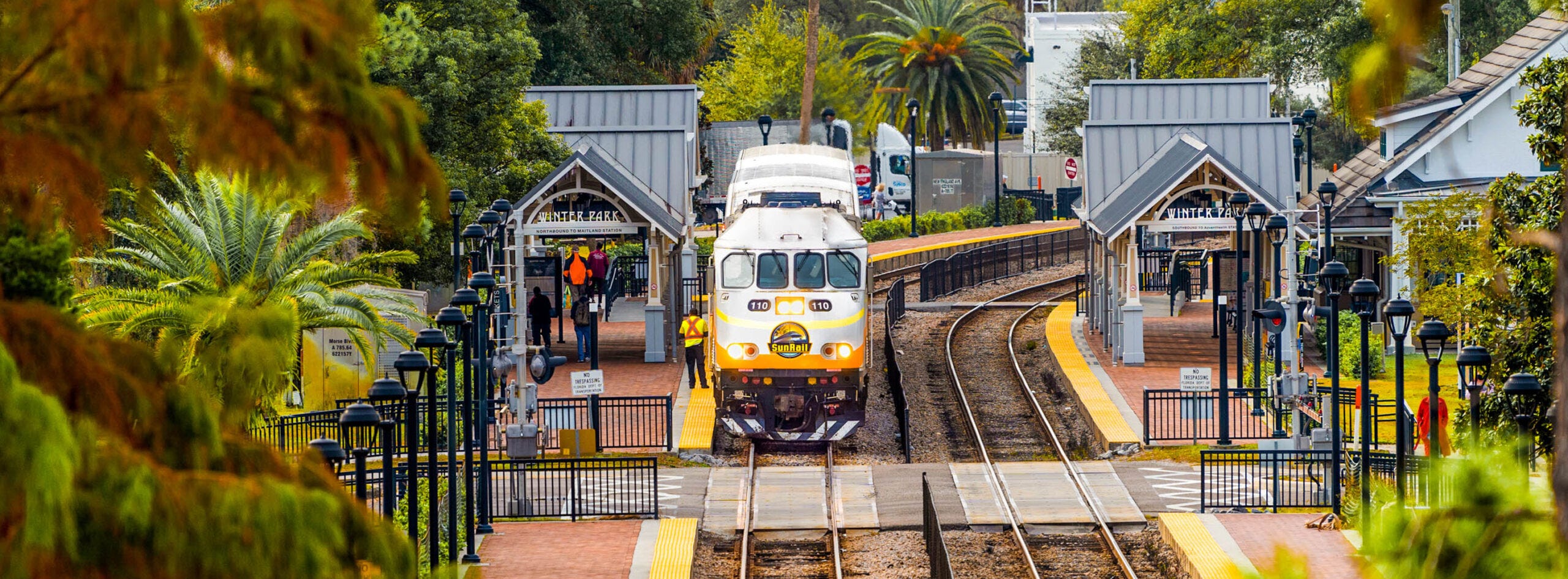
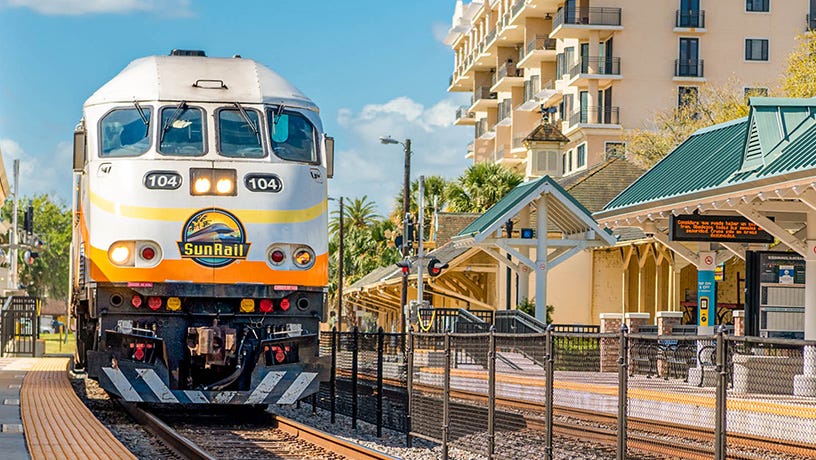
Spend time in Florida, as I do several times a year, and you notice that the rail story there is not one line but a layered network, which is exactly how a mature rail geography is supposed to look. Brightline is the glamorous intercity layer, the one that gets the headlines. Underneath it runs SunRail, the Orlando area’s commuter line, a seventeen-station spine that threads from DeBary and Sanford in the north down through the suburbs and into the center of Orlando and on toward Kissimmee. And braided through both is Amtrak, which shares several of those stations and runs its long-distance service, including the Auto Train that famously starts at Sanford.
What I like about this layered map is how ordinary it makes the train feel for the people who live along it. The commuter line connects places that matter to real working lives, Lake Mary with its cluster of corporate offices, Winter Park with its genuinely timeless charm that most visitors miss because they are rushing to the theme parks, Sanford with a revitalized historic downtown that feels like a small time capsule. None of those are tourist spectacles. They are the connective tissue of a region, and rail is how a surprising number of people reach them.
A caution worth stating, since it trips up even careful writers, is that Sanford and Winter Park sit on SunRail and Amtrak, not on Brightline, so the honest way to describe Florida is as a network of complementary services rather than a single brand. That is also the point. A place has real rail when it stops being a single famous line and becomes a layered system you can stop thinking about.
What Europe taught me without my noticing
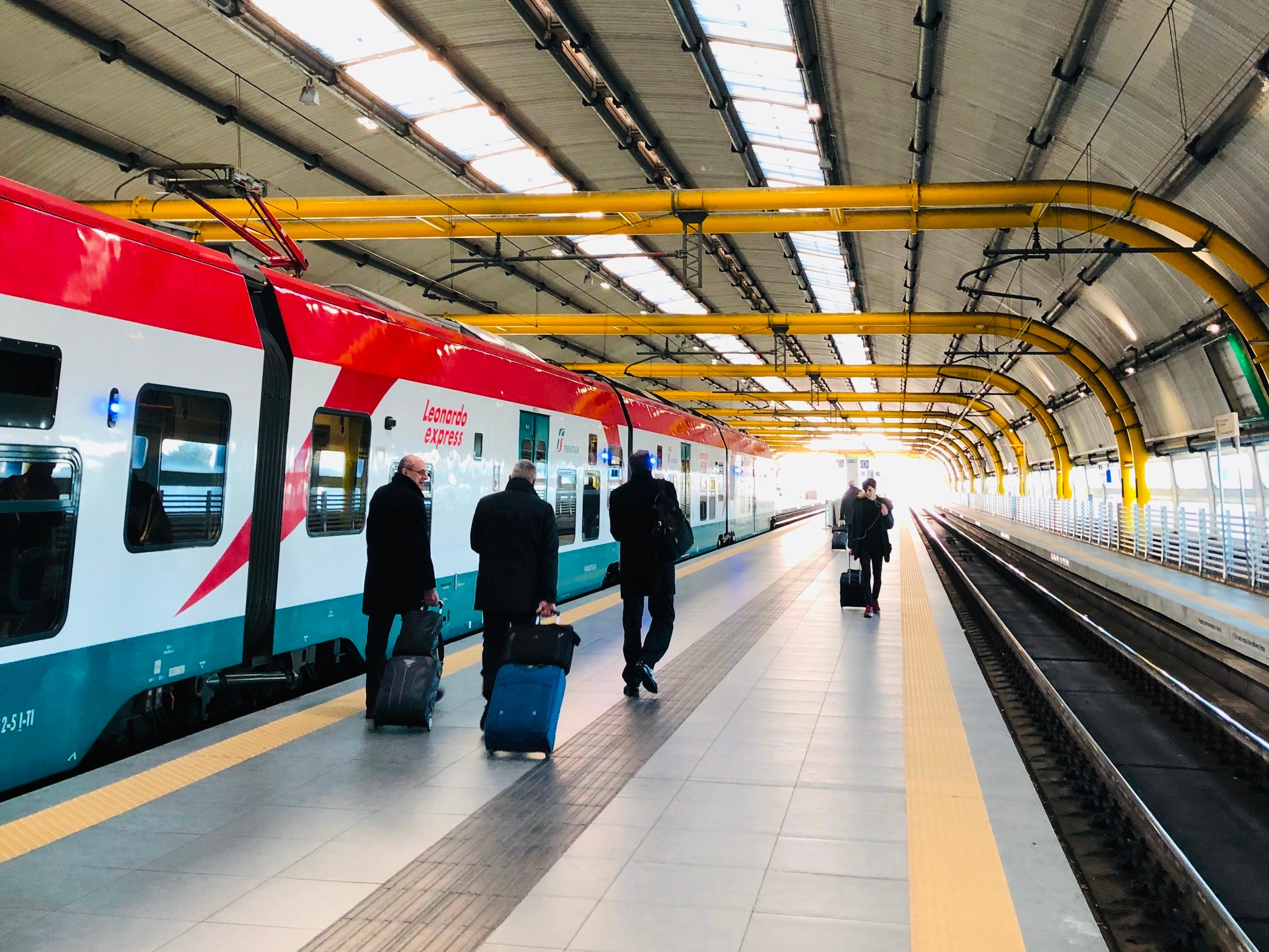
Which brings me to the continent that taught me what rail can be, back when I was too busy using it to appreciate it. For four years running I crossed Switzerland in every direction, north to south and east to west, relying entirely on its urban and intercity rail, and I cannot recall a single time I worried about whether a train would come. I once rode from Dresden to Prague and watched a river valley unspool through the window in a way no airplane will ever offer. I got around the whole of Milan on the ground. I used the trains of Germany, of London, of Edinburgh, and I moved through Paris, the so-called fifteen-minute city, without once needing a car. Even the interior of Spain, far from its glamorous coasts, was reachable by rail.
The thing I took from all of it took years to surface, and it is this. In a mature rail culture, the train becomes invisible. You stop admiring it and start simply living around it, the way you do with running water or electric light. That invisibility is not the absence of an achievement, it is the whole achievement, the sign of infrastructure so reliable it has sunk beneath conscious notice. It is the same quiet magic I have written about in aviation, where the real triumph is making distance stop feeling like an obstacle. Europe did that with rail so thoroughly that its own residents forget to be impressed. I never did, maybe because I came from a place where the train never got the chance to become invisible, because for the most part it never arrived at all.
Why so much of our map is empty
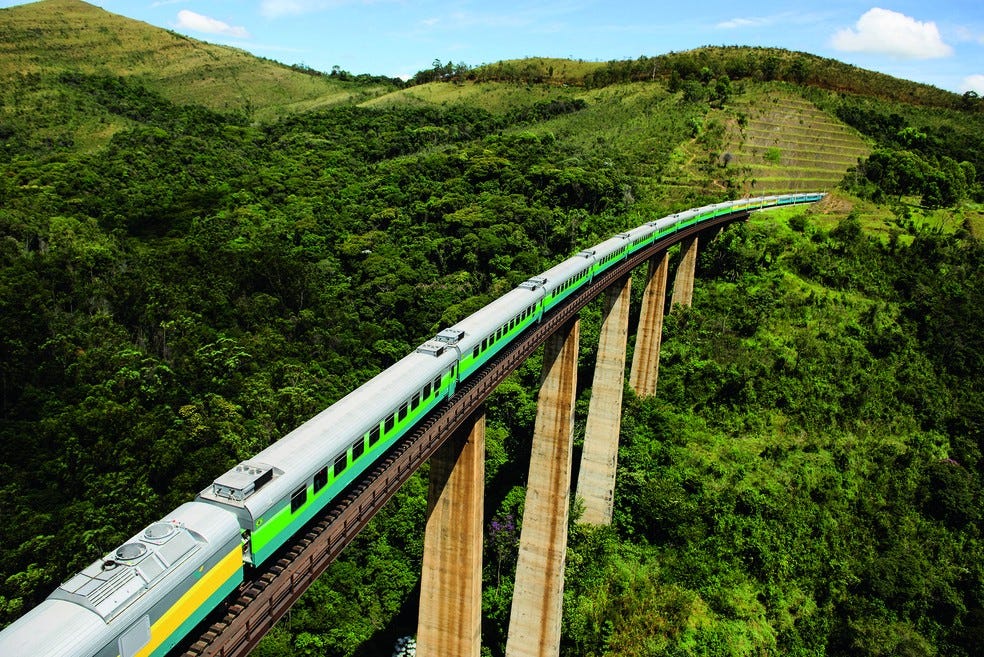
Here is the uncomfortable part, and I want to handle it with precision rather than lament. Latin America has very little intercity passenger rail, and the reasons are a genuine mix of the physical and the political. The geography is, frankly, brutal for railroads. The Andes form a wall down the western edge of the continent, the Amazon basin swallows infrastructure, and the sheer distances between major cities are continental in scale. Laying and maintaining track across that is a feat of geology as much as engineering, and it is fair to say nature did not design this continent for the railway the way it arguably designed the plains of Europe or the American Midwest.
But geology is only half the story, and the honest half-admission is that the other half was choice. For decades the region invested in roads and air links and let its historic rail networks wither, and the capital intensity that is straining even a successful operation like Brightline helps explain why private money rarely rushed to fill the gap.
None of this is a verdict of inferiority, and I want to be clear about that, because the lazy version of this argument treats the empty map as evidence that the region is simply behind. It is not behind. It made different bets under harder conditions, and it is now in a position to make new ones with far better technology and a clearer view of what rail is worth.
There is even an argument that arriving late is a quiet advantage, since a region that never over-built around a previous generation of track can design for the routes and the demand that actually exist today, rather than maintaining a sprawling network inherited from another century. Starting with a mostly empty map is painful, but it is also a blank one. The same instinct I keep returning to, that the value in how we move hides in the structure underneath, applies to a railway even more than to a hotel. The structure is the whole story, and the structure can still be built.
The one line worth watching
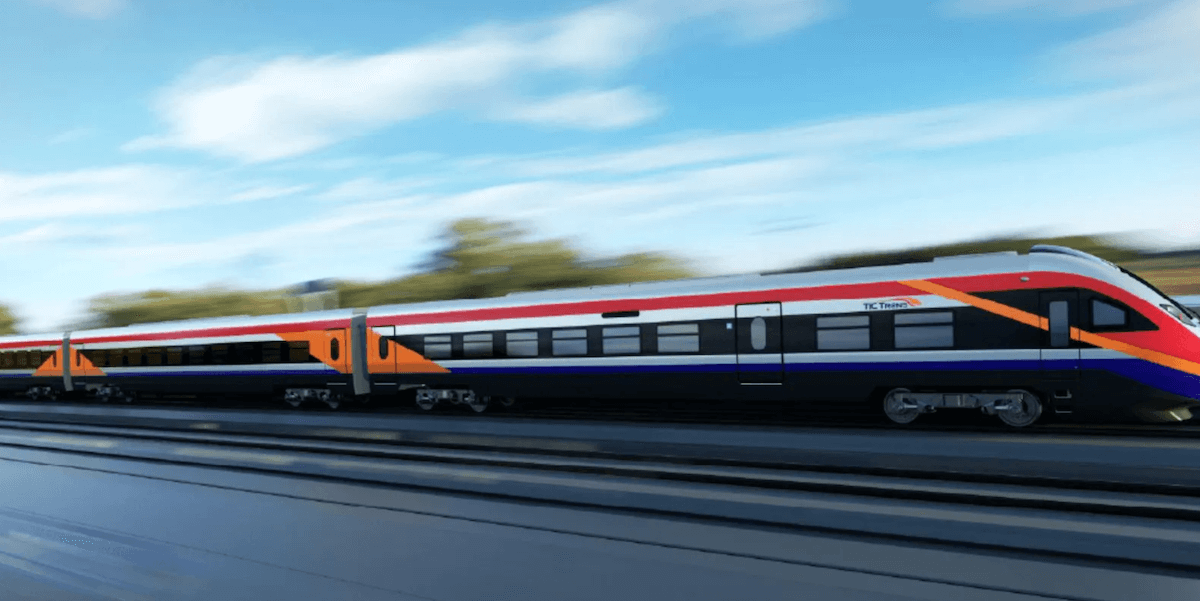
If you want a reason for optimism that is concrete rather than sentimental, look at the corridor between São Paulo and Campinas. The state of São Paulo has moved forward on an intercity train there, a project reported at roughly 2.7 billion dollars that would give Brazil a genuine modern intercity passenger service on one of the densest, most economically important stretches of the country. It is exactly the kind of route where rail makes sense, two large cities close enough together that the airplane is inefficient and the highway is congested, with enough daily demand to justify the enormous cost of the track.
This is the honest test case for Latin American rail, and I will be watching it closely, both as an enthusiast and because the corporate travel world I work in has a real stake in it. When a dense corridor gets a fast, reliable train, the business trip between those cities changes character entirely, from a half-day of airport friction or traffic into something closer to the effortless hop I took for granted in Switzerland. A travel program that today thinks only in flights and car services will need to learn to think in rail too, and declaring that interest is only fair.
The São Paulo to Campinas line will not fix a continent. What it can do is prove the model at home, in our own geography and our own economics, which is the thing a thousand admiring references to foreign railways never quite can.
The case for building it anyway
So the train is back, in the Gulf, in Florida, across the Europe that taught me to love it, and the question for my region is not whether rail is viable but whether we will decide it is worth the enormous, patient investment it demands. The geology is real and the capital is daunting, and both of those are reasons the job is hard, not reasons to leave it undone. The corridors that make sense here are obvious to anyone who has sat in the traffic between our big cities or watched the short-haul flights shuttle back and forth burning fuel over distances a train could cover in comfort, and I remain, as I tend to be about this region, stubbornly optimistic that we build the thing rather than admire it from afar.
I keep coming back to that window between Dresden and Prague, the river turning below me while I did nothing but watch. There is a version of that view waiting on a dozen routes across Latin America, between cities that currently know each other only through airports and highways.
The track is not there yet, and laying it will be expensive and slow and occasionally require a restructuring agreement of its own. It will still be worth it, because a continent that can move its people the way the best rail cultures do is a continent that has quietly solved something most of the world is only now remembering it wanted. The world is rediscovering the train. It would be a shame to be the last ones to get on board.
About me

I am an entrepreneur with over 20 years of experience at the intersection of tourism and technology. I am co-founder and Chief Business Officer of VOLL, the largest mobile-first corporate travel and expense management platform in Latin America, where I lead the commercial strategy behind our AI adoption.
A first-cohort graduate of The AI-Powered Organization at Stanford Graduate School of Business and a Marketing specialist from Fundação Dom Cabral, I serve on the Tourism Council of FecomércioSP and on the Executive Council of the Latin American Association of Corporate Events and Travel Management (Alagev). I write and speak about innovation, digital transformation, entrepreneurial leadership, and the future of corporate travel.
Discussion about this post