


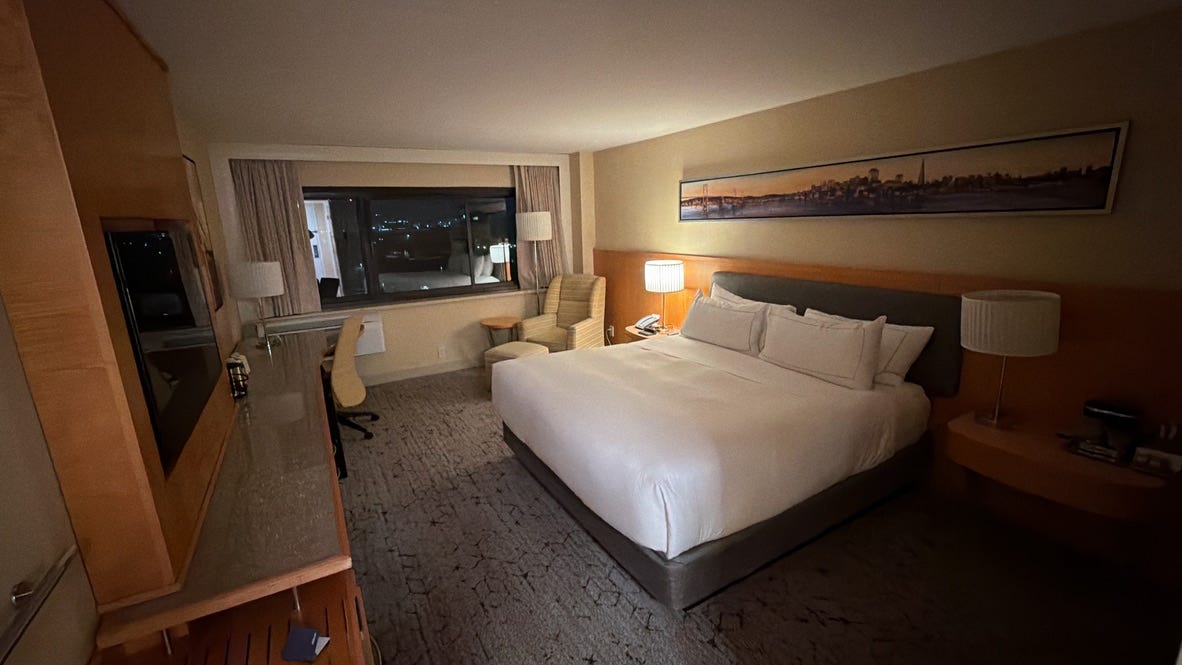
Ninety percent of business travelers say their hotel room is the only place they feel truly off the clock. I read that figure in a new study Hyatt ran with Talker Research, and my first reaction was not surprise but recognition, followed by a small, uncomfortable thought. If the hotel room is the one place a person finally stops working, why did the same survey find that most of them keep working there anyway? The room is doing a job nobody put in the budget, and it is worth asking what that job actually is.
I should say upfront where I sit, because it shapes how I read any number like this. I spend a large share of the year in hotel rooms, I run a company on the corporate side of this industry, and I have a professional interest in travelers arriving functional rather than frayed. I also have a personal one.
I pick where I stay by how close it is to the office I am visiting, I almost never book the same hotel twice, and I have come to treat the room as the quiet center of a noisy week. So I am not a neutral observer of this data. I am one of the ninety percent.
The room became the office nobody asked for

Start with the contradiction, because everything else hangs off it. In the same study, fifty-three percent of business travelers said they work most nights after the official workday ends, and twenty-two percent said they work every single night on the road. The talker.news writeup of the research put the headline plainly: nine in ten of us struggle to switch off on a work trip. So the sanctuary has a desk in it, and the desk is in use.
This is not a scheduling accident. It is the predictable result of what the workplace has quietly become, a condition researchers have started calling digital presenteeism, the felt need to be visibly online and responsive well past any reasonable stopping point. On a trip, that pressure does not ease, it concentrates. You are already away, already slightly guilty about the cost of the flight, already aware that the people back at the office can see the little green dot next to your name. The hotel room becomes the place where all of that follows you, and then you close the curtains and answer three more messages before bed. The room is the only boundary left, and it is a soft one.
A sanctuary you feel guilty for using

Here is the part of the data that stayed with me. Nearly half of the travelers surveyed, forty-six percent, said they feel guilty when they decline an optional work activity to decompress in their room. Think about the strangeness of that. People feel they need permission to rest in the one space the company is already paying for, and most of them do not feel they have it.
So they improvise. The survey catalogues the small deceptions business travelers use to buy back an hour of their own evening, and they are more inventive than I expected. Forty-seven percent have skipped networking to retreat to their room. Thirty-six percent admitted to blocking fake meetings on their calendar. Thirty-three percent invented a conflicting commitment to get out of a work dinner. These are not lazy people. These are high performers constructing elaborate alibis for the radical act of sitting quietly by themselves for ninety minutes.
A quick word on the source, because I think readers deserve it. Hyatt commissioned this survey, and a hotel company asking travelers how much they value hotel rooms is not exactly a disinterested jury. The framing leans, as sponsored research tends to, toward the sponsor’s product. I have made the same argument about other industry research I have no stake in, and the discipline is always the same. Take the numbers, which are large and internally consistent, and leave the marketing conclusion on the table. The useful finding here is not that Hyatt rooms are wonderful. It is that a broad sample of working adults has started treating a rented room as the last defensible border of their personal time, and feels guilty about defending it.
What the room is quietly being asked to do
Strip away the amenities language and the hotel room, for the modern business traveler, has become the physical stand-in for a boundary the job stopped providing. The office has a door you can leave. The home has an evening that, in theory, belongs to you. The business trip collapses both, and the room is what is left to hold the line.
That is a heavy assignment for four walls and a minibar. It also explains why the small frustrations of a bad room land so much harder on the road than they would at home. A noisy corridor, a bed that fights you, wifi that drops in the middle of the one call that mattered, these are not inconveniences when the room is your only refuge. They are a breach of the one place you had left. I have written before that the traveler was never really asking for another app, and this is the same instinct seen from inside the room. What people want is for the space to simply work, so they can stop managing it and start recovering in it.
Societies have started to notice that this boundary needs defending, and some have reached for the law. A growing list of countries now has some form of right-to-disconnect legislation, rules that try to protect an employee’s evening from the employer’s email. The interesting detail, which I will come back to, is which part of the world moved early on it. For now, the point is simpler. When a government has to legislate the right to close your laptop, you can safely assume that a lot of people were not managing to close it on their own, and that many of them were in a hotel room at the time.
The amenities are not perks, they are the border fence
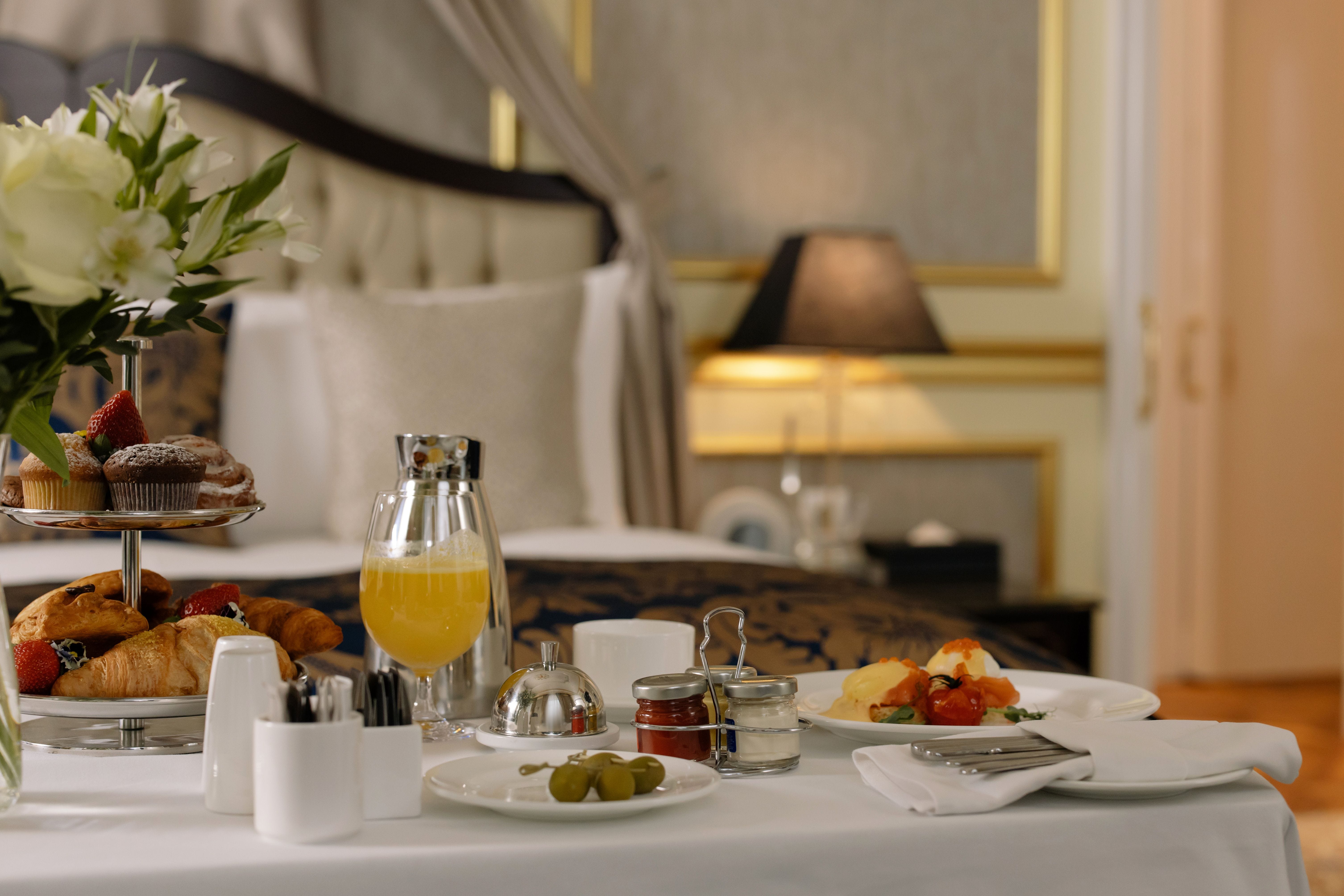
Look at what travelers actually said they want most, and it reads less like a wish list and more like the minimum equipment for holding that border. The top five, in order, were a comfortable bed at thirty-one percent, fast and reliable wifi also at thirty-one percent, twenty-four-hour food at twenty-five percent, complimentary breakfast at twenty-three, and early check-in at twenty-two. Hospitality Net covered the full breakdown of the amenities data, and what strikes me about the list is how unglamorous it is. Nobody is asking for a rooftop infinity pool. They are asking to sleep, to connect, to eat when their body clock is wrong, and to not stand in a lobby with their luggage because a room was not ready.
Read those requests as what they really are, which is a demand for control over your own time. The comfortable bed protects sleep. The reliable wifi means the work gets done fast enough that the evening survives. The twenty-four-hour food is there because a traveler who lands at eleven at night is not interested in being told the kitchen closed at ten. Early check-in is the difference between starting your recovery at two in the afternoon or at six. Each amenity is a small transfer of control from the trip back to the traveler, and that is why they matter so much more than their modest descriptions suggest.
The business stakes behind this are not soft either. In the same research, eighty-seven percent of travelers said the hotel can make or break the success of a trip, and seventy-nine percent said a high-quality stay improves their actual work performance. I treat those two numbers as the whole argument for taking the room seriously. The hotel is not the reward at the end of the working day. On a trip, it is one of the inputs to the working day, and a program that treats it as a line to be minimized rather than a condition of performance is cutting the one thing travelers quietly refuse to give up.
What a travel program keeps missing about the room
his is where my own line of work comes in, and where I have to be honest about both my bias and the limits of what technology can do. The instinct, when you build software for corporate travel, is to reach for the measurable. Cost per night, policy compliance, booking channel, the clean numbers that fit in a dashboard. The room, as an experience, resists all of that. You cannot easily put a figure on whether someone slept, or whether the wifi held, or whether they felt enough like themselves the next morning to close the deal they flew out for.
So those things tend to fall off the edge of the program, not because anyone decided they do not matter, but because they are hard to see. The honest work, the work I actually care about, is giving the people who design travel policy enough visibility into the traveler’s real experience that the room stops being a blind spot. That means knowing that a particular traveler is a light sleeper, or needs reliable connectivity for late calls, or is landing too late for a normal dinner, and letting that shape the booking rather than leaving it to luck. It is the same lesson I keep drawing about this whole industry, that the human details are where the value lives, and that a system which only manages what is easy to count will keep missing them. A good platform does not make the traveler feel at home. It makes it far more likely that the room they are sent to can.
The region that legislated the boundary first

I promised to come back to geography, and here it is, because it flips the usual script in a way I find genuinely encouraging. When people picture the countries that protect a worker’s right to switch off, they tend to picture Western Europe, maybe Australia. But one of the earliest and clearest laws on the books came from Latin America. Colombia passed its right-to-disconnect law, Ley 2191, in January 2022, guaranteeing workers the right to not be contacted outside working hours, well before Australia’s much-discussed 2024 version. The region did not trail this idea. On this particular boundary, it led.
I do not think that is a coincidence. The deep skill behind everything in this survey, the thing that turns a rented room into a refuge, is hospitality in its oldest sense, the ability to make a stranger feel at home somewhere that is not their home. That is not a skill Latin America needs to import. It is arguably the thing the region does best, the warmth and attentiveness I grew up around and still feel every time I check into a hotel in São Paulo or Bogotá or Mexico City. I have argued before that this is the most optimistic corner of the travel industry to be building in, and the refuge data is one more reason why. The instinct to care for the person in front of you is already here. The opportunity is to turn that instinct into systems, so the care arrives reliably and not only when the right person happens to be on shift.
The quiet math of a good hotel room
So the hotel room is carrying more than we ever officially asked it to. It is the office after hours, the boundary the job stopped drawing, the one space a traveler can shut the door on the little green dot. Ninety percent of travelers already know this, even if they feel guilty saying it out loud, and the companies that figure it out will get something they cannot buy with a lower nightly rate. They will get people who arrive able to do the work.
I thought about all of this the last time I checked in somewhere new, dropped my bag, and felt the particular relief of a door closing behind me. Then, of course, I opened the laptop. The room, to its credit, did not judge me. It just did its quiet job, the kind of attentive, invisible work a great receptionist understands and an algorithm does not, which is the whole point, and a great deal more than most of us remember to ask of a room.
About me

I am an entrepreneur with over 20 years of experience at the intersection of tourism and technology. I am co-founder and Chief Business Officer of VOLL, the largest mobile-first corporate travel and expense management platform in Latin America, where I lead the commercial strategy behind our AI adoption.
A first-cohort graduate of The AI-Powered Organization at Stanford Graduate School of Business and a Marketing specialist from Fundação Dom Cabral, I serve on the Tourism Council of FecomércioSP and on the Executive Council of the Latin American Association of Corporate Events and Travel Management (Alagev). I write and speak about innovation, digital transformation, entrepreneurial leadership, and the future of corporate travel.