


A rumor that was never true, and a 50 percent drop
In 2025, a rumor spread online that a major earthquake was coming. It had no scientific basis. Bookings in some East Asian markets fell by as much as half.
Nothing happened. No earthquake, no physical disruption, no damage to a single hotel or runway. The demand shock arrived anyway, ahead of an event that never occurred, and destinations absorbed real economic loss from something that existed only as information moving quickly.
That case appears in a report published this month by TOURISE and Oxford Economics, which reviewed 85 major tourism crises over the past two decades. It is the single most useful example in the study, because it separates two things the industry habitually conflates: the disruption itself, and the collapse in confidence that surrounds it.
Travel disruption preparedness is usually budgeted as a response capability. The evidence suggests it works better as a confidence capability, and confidence can be damaged without anything physical going wrong at all.
What the numbers say about preparing early
The central finding of the report, titled Resilience in a World that Doesn’t Reset, is that destinations taking preventive action before disruption occurs recover up to 1.5 times faster than those that begin responding once a crisis is already underway.
The report also documents something genuinely encouraging. Average recovery periods have compressed substantially. In the early 2000s, a destination commonly needed around 24 months to recover from a major disruption. Today the typical range is 10 to 12 months. The study attributes the improvement to better crisis management, faster communication, and more operational flexibility in how travel is delivered.
Adam Sacks, president of Tourism Economics, noted alongside the report that international tourism reached a record 1.52 billion arrivals in 2025, despite a decade containing both natural disasters and human-caused crises. The sector has become considerably better at absorbing shocks than it was twenty years ago.
The caution the report attaches to that improvement is the part worth reading twice. Recovery times fell because crises were largely sequential, arriving one at a time with room to recover in between. The report’s argument is that this assumption no longer holds, and that overlapping disruptions affecting routes, energy costs, supply chains and consumer confidence simultaneously could slow or reverse the gains.
Two disclosures about this report
Before going further, two things about the source.
TOURISE is chaired by Saudi Arabia’s minister of tourism, and the report uses Saudi Arabia’s own tourism performance as its illustration of how diversification supports resilience. A state-backed body producing research whose showcase example is that same state is worth flagging, in the same way I would flag a vendor study concluding that the answer is the vendor’s product category.
Second, several of the report’s forward-looking scenarios are built on geopolitical variables. I write about the economic and operational consequences of those situations rather than the politics of them, so I am setting the scenario modeling aside and working from the historical analysis, which is where the useful material sits anyway.
Neither point invalidates a review of 85 crises across two decades. Both are reasons to take the data and leave the framing.
Concentration is its own risk
One structural observation in the report deserves attention independent of any particular event.
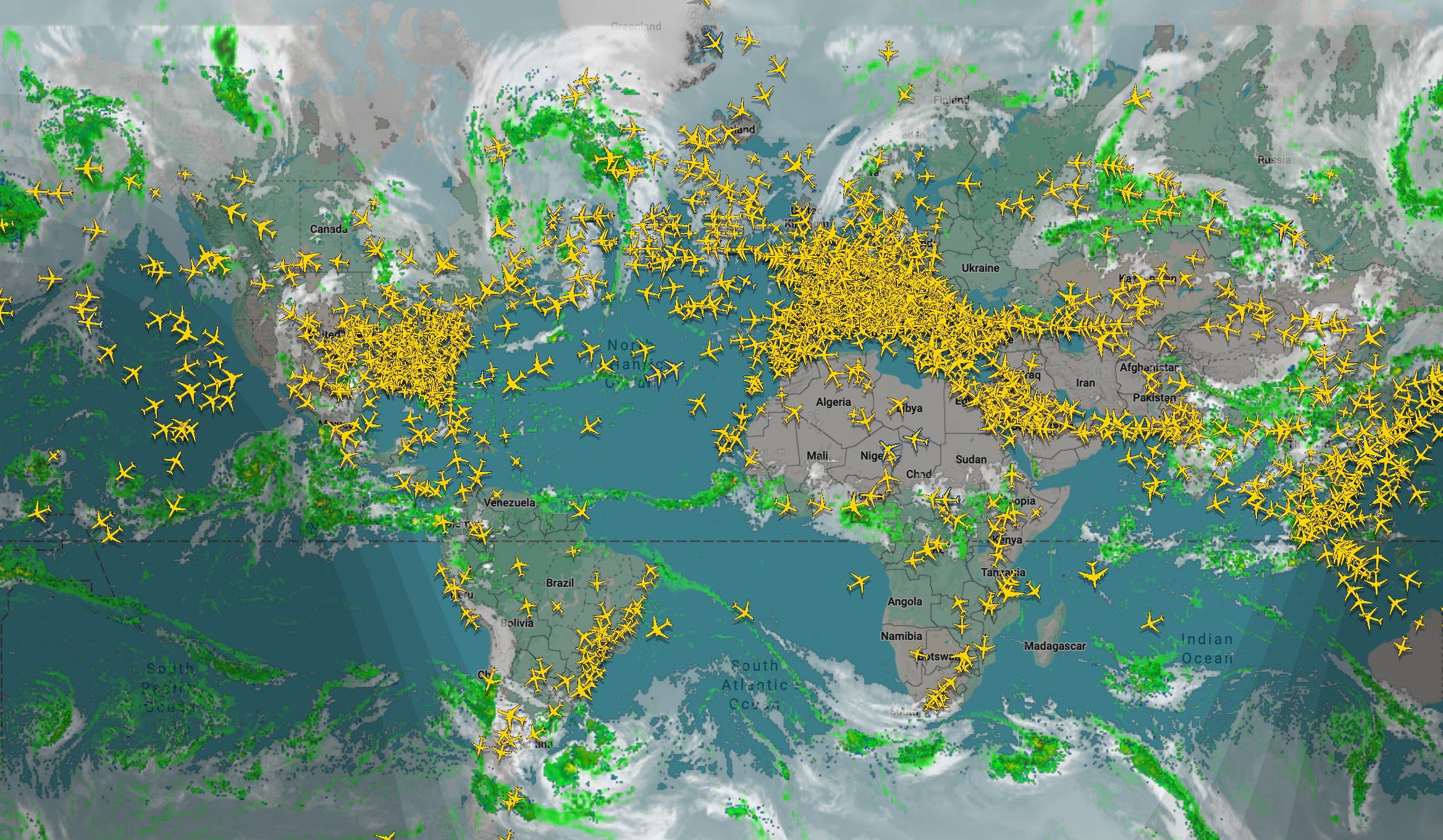
A large share of global transit traffic passes through a small number of connecting hubs. The report puts the figure at roughly 14 percent moving through a single regional hub cluster. That concentration exists because it is efficient. It also means an operational problem at a small number of airports propagates into travel flows on continents with no direct connection to the cause.
Corporate travel has already lived a clean demonstration of this, and it was not a crisis of the kind anyone plans for. On 19 July 2024, a faulty update from a security software vendor took millions of systems offline worldwide, cancelling more than 5,000 flights and leaving hotel guests unable to check in or out. The GBTA’s annual convention opened three days later in Atlanta, with many of the several thousand expected attendees unable to arrive on time.
The people who manage travel disruption professionally spent that week stranded by one, caused by a routine software update rather than by any threat anyone had modeled.
Concentration risk is not only geographic. It is also technological, and the second kind is less visible because it does not appear on a map.
What this looks like from inside a company
I sat on a panel this month at the World Trade Center São Paulo Business Club’s CPO Committee, alongside procurement and supply chain leaders from companies in completely different industries. The session was called Under Pressure, and the subject was how risk is reshaping corporate decision making.
What I brought to that conversation was a simple observation. No corporate budget I know of, built at the end of last year, anticipated what happened to jet fuel costs in 2026. The shock arrived from outside the sector, moved through the cost chain, and reached the price of a ticket quickly. Companies, travelers, airlines and procurement teams were surprised at the same moment, all of them needing to respond fast to a price pressure nobody had modeled.
What struck me in that room was the recognition. These were experienced professionals who manage supplier risk, currency risk and contract risk as routine parts of their week.
And this specific category of disruption, the kind that arrives from outside the value chain entirely, was new territory for essentially everyone at the table.
Travel tends to be where that becomes visible first. Before a cost increase appears in a contract, the flight has already become more expensive. Before a supplier sends a formal notice, someone has already had to rebook a trip.
The uncomfortable implication for travel programs
If the report’s central finding is right, preparation has measurable value and the preparation happens during calm periods, then most corporate travel programs are underinvesting in exactly the wrong direction.
Most programs have a duty of care protocol covering physical incidents. Far fewer have anything comparable for cost shocks, information incidents, or the compounding kind of disruption where several things break at once. And almost none run the exercise in advance, when nothing is wrong, which is the only time it is possible to think clearly about it.
The three factors the report identifies as determining recovery speed translate reasonably well from destinations to companies:
Confidence, which for a travel program means whether travelers trust the guidance they receive when things go wrong.
Connectivity, which means knowing what alternatives exist before needing them.
And affordability, which means having decided in advance what the company will absorb rather than negotiating it mid-crisis.
Preparation is the clearest instance of that principle, since its entire value is the cost of things that then do not happen, which is precisely the number nobody can put on a slide.
Where this leaves the region
The report is about destinations, and its data comes overwhelmingly from markets outside Latin America.
There is a version of this analysis worth doing here specifically, because the region’s exposure profile is genuinely different. I have written about how Brazilian airfares stayed expensive even when input costs moved in the country’s favor, which suggests the transmission of a cost shock into a ticket price behaves differently here than a global model would predict. Latin America has also repeatedly absorbed new technology and new operating conditions faster than markets that had more time to prepare, which is its own form of resilience and one that rarely gets counted as such.
The most useful thing I took from three days at a global convention this year was how often a finding gets treated as universal when it was measured in one place. A 1.5 multiplier on recovery speed is a compelling number.
Whether it holds in a region with different route concentration, different currency exposure and different institutional capacity is an open question, and one worth answering before anyone builds a plan around it.
About me

I am an entrepreneur with over 20 years of experience at the intersection of tourism and technology. I am co-founder and Chief Business Officer of VOLL, the largest mobile-first corporate travel and expense management platform in Latin America, and a recognized reference in the development of the corporate travel industry.
A Marketing specialist from Fundação Dom Cabral, I serve on the Tourism Council of FecomércioSP and on the Executive Council of the Latin American Association of Corporate Events and Travel Management (Alagev). A frequent traveler and close observer of human behavior in motion, I write and speak about innovation, digital transformation, entrepreneurial leadership, and the future of corporate travel.