My first Tesla ride ended with a driver saying "voilà". Travel policy needs a better answer
Turo now lets US renters pick Teslas with supervised self-driving. What it means for the corporate rulebook, from Vienna on.


Vienna, 2019. It was my first visit to Austria, and I had just done what every visitor to the city is supposed to do: sit down at the Hotel Sacher and try the Sachertorte. I will confess it was not my favorite dessert. I grew up on Brazilian sweets, which are very sweet, and the Austrian version is balanced and elegant in a way that my palate was not yet trained to appreciate.
With three friends, I decided to take an Uber X back, because the euro had to be worth every cent. What arrived was a Tesla, the first one I had seen up close. The door handle sat flush against the body. A giant screen took over the middle of the dashboard. The windshield was so large and so lightly framed that the ride felt like a panoramic tour. I was a tourist in a car that looked like it had come from somewhere else.
The driver noticed the excitement of four Brazilians in the back seat. Somewhere in the historic center, he switched on the automatic mode, let go of the wheel and said “voilà”. In my memory, the car did most of the driving by itself until we reached our destination.
It felt like The Jetsons, with one important addition: charm, mixed with a small and honest dose of fear.
That ride stayed with me for seven years. Last week, it came back, because on October 28 a very different version of it became available to anyone in the United States with a Turo account.
The city that taught me music before it taught me cake
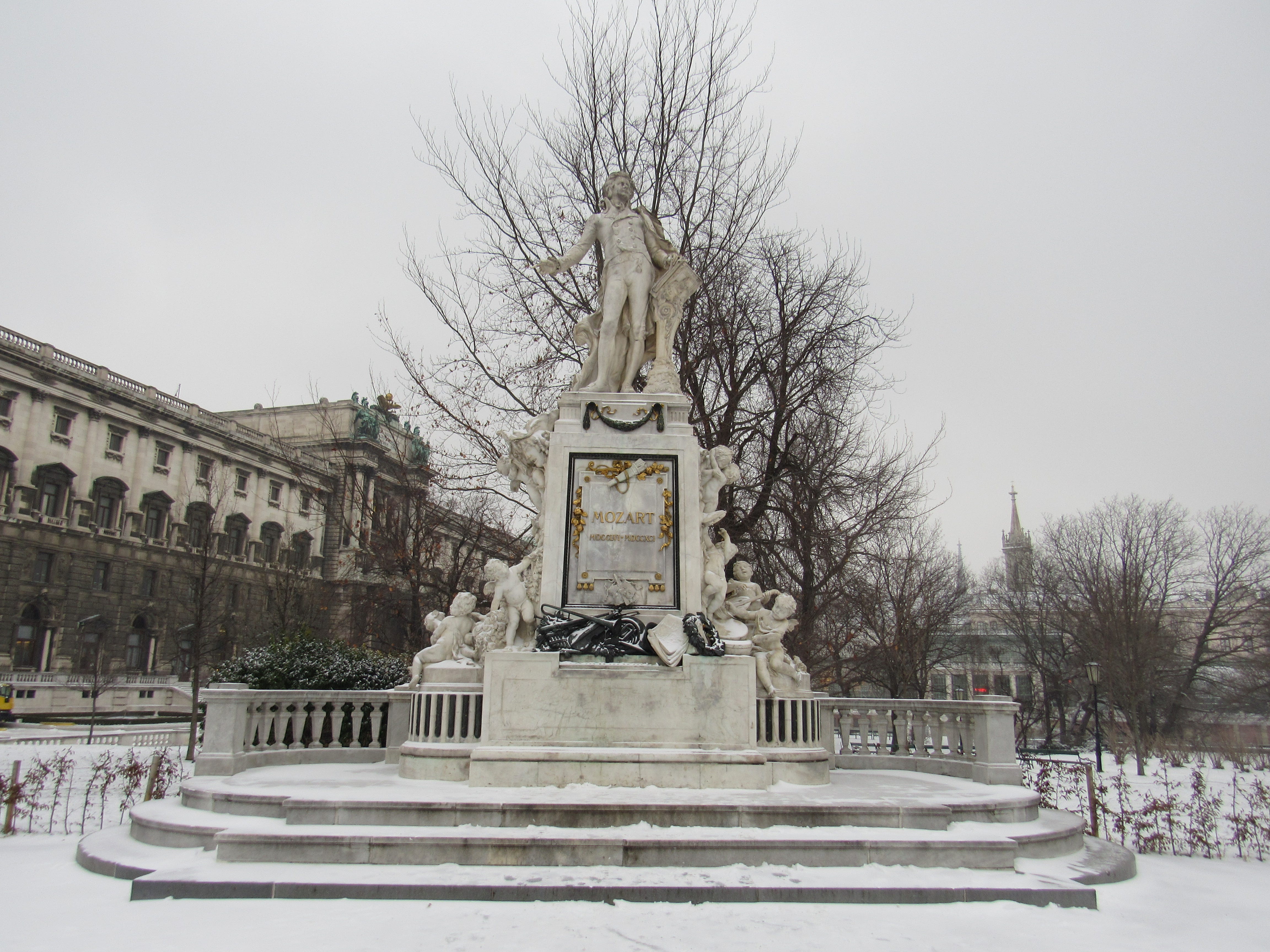
Let me explain why that Vienna afternoon matters to me beyond the car. Vienna is one of my favorite cities in the world, and the reason goes back to my childhood. Vivaldi, Mozart, Bach, Chopin, Beethoven, Tchaikovsky: I heard them first on cheap CDs bought at the supermarket and at newsstands, and my mother, a retired teacher, is part of that story. Vienna is where those names live.
That is why the memory of the ride is so vivid to me: the newest car I had ever seen was moving through a city that I had loved since childhood through its music. The old and the new were sharing one street, with a little tension between them, and I think that tension is the right place to begin.
Seven years later, you can pick one from a menu

Here is what changed. According to Auto Rental News, as of October 28, customers of the peer-to-peer car marketplace Turo in the United States can identify and rent Teslas equipped with Full Self-Driving (Supervised). Before the change, a renter had to book first and then ask the host whether the car had the feature. Now the information appears before the booking.
The details matter. The company verifies the feature through a direct connection with Tesla’s systems, which confirms which vehicles have it enabled. Turo does not charge an extra platform fee for rentals with the feature, and it has not created a separate insurance or protection arrangement for them: the existing protection structure applies. Hosts set their own prices. Renters get access to Tesla’s instructional material, including a tutorial video. Expansion to Canada and Australia is planned, with no date announced.
I find the whole thing admirable in a quiet way. Turo noticed a gap in the market, a clear way to know whether a given car has the driver-assistance feature the owner is advertising, and closed it with a data connection instead of a guess. Its senior vice president, Tim Rossanis, described the lack of that clarity as something the industry had been missing. That is the kind of practical problem-solving I would like to see more often in travel.
Supervised is the word that carries the whole policy
Now for the part where I look at the fine print with the polite skepticism it deserves. The article makes a careful distinction that I wish more headlines would copy. In its words: “The vehicles aren’t autonomous. Drivers must remain attentive and ready to intervene.”
The system can steer, accelerate, brake and navigate, and the person behind the wheel remains responsible for driving. The word “supervised” holds an entire allocation of responsibility inside it. It tells the renter that the technology helps and that the human answers for the result. It also means that the renter has to understand the limits of the system, and when to take control, in a rental where pickup is usually contactless and the explanation arrives through a screen.
I want to be careful with that last point, because I do not want to turn a clever product launch into a warning. The point I want to make is for the corporate world. Turo is a consumer marketplace, and a business traveler can still end up using it, for instance on a personal stretch of a trip or on a weekend added to a conference. When that happens, a handful of questions land on the travel manager’s desk. Who is responsible if something goes wrong? Does the company’s rental coverage, or the corporate card’s, apply to a peer-to-peer marketplace? What does the duty of care look like for an employee who is trying out a driver-assistance system in a city they do not know?
The explanation of the system matters here too. Because Turo pickups are usually contactless, most of the guidance has to reach the renter remotely, which is why the tutorial video and the instructional material from Tesla are more than a courtesy. Rossanis said the feature is fairly intuitive once it is on, though hearing an explanation helped him the first time he used it.
As the article puts it, the renter also has to understand the system’s limits and when to step in. A traveler who arrives tired from a flight is the person least likely to watch a tutorial carefully, and that is a design problem as much as a policy one.
I do not have legal answers, and I would not trust any article that claimed to. What I can say is that these are questions for the insurer and the legal team, and that they are much easier to answer before a traveler asks than after.
San Francisco taught me not to ban what is already on the street
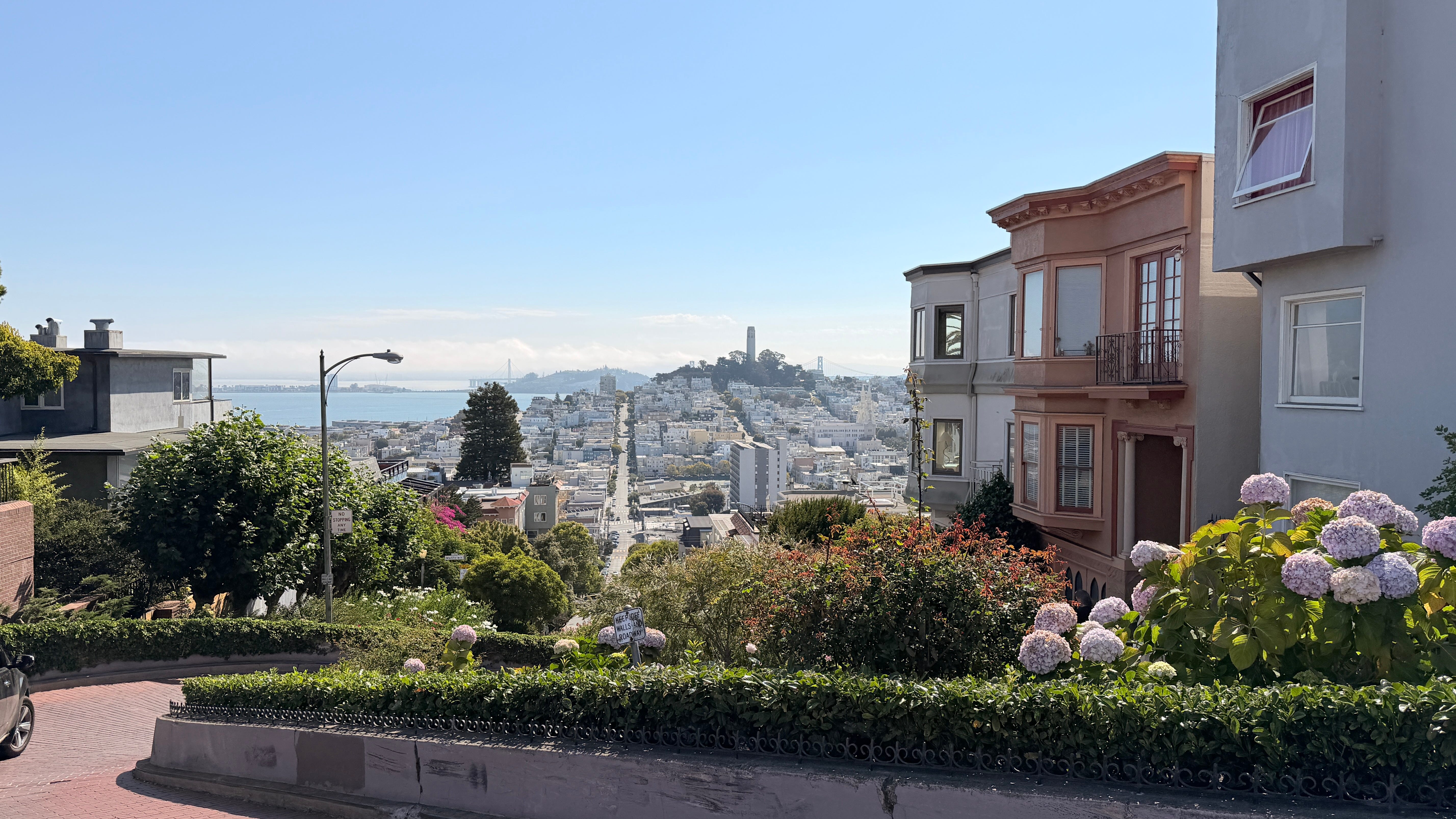
I came to this subject from a street in San Francisco. I walked there in August and wrote about it in my piece on the cities with the most to gain from robotaxis, so I will leave that scene where it was. What I did not say then is that I never rode in one of those cars. My App Store account is set to Brazil, and as far as I understood, I would have to change the country on my iPhone to download the app. I did not want to gamble with my saved passwords for a ride. A small logistical fear beat a large curiosity.
I have ridden in a Tesla in Dallas in 2023, in Atlanta in 2024 and in Denver in 2025. In Chicago, I rented a different car. And in San Francisco I saw vehicles from Google’s Waymo and, if my memory serves, from Amazon’s Zoox, which began offering rides to the public in the city. Those cars looked like part of the street, much as a taxi does.
That sight shaped my position, and I will state it directly: a travel policy should permit. It should give direction and set limits on what belongs to the company and what belongs to the traveler. It should not forbid what is going to happen anyway. In a city like San Francisco, riding in a Waymo or renting a Tesla is an invitation that arrives without being sent, and a rule that bans it asks the traveler to work around the company’s own policy.
If a company wants to authorize something expressly, I believe it should do so on purpose, by naming the operators it recommends, and the travel manager should know those operators well enough to defend the list. It is the same reasoning I applied in my look at the IRS per diem map: a rule that tries to cover everything with one sentence ends up fitting nowhere. A short list of vetted options is easier to follow than a long list of prohibitions.
A named list also changes the conversation inside the company. When a traveler asks whether they can use a service, the travel manager has an answer that does not depend on mood or memory: it is on the list, or it is not, and the list has an owner and a review date. That owner can add an operator after a pilot, remove one after a bad experience, and explain the reasoning to finance and to the legal team.
The alternative is a collection of private exceptions, each negotiated by email, none of them visible to the people who will have to defend them later. A short list that someone maintains is a form of care for the traveler, because it replaces improvisation in a foreign city with a decision that was already made calmly at home.
I think of the tuk-tuks of Southeast Asia, which I mention with real respect for the places that run on them. A policy that tried to forbid them would, I suspect, be ignored, and the cost would be the credibility of every other rule.
Where my own company comes from
I should say where I come from on this topic. VOLL was born as a corporate urban mobility app. We built a kind of digital menu that put the large ride-hailing apps next to local taxis, executive transport cooperatives, vans and minibuses, all governed by travel policies, access profiles, budget flows, validations and integration with ERP systems. It replaced the paper taxi voucher books in which an executive turned the page over and read the phone number of the local cooperative printed on the back.
As far as I know, it was one of the first solutions of its kind in Brazil, and it arrived alongside the wave of ride-hailing apps that had no corporate answer. I like to think we helped companies open that door in an orderly way, which is the same instinct behind what I believe a traveler wants from an app. I mention it because it gives me a certain humility about this subject. Every new way of moving people eventually needs a corporate answer, and the question is whether the company writes it or the traveler improvises it.
A policy that stays silent still says something

What might the missing sentence look like? I will offer an example, and only an example, because every company’s insurance and risk profile is different: “Employees may use driver-assistance features only with operators on the approved list, after reading the operator’s instructions, and remain fully responsible for driving.” It is short. It names the responsibility. It leaves room for the travel manager to update the list as the market changes, which it will, quickly. The same logic applies to the other costs of a trip that never fit in a single field, which I explored when I wrote about the ROI problem in corporate travel.
I started with a driver who said “voilà”, and I will end with a provocation for the people who write the rules. A policy that stays silent on a car that drives itself is also a policy, because it lets each traveler write their own. The silence will not protect anyone. It will only make sure the company learns about the decision after it has been taken.
My suggestion is modest. Read the October 28 announcement as a prompt, and ask your team what your program would say today if an employee asked whether they could rent a Tesla with supervised driving on a trip. If the answer is “we have not thought about it”, you have found your next policy sentence.
And if the driver says “voilà” on your next ride, keep your eyes on the road. In Vienna, I was too busy admiring the windshield.
About me
I am an entrepreneur with over 20 years of experience at the intersection of tourism and technology. I am co-founder and Chief Business Officer of VOLL, the largest mobile-first corporate travel and expense management platform in Latin America, where I lead the commercial strategy behind our AI adoption.
A first-cohort graduate of The AI-Powered Organization at Stanford Graduate School of Business and a Marketing specialist from Fundação Dom Cabral, I serve on the Tourism Council of FecomércioSP and on the Executive Council of the Latin American Association of Corporate Events and Travel Management (Alagev). I write and speak about innovation, digital transformation, entrepreneurial leadership, and the future of corporate travel.
Discussion about this post