Latin American business travel will spend 67.7 billion dollars next year. It is barely taking more trips
A new GBTA forecast has the region’s spending jumping double digits while its trip count hardly moves, and that gap is the story.

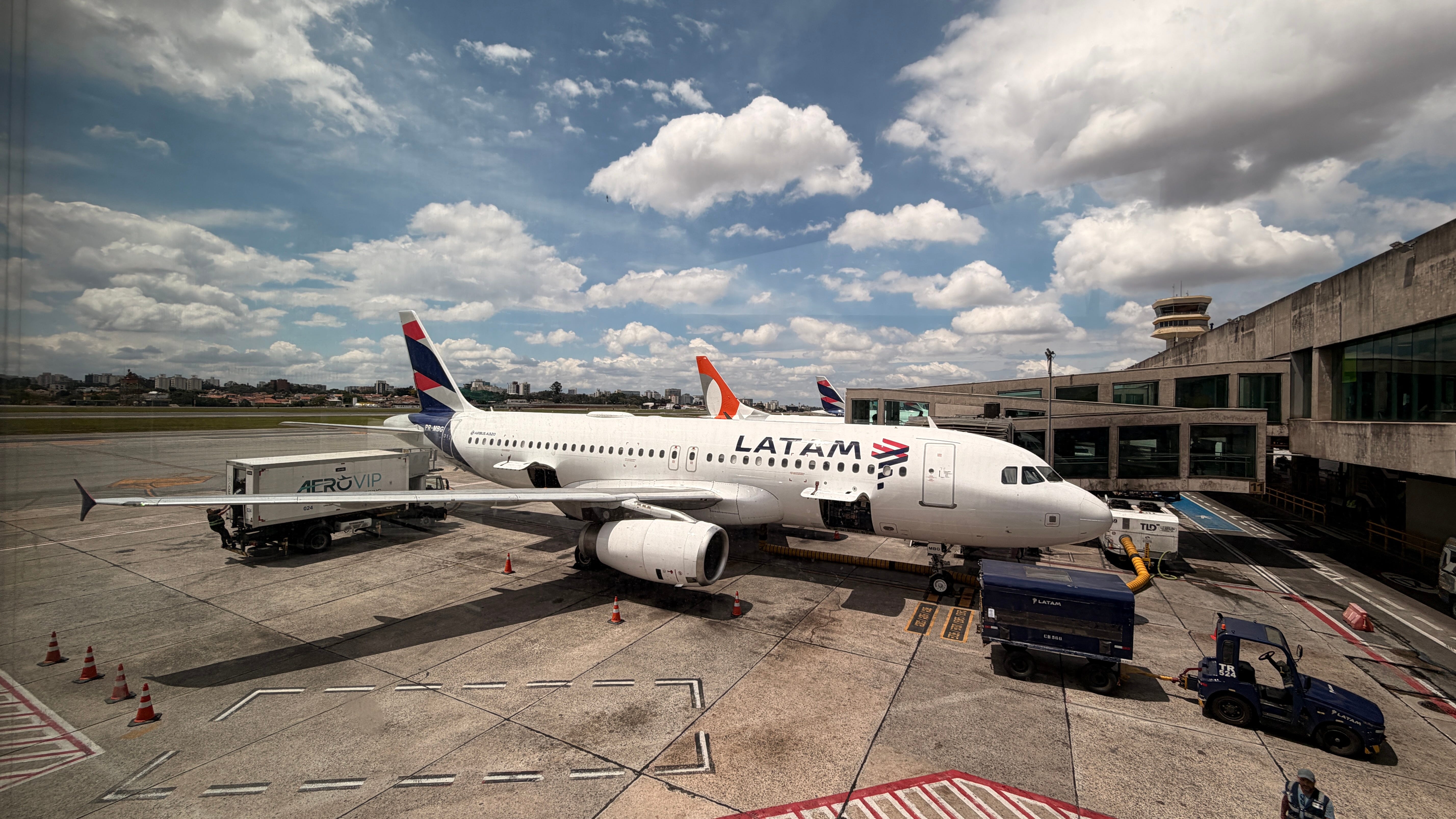
The number making the rounds this week is a good one. Latin American business travel is forecast to reach 67.7 billion dollars in 2026, growing around 11 percent, one of the fastest regional growth rates in the world, according to GBTA’s latest read on the region. It is the kind of figure that makes for a confident headline and a good slide at a conference, and the regional industry is right to feel some momentum behind it.
But there is a second number sitting quietly underneath the first, and once you see it, the story changes.
That same forecast expects the region to take 64 million business trips in 2026, a rise of just 1.5 percent. So spending is climbing about seven times faster than the number of trips. The money is rising far quicker than the movement, and I think that gap, not the headline total, is the thing worth talking about. I spend my working life on the corporate side of this industry, building tools to manage exactly this kind of spend, so I read a forecast like this looking for where the pressure actually lands. This year, it lands on the space between those two numbers.
The growth is in the price, not in the trips

Pull the two figures apart and the conclusion is unavoidable. If spending rises 11 percent while trips rise 1.5 percent, then the cost of the average business trip in Latin America is going up sharply. Companies are not sending far more people to far more places. They are paying considerably more to send roughly the same people on roughly the same journeys. The growth everyone is celebrating is, to a large degree, inflation in the price of a trip rather than expansion in the amount of travel.
This is not a Latin American quirk, it is a Latin American instance of a global squeeze, and I have written before about where that cost actually comes from, line by line. Fuel, capacity discipline at the airlines, currency swings against the dollar, and hotel rates that have not come back down all stack onto the same ticket and the same folio. The result is a market that looks like it is booming when you measure it in dollars and looks nearly flat when you measure it in trips.
Both pictures are true. They are just answering different questions, and a travel manager who only hears the dollar figure will badly misjudge what is happening to their own program. The budget is growing because each trip costs more, which is a very different problem from the budget growing because the business is traveling more.
The practical consequence is uncomfortable but clarifying. If your travel budget rose by double digits this year while your people took about the same number of trips, you did not get more travel for the money, you got the same travel at a higher price. That reframes the job of a travel program entirely. In a volume-growth market, the mandate is to enable more trips without the costs running away.
In a price-growth market like this one, the mandate is to defend the value of each trip against a rising unit cost, which is a tighter, more analytical discipline and one that most programs in the region are only beginning to build. The companies that notice the difference between these two kinds of growth will plan for 2027 very differently from the ones that just see a bigger number and assume the good times are simply rolling on.
Latin America, in this data, is mostly Brazil

There is a second thing the headline flattens, and as a Brazilian I say it with affection rather than triumph. Brazil alone is forecast to account for 35.8 billion dollars of the region’s 67.7 billion, more than half the entire total, growing a brisk 13.8 percent, and it is the only Latin American market that cracks the global top fifteen. Everything else sits well behind. Mexico follows at 10.4 billion, enough for twentieth in the world, and then the drop is steep, to Argentina at 6.1 billion, Peru at 5.9, Colombia at 5.5, and Chile at 3.4.
Read that distribution honestly and “Latin American business travel” is really one large market, one mid-sized one, and a long tail of promising but much smaller ones. That matters for anyone making decisions off the regional number, because the regional average is dominated by Brazil and hides very different realities underneath it. A supplier treating the region as one uniform block will misread five or six markets at once.
The opportunity in that concentration is not a reason for the rest of the region to feel small, it is a map of where the depth still has to be built, and the countries in that tail are precisely the ones where a maturing travel-management discipline has the most room to add value. This connects to a point I keep returning to, that the most interesting story in this industry is where the structure is still being built, and the Latin American map is a clear picture of exactly that.
The 2027 number is the one I would circle
If the gap between dollars and trips is the present tension, the future tension is hiding one line further down. The same forecast expects regional spending growth to slow from around 11 percent in 2026 to just 3.3 percent in 2027. That is a steep deceleration, and it is the number I would circle on the page.
A drop like that usually means one thing, which is that the easy part is ending. Much of the recent growth has been the long tail of the post-pandemic recovery, the catch-up spending as companies returned to the road and as prices reset upward. That bounce is nearly spent. The deceleration also stands out against the global picture, since GBTA’s worldwide forecast still has business travel growing toward record levels on a steadier curve.
A region cooling faster than the world it sits inside is not failing, but it is being told plainly that the recovery dividend is nearly collected and the next gains will have to be earned the hard way. What comes after a recovery is not another recovery, it is ordinary life, and ordinary life grows at low single digits and rewards discipline rather than enthusiasm.
A market growing at 11 percent forgives a lot of waste. A market growing at 3.3 percent does not.
The programs that coasted on a rising tide are about to find out how much of their growth was the tide and how much was them.
What a maturity phase actually rewards
So the region is entering a different chapter, where trips are flat, costs are high, and the growth that papered over inefficiency is fading. That sounds like bad news and it is not. It is simply the moment when the work shifts from capturing growth to managing it well, and that is a far better game for anyone who takes the craft seriously.
When volume stops doing the heavy lifting, three things start to matter more than they did. The first is visibility, actually seeing the full cost of a trip rather than the fare alone, because you cannot control what you cannot measure. The second is governance, making sure the negotiated rate is the rate that gets paid and the approved channel is the channel that gets used. The third is total cost over lowest price, the discipline to understand that the cheapest fare with three connections and an exhausted traveler is rarely the cheapest trip.
This is the work my own company exists to support, so treat that as disclosure rather than a sales line, and it is the same lesson I keep drawing from the other direction, that the parts of a program worth protecting are usually the ones nobody wants to cut. GBTA’s own framing points the same way. Katharine Farrell, the association’s Vice President for the Americas, said the region has “strong momentum and a clear opportunity to turn business travel growth into broader economic value,” and the operative word in that sentence is turn. Growth does not convert itself into value.
Somebody has to do the converting, and in a low-growth year that somebody is the travel program.
The optimism is real, and it does not have to be naive

For all of that, the mood in the region is genuinely good, and I do not want to argue anyone out of it. In GBTA’s recent sentiment reading, 76 percent of Latin American travel professionals said they were optimistic about the next twelve months, a figure the association itself notes comes from a limited regional sample, so hold it loosely. I would rather have an optimistic industry than a gloomy one, since confidence is what funds investment and keeps good people in the sector, and the belief is grounded in a real demand curve rather than wishful thinking. Even discounted, it describes an industry that believes in its own trajectory, and that belief is not misplaced.
Optimism and discipline are not in tension, which is the point I most want to land. The healthiest version of this moment is a region that stays confident about the demand while getting serious about the management, that treats the slowing growth not as a disappointment but as the signal to build the muscle it will need for the next decade. The alternative, riding the good feeling without tightening the operation, is how programs enter a flat year unprepared and spend it apologizing for overruns. The data gives every reason for confidence. It also gives a clear instruction about what to do with it.
The real opportunity for the region

I will end close to home, because the regional story is ultimately a Latin American one and I am not a neutral party to it. The forecast says our region is spending more, traveling barely more, concentrated heavily in Brazil, and about to grow much more slowly. None of that is a verdict of weakness. It is the profile of a market growing up, and growing up is the phase where good management stops being a nicety and starts being the whole game, as I have argued about the hidden value in corporate travel more than once.
The opportunity, then, is not to chase a growth rate the world is not going to hand us in 2027. It is to become the region that converts its spending into the most value per dollar, that builds the visibility and governance while the mood is still high enough to fund the effort, and that treats a flat year as a chance to get genuinely good rather than merely busy. Brazil will keep anchoring the numbers. The more interesting question is whether the whole region uses this next phase to deepen, because the 67.7 billion dollars is impressive, and what we do with the slow year that follows is what will actually matter.
The number under the number
So celebrate the headline, by all means, because 67.7 billion dollars and double-digit growth are real and hard-won. Just do not stop reading at the headline. The trip count barely moved, the dollars moved mostly because trips got more expensive, the region is one big market and a long tail, and the growth is set to slow to a crawl.
Every one of those facts points at the same conclusion, which is that the next phase of Latin American business travel will be won on how well the money is managed, not on how fast it grows.
It is the same conviction that keeps me optimistic about building here rather than resigned about it, because a maturing market rewards exactly the discipline this region is now in a position to build. That is a quieter story than the one in the headline. It is also the one that pays.
About me

I am an entrepreneur with over 20 years of experience at the intersection of tourism and technology. I am co-founder and Chief Business Officer of VOLL, the largest mobile-first corporate travel and expense management platform in Latin America, where I lead the commercial strategy behind our AI adoption.
A first-cohort graduate of The AI-Powered Organization at Stanford Graduate School of Business and a Marketing specialist from Fundação Dom Cabral, I serve on the Tourism Council of FecomércioSP and on the Executive Council of the Latin American Association of Corporate Events and Travel Management (Alagev). I write and speak about innovation, digital transformation, entrepreneurial leadership, and the future of corporate travel.
Discussion about this post