


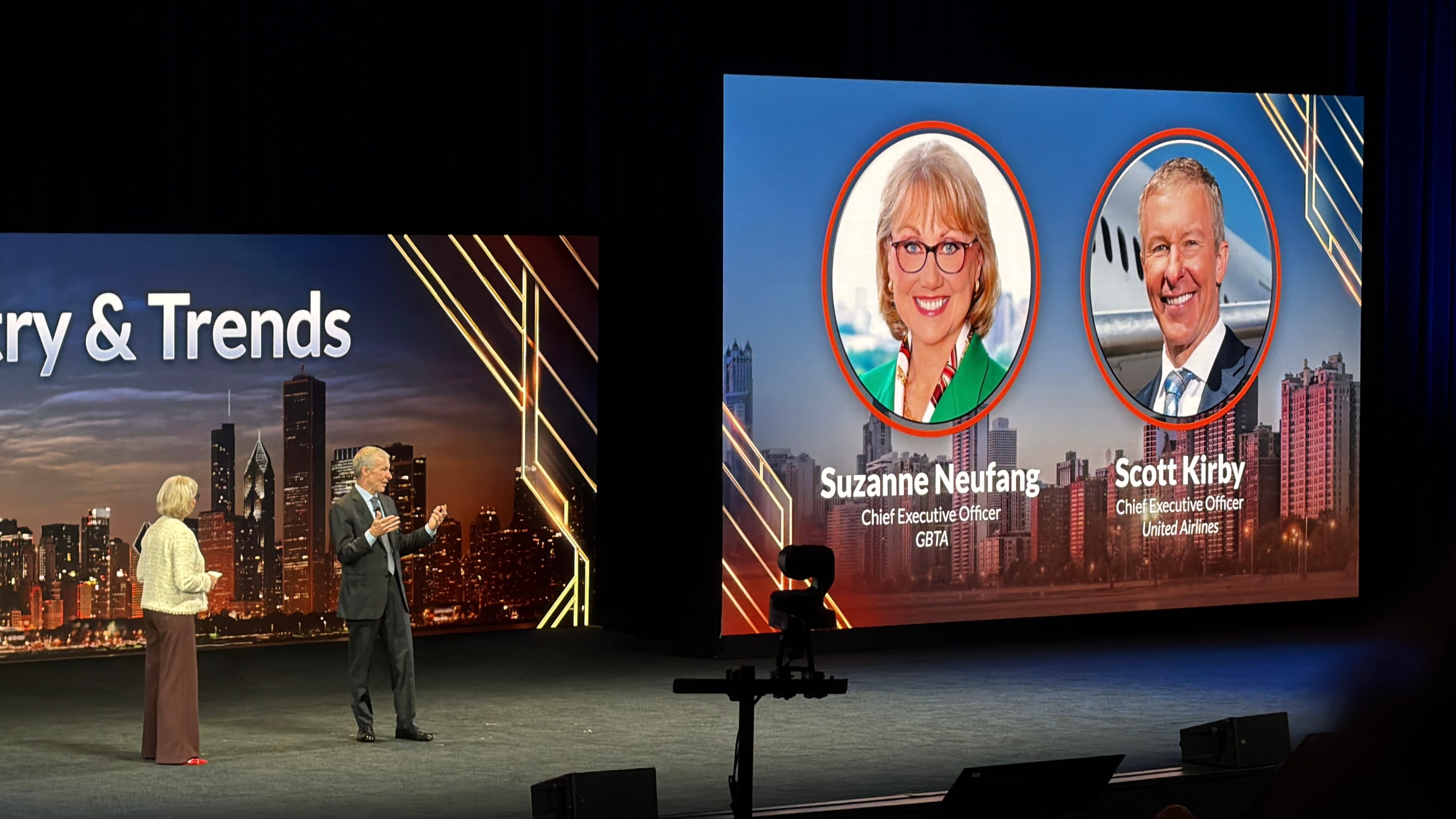
Over three days in Chicago, the chief executives of three major airlines took the stage at the GBTA Convention, one after another across the week, and talked about where their businesses are going. They run very different companies with very different strategies. And if you listened past the strategy, they were all circling the same handful of truths, one of which the industry has been reluctant to say out loud.
I want to walk through what each of them said, and then the thing none of them said directly but all of them implied.
United: the honest number

Scott Kirby, who runs United Airlines, offered the line I have not been able to stop thinking about since, and it was notable precisely because it cut against the optimism of the week.
Demand is strong, he said, but business travel has not fully returned to where it was before the pandemic. There are still fewer corporate trips than there used to be. In a week when the industry was celebrating a record nominal spending forecast, the head of one of the largest airlines in the world stood up and gently reminded the room that the record is in dollars, not in trips.
He said something else that has stayed with me. Airlines, in his framing, are one of the best real-time economic indicators that exist, because business travel is the first thing a company cuts when conditions tighten and the first thing it restores when confidence returns. It is a beautiful way to describe the industry: a live feed of corporate confidence, read in seats sold.
Put those two ideas together and you get a quietly sobering message. The strength everyone can feel is real, but it sits on top of a base that has not fully recovered, and the people best positioned to read the economy are watching it carefully.
Southwest: the culture under transformation

Bob Jordan, the chief executive of Southwest, described a company in the middle of the most significant commercial transformation in its history.
The list of changes he walked through would have been unthinkable at Southwest a few years ago. Assigned seating. A redesigned approach to how the airline handles its cabin. New international partnerships. Connectivity being installed across the fleet. For an airline whose entire brand was built on doing things its own singular way, this is a substantial reinvention.
And yet the heart of what he said was about continuity, not change. His argument was that culture is not a product feature and not a policy, and that a company can transform what it sells and how it operates while keeping intact the thing that actually made it what it is. He reached back to the airline’s founding philosophy to make the point, the old idea that if you do not change you die, which is itself part of the culture he is trying to protect.
What struck me was the tension he was holding: transforming the commercial model precisely in order to preserve the company underneath it. The changes are the means. The culture is the end.
American: the strategy built from listening

The leader speaking for American Airlines described a commercial plan organized around a few clear pillars, a leading network, a premium customer experience, revenue built on being easy to do business with, and loyalty earned as a result of the first three rather than pursued on its own.
But the detail that stayed with me was not the pillars. It was where he said the strategy came from. Not from headquarters, not from a consulting deck, but from listening to customers, to travel agencies, and to corporate travel managers. A global airline’s commercial strategy, shaped in significant part by the people who manage corporate travel programs.
I want to sit on that for a moment, because it says something about my own audience that my own audience rarely hears. The travel managers who so often feel like price-takers, like the department that gets handed fares and told to enforce policy, are in fact a voice that helps shape the commercial strategy of one of the largest airlines on earth. The bargaining power of this profession is greater than the profession tends to believe.
The thing all three implied
Here is what none of them said in exactly these words, and all of them said in effect.
Kirby framed airlines as a read on human confidence. Jordan insisted the technology and commercial changes are in service of a culture made of people. The American leader built an entire strategy out of listening to people. Underneath three different messages was a single shared conviction: in a year when this whole industry was arguing about how much to hand over to artificial intelligence, the people who actually run the airlines spent their time on stage talking about human judgment, human confidence, and human relationships.
None of them was anti-technology. All of these companies are investing heavily in it. But not one of them stood up and said the future is automated. Each of them, in his own way, described a future in which technology is in service of something human, the confidence to travel, the culture that holds a company together, the relationships that shape a strategy.
Why this matters beyond the keynote
I think this matters because it is easy, in a week saturated with sessions about agentic AI, to conclude that the direction of this industry is toward removing people from it.
The three people with the most operational skin in the game described the opposite. They described technology as a tool in the service of human confidence, human culture, and human relationships, which is very close to the argument I have been making about where AI actually belongs in this business: amplifying people rather than replacing them.
When the buyers debating autonomy and the CEOs running the airlines independently arrive at the same conclusion, that the human layer is the point and the technology is the tool, it stops being one commentator’s opinion and starts looking like the actual shape of the industry.
The record, and the base beneath it
So I left those three keynotes holding Kirby’s honest number in one hand and the two culture-and-relationship arguments in the other.
The market is at a nominal record and has not fully recovered in real terms. The airlines are transforming aggressively and insisting the transformation is in service of something human. And the profession I write for turns out to have more influence on all of it than it usually claims.
Three CEOs, three strategies, one quiet agreement. The future they described is not automated. It is human work, supported by better tools. It is worth noticing that the people betting billions on that future said so themselves, plainly, on the biggest stage our industry has.
About me
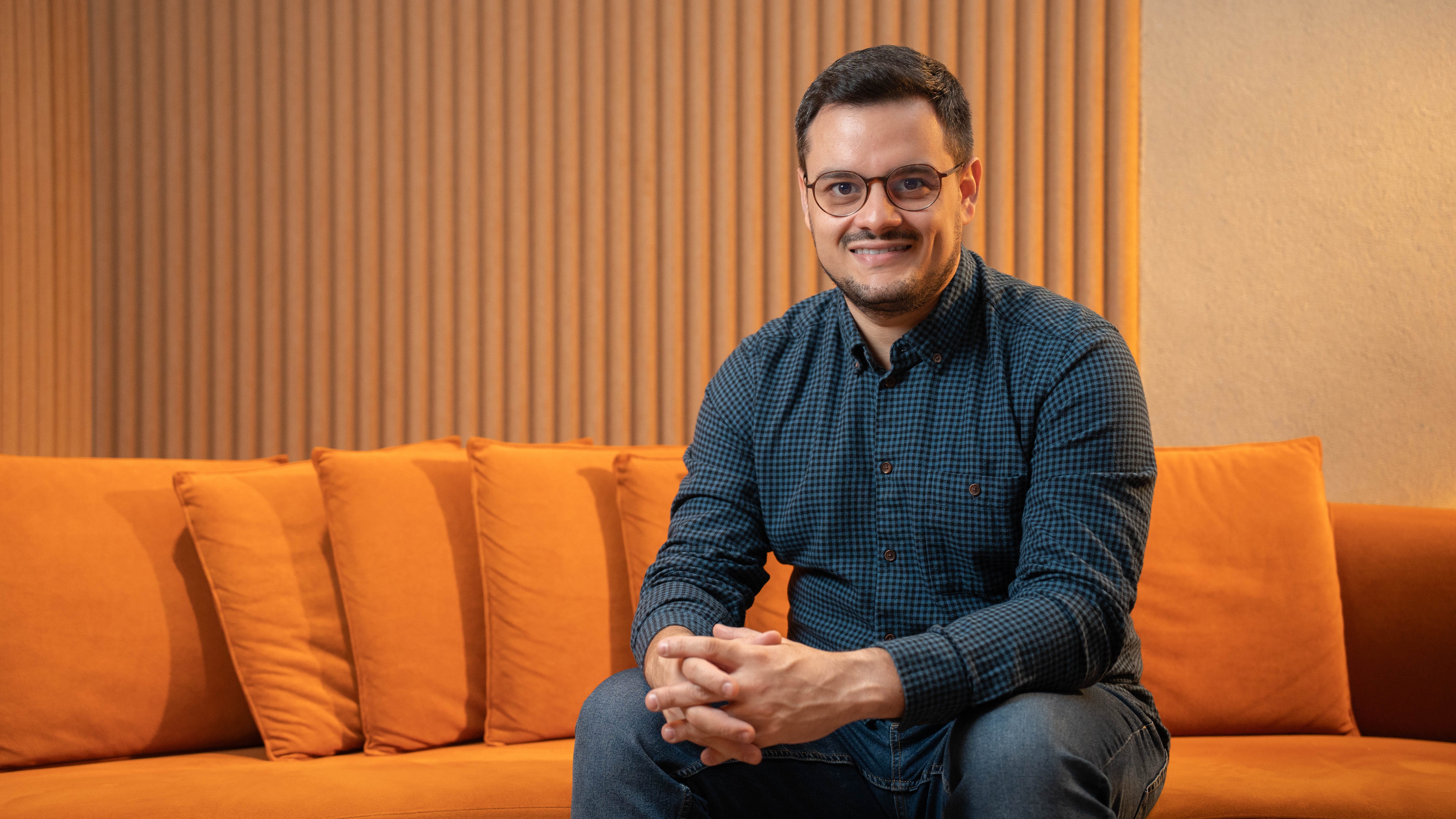
I am an entrepreneur with over 20 years of experience at the intersection of tourism and technology. I am co-founder and Chief Business Officer of VOLL, the largest mobile-first corporate travel and expense management platform in Latin America, and a recognized reference in the development of the corporate travel industry.
A Marketing specialist from Fundação Dom Cabral, I serve on the Tourism Council of FecomércioSP and on the Executive Council of the Latin American Association of Corporate Events and Travel Management (Alagev). A frequent traveler and close observer of human behavior in motion, I write and speak about innovation, digital transformation, entrepreneurial leadership, and the future of corporate travel.