



I want to write directly to a group of people I have spent my whole career around, and who I think are getting a raw deal in the current conversation about artificial intelligence. Corporate travel managers. Travel coordinators. The people who, in companies all over the world, quietly make sure that colleagues get where they need to be, safely, within budget, and back home again. If you are one of them, you have probably spent the last two years hearing some version of the same message: the AI is coming, the booking is automating, the role is shrinking. I think that message is wrong, and I think it is wrong in a way that matters, because believing it leads good people to undervalue themselves at exactly the moment their value is about to climb.
Let me make the case, and let me make it with evidence rather than reassurance, because reassurance without evidence is just a pat on the head.
What is actually being automated
Start with what is true, because the fear is not baseless. A real part of the traditional travel-management job is being absorbed by software, and there is no honest way to pretend otherwise. The transactional core of the role, the manual searching, the rebooking, the rate audits, the policy exceptions processed one at a time, is exactly the kind of repetitive, rules-based work that modern tools do well. The industry is direct about this: modern platforms now automate fare rebooking, hotel rate audits, and policy exceptions, freeing the manager for strategic work. Routine booking tasks are under automation pressure, and anyone telling travel managers otherwise is not doing them a favor.
But notice the precise shape of what is being automated. It is the part of the job that was never the point. No travel manager got into this work because they loved manually re-shopping a fare at eleven at night, or auditing hotel rates in a spreadsheet, or processing the same policy exception for the hundredth time. That was the toll the job extracted, not the value the job created. And here is the thing the doom narrative misses entirely: when you automate the toll, you do not erase the worker. You free them for the part that was always the real work.
The role was already changing, and fast
This is not a prediction. It is already happening, and the people tracking the profession can measure it. The travel-manager job description has shifted faster in the last 24 months than in the prior decade, moving from booking coordination toward procurement strategy and operational risk management. The work that holds value is the part that protects the business: disruption handling, policy and spend visibility, and traveler safety when the stakes are high. The role is shifting toward strategy precisely because the basic booking is getting faster.
Look at what is rising in value as the transactional work falls away. Duty of care has become a board-level concern: by the 2025 GBTA Risk Report, 84% of large enterprises now require pre-trip risk approval for travel to elevated-risk destinations, up from 61% in 2022. Sustainability reporting is moving from voluntary to mandatory, which I have written about before, and it lands squarely on the travel manager’s desk. Supplier negotiation, stakeholder management across HR, finance, and legal, calm judgment during a medical evacuation or a ground-stop event: none of this is automatable, and all of it is becoming more central to the role, not less.
The market backdrop makes this even clearer. Business travel is not shrinking; it is projected to grow at double digits annually through the early 2030s. A growing, more complex, more regulated travel market does not need fewer skilled people managing it. It needs more capable ones, equipped differently than before.
What the tools actually do to a good manager
I find the most convincing evidence in the specific, concrete stories of travel managers who have already crossed into the new version of the job, because they show what the transition actually looks like from the inside, rather than in the abstract.
There is a head of travel at a well-known software company who described what modern tooling did for him, and his phrasing has stuck with me. He said the software does not do his job, but it gives him the ability to do his job exceptionally well. He can now generate an urgent report for senior leadership in under a minute, which turns him into a responsive business partner who delivers instant insight when leadership is making a critical decision. Read that carefully, because it is the whole argument in miniature. The technology did not replace him. It promoted him. It took him from the person who would have spent two days assembling that report to the person in the room when the decision gets made.
Another travel leader, at a fast-growing food company, put the shift this way: before, she understood travel patterns anecdotally, but now she has comprehensive data insights that let her optimize the program strategically. That is the move from firefighting to future planning, from reacting to anticipating, and it is the move the best people in this field are making right now. The technology is not the threat. It is the thing that finally lets a skilled travel manager operate at the level their judgment always deserved.
This is why I tell people in this profession to view modern platforms not as a threat to the role but as professional development tools that amplify their expertise. The travel managers who are thriving are the ones who treat the time freed by automation as an opening to develop the strategic muscles that automation cannot touch.
The skills that compound
If the transactional work is leaving and the strategic work is rising, the practical question for anyone in this career is simple: what should I get good at? The evidence points clearly at a handful of capabilities, and the encouraging part is that none of them require becoming a technologist.
The first is data literacy. Not data science, data literacy: the ability to read a dashboard, interpret a trend, and present numbers clearly to a finance team. The modern travel manager is increasingly expected to be comfortable reading the data and turning it into a recommendation. This is the single highest-leverage skill in the new version of the job, because it is what converts the output of the tools into decisions the business acts on.
The second is the cluster of genuinely human skills that become more valuable, not less, as the routine work automates. Stakeholder management across departments. Clear executive communication. Negotiation with suppliers. Calm under crisis. These are the skills the role is described as demanding now, and they are precisely the skills no model possesses. A machine can audit a fare. It cannot sit across a table from a supplier and read the room, or hold a leadership team steady during a crisis, or persuade a reluctant department to adopt a new policy.
The third is what I would call strategic fluency: understanding the company’s actual goals, its budget cycles, its priorities, well enough to speak the language of business strategy rather than the language of travel logistics. When a travel manager can do that, they stop being a service provider and become an advisor. That is the promotion that is available, right now, to anyone in this field willing to reach for it.
The transformations pushing all of this
None of this is happening in a vacuum, and it is worth naming the larger forces, because they explain why this shift is structural rather than a passing phase. The role is being reshaped simultaneously by globalization, by technological advancement, by changing employee expectations, and by the rise of ESG reporting. Each of these adds complexity, and complexity is the travel manager’s job security, because complexity is exactly what cannot be reduced to an automated booking.
Consider how these pile onto the desk. Travelers now expect a consumer-grade experience and the blending of work and personal travel. Regulators now demand emissions disclosure that requires connected, auditable data. Geopolitical volatility makes duty of care a constant rather than an occasional concern. A business trip in 2026 sits at the intersection of finance, sustainability, security, technology, and human wellbeing, and someone has to stand at that intersection and make sense of it. That someone is the travel manager. The job is not disappearing. It is becoming the coordination point for some of the most strategically important questions a company faces.
What I would say to someone in the job
I come at this, admittedly, from a particular place. I run a company that builds the very technology people fear will replace these roles. So you might reasonably expect me to soften the automation story. I am doing the opposite, and I mean it, because I have watched this play out and the evidence is on the side of the optimists, not the doomsayers.
The technology I help build is not designed to remove the travel manager. It is designed to remove the toll, the manual, repetitive, attention-draining work that kept skilled people stuck doing tasks beneath their judgment. What is left when that toll is gone is not a smaller job. It is a bigger one: the strategy, the negotiation, the risk judgment, the human leadership that the role was always secretly about and rarely had time for. The best travel programs I have seen are not the ones with the fewest people. They are the ones where capable professionals were freed by good tools to operate at the top of their ability.
So if you are in this profession and you have been told your role is shrinking, I would gently push back. The transactional part is shrinking. The strategic part is expanding faster. The question is not whether AI will take your job. It is whether you will use the time AI gives back to step into the larger version of it that is opening up. The people who do that are about to become some of the most valuable players in their companies, sitting at the intersection of cost, risk, sustainability, and human experience, with the data and tools to actually steer it.
The job everyone keeps saying AI will erase is, in fact, about to become one of the most strategic seats in the building. The only thing that will erase a travel manager is deciding to stay in the part of the job the machines are taking, instead of stepping into the part only a person can do. That part is bigger than it has ever been. I would tell anyone in this field to go claim it.
About me
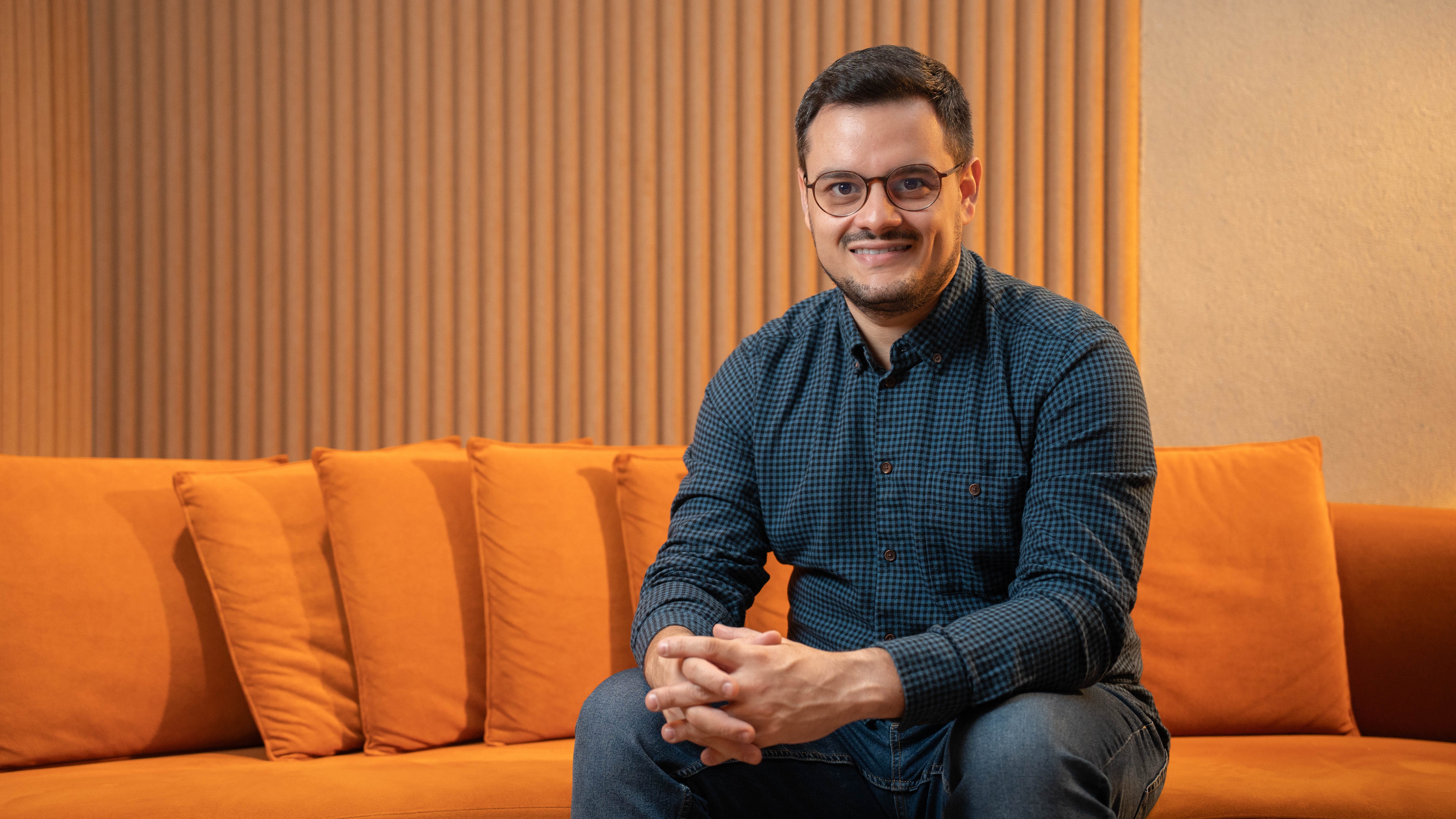
I am an entrepreneur with over 20 years of experience at the intersection of tourism and technology. I am co-founder and Chief Business Officer of VOLL, the largest mobile-first corporate travel and expense management platform in Latin America, and a recognized reference in the development of the corporate travel industry.
A Marketing specialist from Fundação Dom Cabral, I serve on the Tourism Council of FecomércioSP and on the Executive Council of the Latin American Association of Corporate Events and Travel Management (Alagev). A frequent traveler and close observer of human behavior in motion, I write and speak about innovation, digital transformation, entrepreneurial leadership, and the future of corporate travel.