



Ask people what worries them about companies using AI to handle customer interactions, and you would expect the usual list: privacy, job loss, bad information, the machine getting it wrong. All of those concerns are real, all of them show up in the data, and, according to a recent study from Skift, a leading voice in global travel research, nearly all of them are declining.
Poor quality interactions, down. Extra effort required to get understood, down. Distrust in the information provided, down slightly. The one concern that is rising, and the one that is now the single largest worry people report about AI-driven service, is simpler and harder to fix than any of the others: the absence of a human being to connect with.
What the numbers actually show
Lack of human connection is now cited by roughly half of travelers as their top concern about AI automating service interactions, ahead of job loss, ahead of data misuse, ahead of every other item on the list. And it is the only one of these concerns that increased year over year while every other concern on the same list fell.
That divergence is the finding. People are simultaneously growing more comfortable with what AI can competently do, and more aware of what it does not provide no matter how competently it does the rest. Those are not contradictory reactions. They are two halves of the same recalibration, happening at the same time, in the same population.
Why competence and connection are different axes
I think the natural mistake is to assume these concerns move together, that as AI gets better at the mechanics of service, the human-connection worry should fall too, the same way the accuracy and effort concerns are falling. The data says otherwise, and I think the reason is structural rather than temporary.
Accuracy, effort, and trust in information are properties of execution. A system either gets the task right or it does not, and AI systems have been getting measurably better at execution, which is exactly why those specific worries are declining. Connection is not a property of execution at all. It is not something a system does better or worse as its capability improves. It is either present, because a person is genuinely on the other end, or it is structurally absent, no matter how well the system performs everything else.
That is why fixing accuracy does not touch the loneliness number. The two are not on the same axis, and improving one has no logical reason to move the other. A perfectly executed interaction with no human anywhere in it is still an interaction with no human in it.
This is the argument I keep making, from a different angle
I have written before about a moment in Chicago when a business traveler’s flight was cancelled and an airline’s chatbot handled the disruption competently, right up until the options ran out and a human had to step in to actually solve the problem. I used that story to argue that the future of this industry is not automated, it is orchestrated, and that orchestration is still fundamentally human work.
This data is the same argument, arriving from consumer psychology instead of from a single anecdote. The rising loneliness concern is what it looks like, at scale, when an entire population starts to feel the gap between a system that works and a system that connects. It is the statistical shadow of exactly the boundary I described in that story, showing up not in one traveler’s account of one bad morning, but in how an entire market is starting to talk about its relationship with automated service.
What this means for anyone building service around AI
The lesson is not to build less capable AI. Capability is not the problem, and the data is explicit that capability concerns are the ones falling.
The lesson is that removing friction and providing connection are two different products, and a service strategy that only optimizes the first while assuming the second follows automatically is optimizing against a trend the data says is moving the other way. A company that automates everything it can and treats the remaining human contact as a cost center to minimize is building directly against the one concern that is getting worse, not better, as AI adoption rises.
The companies that will feel this first are the ones in high-stakes, high-stress categories, travel very much among them, where the moment someone reaches for a human is rarely a moment of convenience. It is a moment of disruption, urgency, or fear, precisely the moment where the absence of a person to connect with is felt most acutely, and precisely the moment a rising concern like this one becomes a competitive difference rather than a footnote in a survey.
The gap that gets more valuable, not less
So here is the pattern underneath the two Skift findings, held together. AI is getting better at the parts of service that can be measured as correct or incorrect, fast or slow, and people are responding to that improvement exactly as you would expect, with rising comfort.
AI is not getting better, and structurally cannot get better, at being a person, and people are responding to that with rising concern, even as everything around it improves. That gap is not a temporary side effect of AI still being new. It is the permanent shape of what AI is and is not, and the businesses that plan around its permanence, rather than assuming it closes with the next model update, are the ones that will still have a human connection to offer when the traveler needs one most.
About me
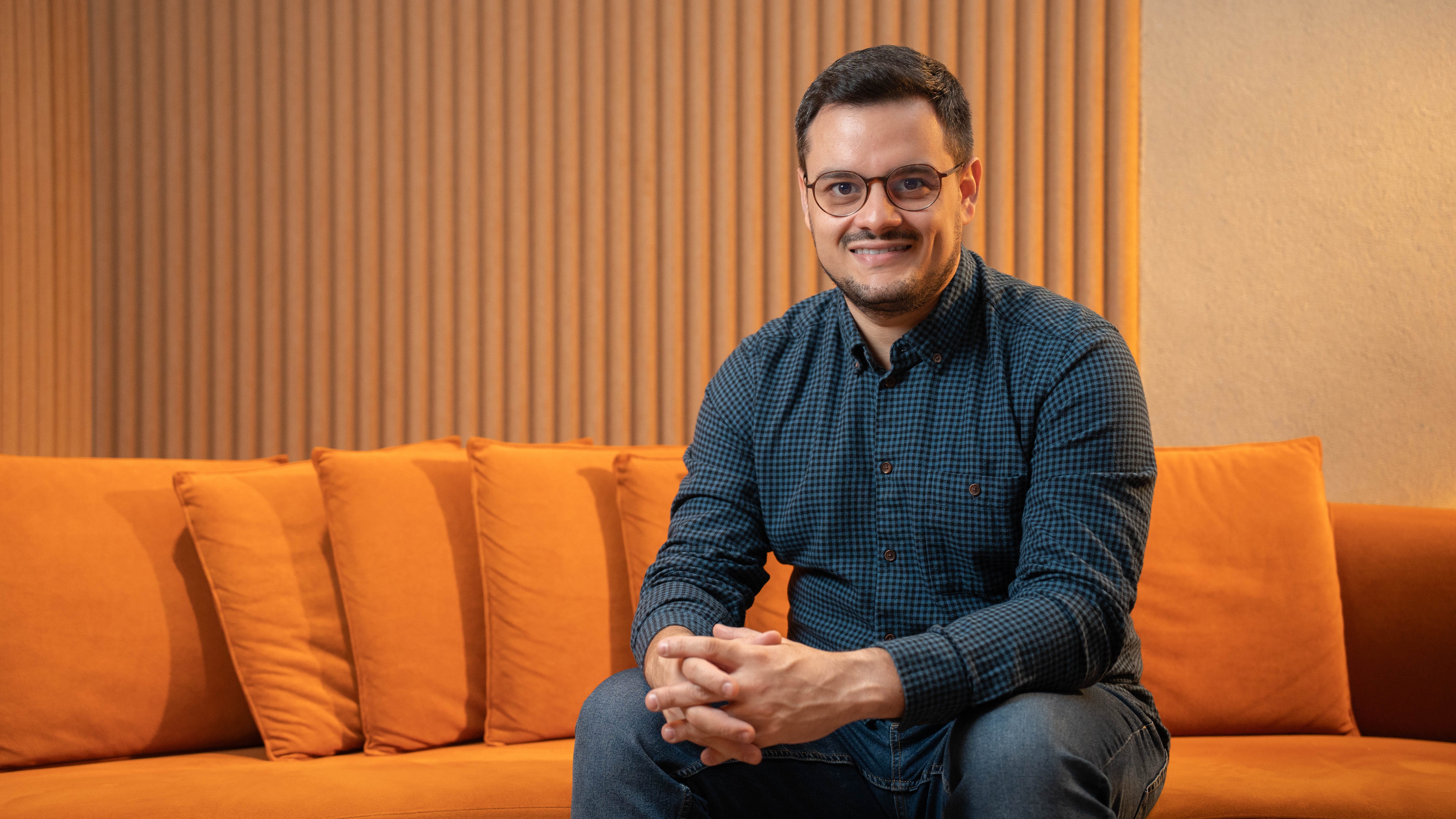
I am an entrepreneur with over 20 years of experience at the intersection of tourism and technology. I am co-founder and Chief Business Officer of VOLL, the largest mobile-first corporate travel and expense management platform in Latin America, and a recognized reference in the development of the corporate travel industry.
A Marketing specialist from Fundação Dom Cabral, I serve on the Tourism Council of FecomércioSP and on the Executive Council of the Latin American Association of Corporate Events and Travel Management (Alagev). A frequent traveler and close observer of human behavior in motion, I write and speak about innovation, digital transformation, entrepreneurial leadership, and the future of corporate travel.