

Why one country files most of the world's airline lawsuits
Brazil is a top-ten aviation market with a legal environment unlike anywhere else on earth. That single fact explains more about the price of a Brazilian ticket than any fuel chart.

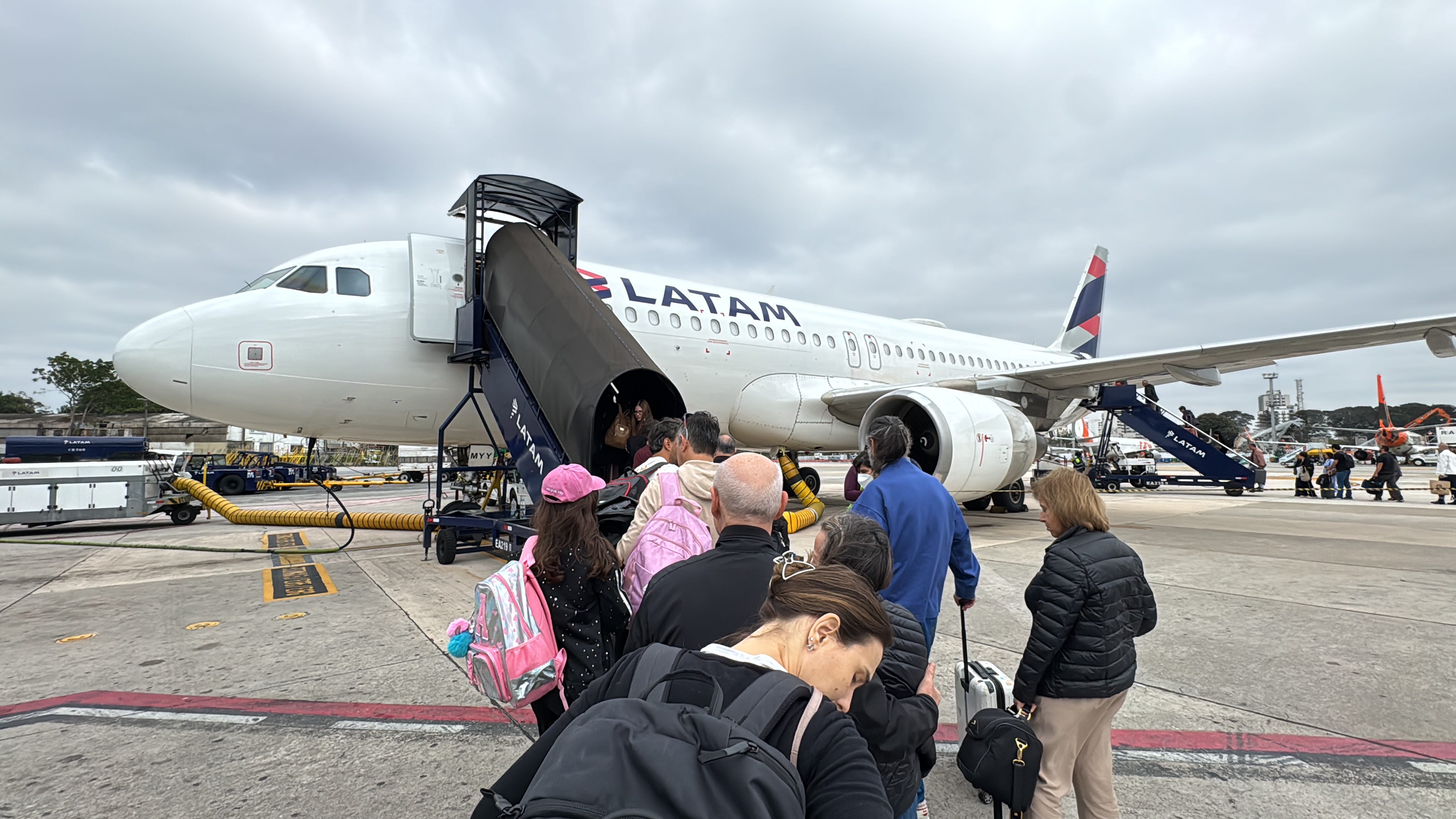
Three years ago, on a flight from São Paulo to Rome, something happened that stayed in my head for a long time.
The plane would not stop shaking. Almost eleven hours to Rome, and it felt like I had climbed onto that “Samba” ride from the small neighborhood fairs, the one that swings you side to side. Nothing dramatic, the predictable kind of movement anyone who flies often knows is harmless, probably just temperature variation, I think. The cabin crew kept serving dinner. Nobody asked anyone to buckle up. The seatbelt sign stayed off. It was Alitalia, now ITA. On the way back, the same thing.
A few days later, on a domestic flight inside Brazil, with none of that turbulence, the crew asked everyone to stay seated because we were crossing an area of instability.
I kept turning the question over. Why two such different procedures for the same physics?
It took me years to understand that the answer has almost nothing to do with weather. It has to do with courtrooms. And once you see it, you stop reading it as a quirk of pilots and start reading it as the single most revealing fact about the economics of flying in Brazil.
What the numbers actually say
Here is the fact that stops people when they first hear it. Brazil accounts for a small share of global aviation, in the neighborhood of three percent of the world’s air traffic. And Brazil concentrates the overwhelming majority of the world’s lawsuits against airlines, by figures the industry itself cites, well above ninety percent.
Read that again, because the asymmetry is the whole story. A country flying three percent of the world’s passengers generates most of the world’s airline litigation. In Brazil, the rate works out to roughly one lawsuit for every couple hundred passengers. In the United States, it is one for well over a million.
The cost is not abstract. Brazil’s major carriers have publicly put the annual bill for this litigation in the range of over a billion reais a year, up from a fraction of that only a few years earlier. That is money that does not buy a single new aircraft, does not open a single new route, does not lower a single fare. It goes to lawyers, to settlements, to the administrative machinery of being sued at scale.
Why the seatbelt sign is a legal instrument
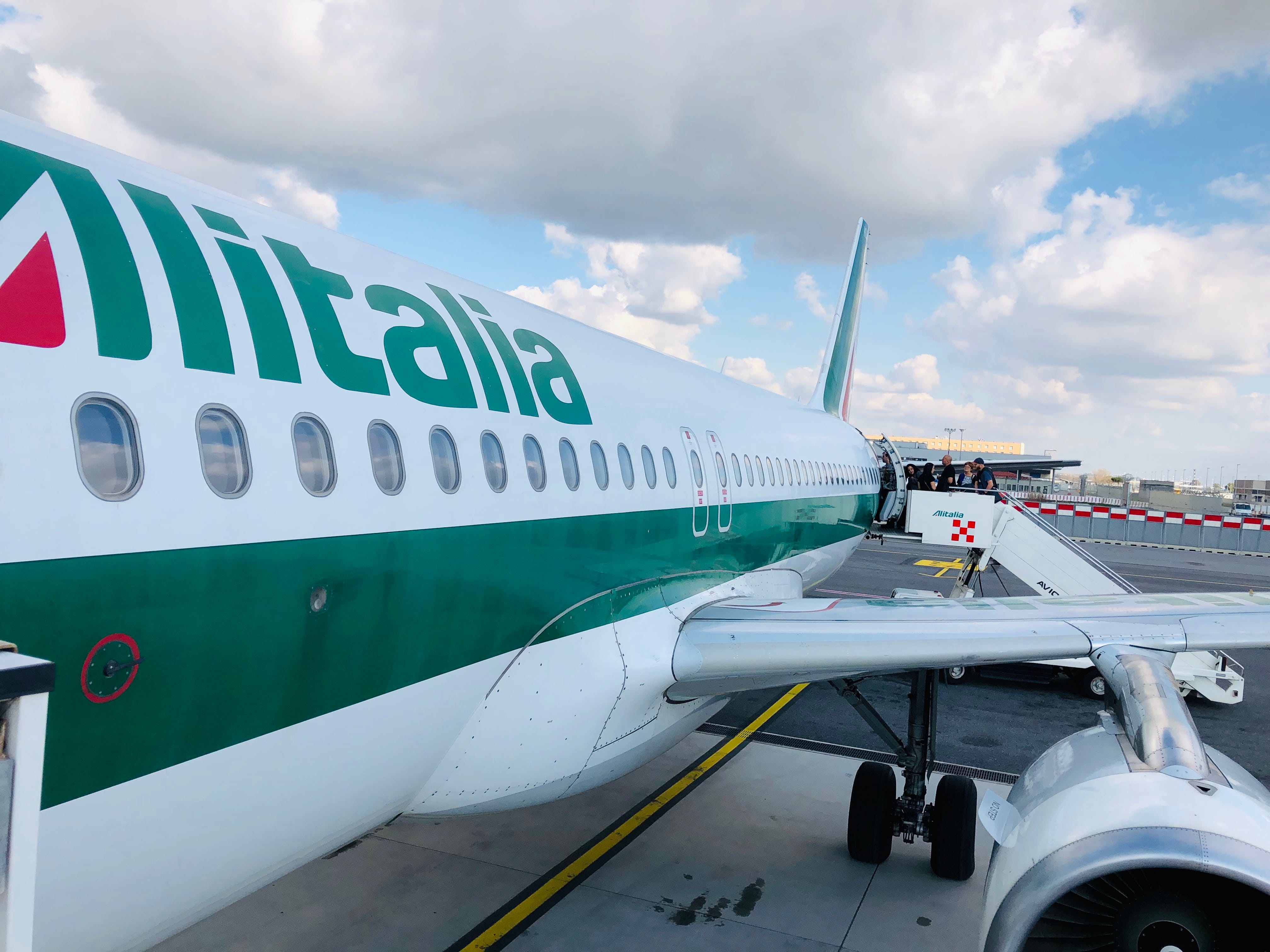
Come back to that Alitalia dinner for a moment, because the contrast explains the mechanism.
International rules only require the seatbelt sign during takeoff, taxi, and landing. Everything in between is the captain’s judgment. And that judgment, it turns out, is made with the legal department sitting on the captain’s shoulder.
In the United States, an illuminated seatbelt sign functions as a shield. If a passenger is injured with their belt off while the sign was on, the airline can argue the passenger was warned, and responsibility shifts. In Europe, the Montreal Convention caps compensation, so a European captain can prioritize passenger comfort without fear of ending up in a courtroom.
Now place Brazil on that spectrum. If a captain in the United States keeps the light on out of concern for the courtroom, imagine the Brazilian one, operating in the most litigious aviation environment on the planet. The behavior I saw was not Italian carelessness and Brazilian caution. It was two crews reading two completely different legal maps, and adjusting the same physics accordingly.
The consumer-protection paradox
Here is where I have to be careful, because this is not an argument against protecting passengers. It is an argument about what happens when protection has no counterweight.
Brazil built one of the most consumer-favorable legal environments in the world, and in many ways that is an achievement. But aviation is where the unintended consequence shows up most sharply. When the cost and probability of losing a lawsuit are high enough, litigation stops being a remedy for bad service and becomes a line of business in itself. The airline prices that risk into every ticket. The passenger who never sues still pays for the ones who do.
I have talked about this with executives at airlines operating in Brazil, and the view is close to unanimous. Legal exposure to the Brazilian consumer is seen, almost without dissent, as one of the structural barriers to the growth of civil aviation in the country. I remember reading the CEO of one of Brazil’s largest carriers address exactly this on his own public channels. It is not a fringe complaint. It is a widely shared read among the people who actually run the flights.
Why thin margins make this decisive
To understand why this matters so much, you have to understand how little room airlines have to begin with.
Globally, the airline industry runs on a net margin of around 3.9 percent, according to IATA. That is roughly four cents of profit on every dollar of revenue, somewhere between seven and eight dollars per passenger. One analysis put it perfectly: the industry’s profit per passenger is less than the price of a sandwich at the gate.
Sit with that number, because it reframes everything. This is an industry that depends on constant innovation and enormous capital just to stay, literally, in the air, and it does so on one of the thinnest margins in the entire economy. Now add a litigation cost structure that most of the world does not carry. Legal cost compresses margin, and in a business already operating on four cents to the dollar, there is almost nothing left to compress. The buffer between a profitable route and an abandoned one is razor thin, and litigation pushes routes across that line.
This is the part that rarely makes the conversation about why Brazilian aviation does not grow faster. People reach for airport infrastructure, for fuel taxes, for the size of the middle class, and all of those are real. But the legal environment sits underneath all of them, quietly raising the cost of every seat and lowering the appetite to add more.
What this means for a corporate travel program
If you manage a travel program, this is not aviation trivia. It shows up in your budget.
The litigation environment is one of the invisible reasons Brazilian airfare behaves the way it does, and why capacity on some routes is thinner and more expensive than the raw size of the market would suggest. When you are negotiating fares, building policy, or forecasting a travel budget for operations in Brazil, you are pricing in a legal reality that does not exist in the same form in the United States or Europe. The volatility, the sudden fare movements, the route decisions that seem to defy demand, part of that traces back to margins that litigation keeps under permanent pressure.
Understanding this does not change the fare tomorrow. But it changes how you read the market. A program manager who knows that Brazilian aviation carries a structural legal cost the rest of the world does not carry makes better assumptions, sets more realistic expectations with finance, and stops treating Brazilian fare behavior as an anomaly to be explained away. It is not an anomaly. It is the visible price of an invisible legal structure.
The dinner, in hindsight
It took me three years to understand that the calm dinner in the middle of all that shaking was not Italian carelessness. It was simply a captain who could decide by looking at the sky instead of at a lawsuit.
That is the whole thing, in one image. In most of the world, the sky is a matter of physics and comfort. In Brazil, it is also, and sometimes primarily, a matter of legal risk. Until that changes, it will keep showing up where few people think to look for it: in the price of the ticket, in the routes that never open, and in the margins of an industry that can least afford to lose them.
About me

I am an entrepreneur with over 20 years of experience at the intersection of tourism and technology. I am co-founder and Chief Business Officer of VOLL, the largest mobile-first corporate travel and expense management platform in Latin America, and a recognized reference in the development of the corporate travel industry.
A Marketing specialist from Fundação Dom Cabral, I serve on the Tourism Council of FecomércioSP and on the Executive Council of the Latin American Association of Corporate Events and Travel Management (Alagev). A frequent traveler and close observer of human behavior in motion, I write and speak about innovation, digital transformation, entrepreneurial leadership, and the future of corporate travel.