



Here is a number that should stop any travel executive mid-slide. Only about 8% of travelers rely on AI when planning a trip, and roughly two thirds would not let it buy or book anything on their behalf, according to an Expedia Group study run with YouGov across more than 5,700 adults in the United States, the United Kingdom and India.
This is 2026. The models are extraordinary. They can plan a multi-city itinerary, read a fare rule, and draft the trip report before you land. And almost nobody wants them holding the credit card.
The gap between what the technology can do and what people will let it do is the whole story of AI in travel right now, and it is not a capability gap. It is a trust gap.
That is the argument Evan Konwiser of American Express Global Business Travel made in a Forbes interview with Jeff Fromm, and it lands hard because it runs against the industry’s favorite habit of measuring progress in model benchmarks. I should say plainly where I stand, because it shapes how I read him.
I am co-founder and Chief Business Officer of VOLL, Latin America’s largest corporate travel and expense management platform, and this month we launched VOLL Intelligence, our own agentic AI for travelers and travel managers. So I am not a neutral bystander to this question. That is exactly why the trust point rings true to me. The hardest part of putting AI into a corporate trip was never the model. It was earning the right to be used at all.
The bottleneck was never the model

Konwiser’s core line is almost blunt enough to be a bumper sticker: “If you don’t trust it, you’re not going to use it.” What makes it more than a slogan is where he puts trust in the build order. Trust is not a message you wrap around a finished product. It is an architectural decision you make at the start, or fail to make, and it shows up in every design choice after that.
The market data backs the diagnosis. GBTA’s own research has found strong interest in AI paired with thin real adoption across corporate travel programs. Everyone is curious, few have handed over real decisions. If capability were the constraint, adoption would track the release notes. It does not. It tracks something slower and more human, which is whether the person on the trip believes the system will not embarrass them in front of their boss, strand them in the wrong city, or quietly spend their company’s money on the wrong thing.
Travelers will let most AI tools look, but not book
The sharpest pattern in all of the recent research is a split between browsing and buying. People are happy to let AI look. They are not willing to let it commit.
In the Expedia and YouGov work, 53% were comfortable letting AI suggest options and a similar share would use it to watch prices or draft an itinerary, yet 66% would not trust AI to buy or book for them. Accenture found the same shape from a different angle, with travelers delegating discovery freely while only about 10% would hand over payment. Broader studies pile on: a Wunderkind survey reported that just 24% trust AI-generated travel recommendations, and a large Booking.com study found only 6% of consumers fully trust AI outputs.
The verbs matter here. People will let a machine narrow the world. They will not yet let it act in the world on their behalf, especially when a mistake costs money and standing.
For corporate travel this is not a small nuance, it is the entire product roadmap. It means the first job of an AI travel tool is not to book faster. It is to earn its way, task by task, from suggesting to drafting to acting, and to understand that the leap from the second step to the third is the one travelers guard most closely.
What erodes trust is invisibility
Konwiser makes a point that reframed the problem for me. The internet, for all its mess, gave people more visibility. You could see the options, compare, and decide. A recommendation engine does the opposite. It processes the options out of sight and hands you an outcome. You are being asked to accept less visibility in exchange for convenience, and in business travel, where a bad trip carries a professional and an emotional cost, that is a large thing to ask.
The remedy he points to is explainability, or in plainer words, showing your work. If the system left out a cheaper flight because it broke policy, say so. If it picked a pricier hotel because it sat two blocks from the meeting, say that too. Trust grows when a person understands both the answer and the reasoning behind it. The traveler data names the fear precisely: in the Expedia and YouGov study the top barriers to letting AI book were loss of control at 57%, data privacy at 57%, and misuse of personal data at 56%. Every one of those is a visibility problem in disguise. People do not fear a machine that decides. They fear a machine that decides without telling them why.
The moat is context, not the model
There is a second Konwiser argument that I would have written myself, because it is the thesis of my own company and of a Stanford executive program on the AI-powered organization that I finished this year. The durable advantage in this field does not come from the model. It comes from proprietary context: the negotiated rates, the policy engine, the traveler’s history and preferences, the depth of the marketplace behind the answer. Models are becoming a commodity. The context around them is not.
This is why corporate travel is, counterintuitively, well positioned for agentic AI. The very thing that looks like bureaucracy, the rulebook, is an asset rather than a constraint when a machine is doing the booking. A consumer agent has to guess what you want. A corporate agent already knows the policy, the preferred suppliers, the approval chain and the budget.
Structure, which the leisure world lacks, is exactly what lets an agent act safely. The company that has organized its travel data and its rules has built the trust scaffolding before it ever switches an agent on. The one that has not will find that no model, however good, can substitute for context it never captured.
Inside the company, trust is a governance problem too
Most of the trust conversation focuses on the traveler, but there is a second audience whose trust matters just as much, and that is the organization. Personalization needs data, and data needs governance.
An AI that remembers a traveler well is useful, and it is also a responsibility, which is why the serious players keep a human in the loop and treat adoption as a gradual handover rather than a switch to flip. Konwiser is candid that keeping people in the loop signals adoption will be incremental, and the longer version of his thinking keeps returning to stewardship of personal information as the price of admission.
For a platform like ours, this is the part that cannot be faked with a good demo. Being a responsible steward of a traveler’s data, showing the reasoning, keeping an override within reach, and moving one careful step at a time is slower than shipping a flashy autonomous booking bot. It is also the only version that a risk officer, a data protection lead and a frequent traveler will all sign off on. In corporate travel, the buyer and the user and the auditor are different people, and the tool has to earn the trust of all three.
The Latin American blind spot
One more thing, and it is the angle almost everyone misses. Read the trust research carefully and you will notice where it was run. The Expedia and YouGov study sampled the United States, the United Kingdom and India. The loudest debate is North American and European. Latin America is, once again, largely unmeasured, and that absence is not the same as absence of a market.
The regional trust equation is genuinely different, and more interesting than a copy of the northern one. Brazilians already run their financial lives through their phones, settling everything from a market stall to a utility bill through Pix at national scale, and they conduct business inside WhatsApp as a matter of course. Comfort with acting through a screen, the exact behavior the northern surveys find scarce, is already high here. At the same time, LGPD sets a real bar for how personal data must be handled, so the stewardship question is not softer, it is legally sharper.
That combination, high behavioral comfort and high regulatory expectation, is a distinct environment for building trusted AI, and nobody is measuring it yet. For anyone building in this region, that gap is not a disadvantage. It is open ground.
The company that earns trust first wins the decade
Strip the topic down and the conclusion is uncomfortable for an industry that loves to compete on features. The next advantage in AI-powered travel will not be won by whoever has the largest model or the longest list of capabilities. It will be won by whoever earns permission to use them, which is a slower, less glamorous, and far more durable kind of work.
That is the standard I want held against my own company. VOLL Intelligence should show its reasoning, keep a human able to step in, respect the boundaries of the data it is trusted with, and grow its autonomy only as fast as it earns it. If it does that, the capability takes care of itself, because a tool people trust is a tool people use.
Konwiser is right that trust decides adoption. The part worth adding is that trust is not a feeling you can market your way into. It is a set of choices you make in the product, in the governance, and in the patience to let people say yes at their own pace. The models will keep getting better. The winners will be the ones travelers and companies actually let in.
About me
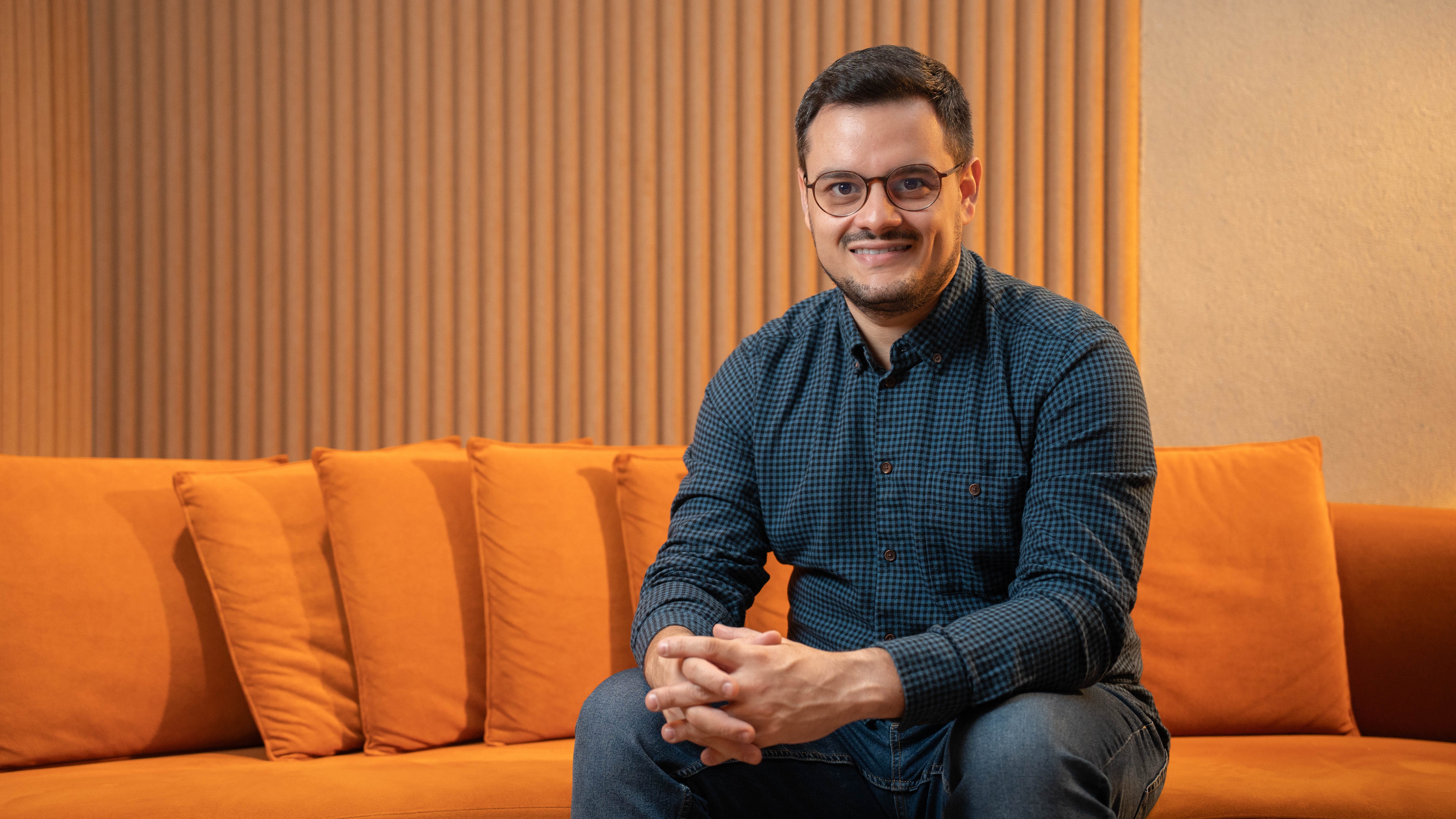
I am an entrepreneur with over 20 years of experience at the intersection of tourism and technology. I am co-founder and Chief Business Officer of VOLL, the largest mobile-first corporate travel and expense management platform in Latin America, where I lead the commercial strategy behind our AI adoption.
A first-cohort graduate of The AI-Powered Organization at Stanford Graduate School of Business and a Marketing specialist from Fundação Dom Cabral, I serve on the Tourism Council of FecomércioSP and on the Executive Council of the Latin American Association of Corporate Events and Travel Management (Alagev). I write and speak about innovation, digital transformation, entrepreneurial leadership, and the future of corporate travel.