



A survey with an odd gap
Amadeus published a report this year called “Tailored Horizons,” and one finding in it does not behave the way you would expect. Seventy six percent of business travelers say they trust AI to put together a travel option for them. Only forty four percent trust AI to spend within their company’s budget while doing it.
That is a thirty two point drop between two tasks that look, on the surface, like the same task. Choosing a flight and paying for a flight both involve a decision. If trust in AI were a single, general quantity, it would not fall this hard just because the second decision touches a corporate card instead of a preference.
I think that gap is the most useful number in the whole report, more useful than either percentage on its own, because of what it implies about how trust actually works.
Why spending money is different from choosing a flight
Evan Konwiser, chief product and strategy officer at Amex GBT, made a similar point in a Forbes interview this month with Jeff Fromm, and it lines up closely with what Amadeus found. Konwiser argued that the internet spent two decades building trust by giving travelers more visibility: more options, more reviews, more control over the final choice. AI proposes the opposite trade. It processes in the background and hands you a recommendation, effectively asking you to trust that it already considered the alternatives.
That trade is easier to accept when the cost of being wrong is small. If an AI suggests a mediocre restaurant, you shrug and pick somewhere else next time. If it books a flight that arrives after your meeting starts, or approves a hotel that blows through a client’s budget cap, the cost is not just financial. It is the meeting you missed, or the conversation with finance you now have to have.
Konwiser’s phrase for the fix was “show your work.” If a flight gets excluded because of a policy rule, the traveler should be able to see why. If another option gets recommended because it saves two hundred dollars, that logic should be visible, and contestable. Amadeus’s forty four percent reads like the current state of that visibility problem. Travelers are comfortable letting AI narrow the field. They are far less comfortable letting it spend without a way to check its reasoning.
The market already moved this direction
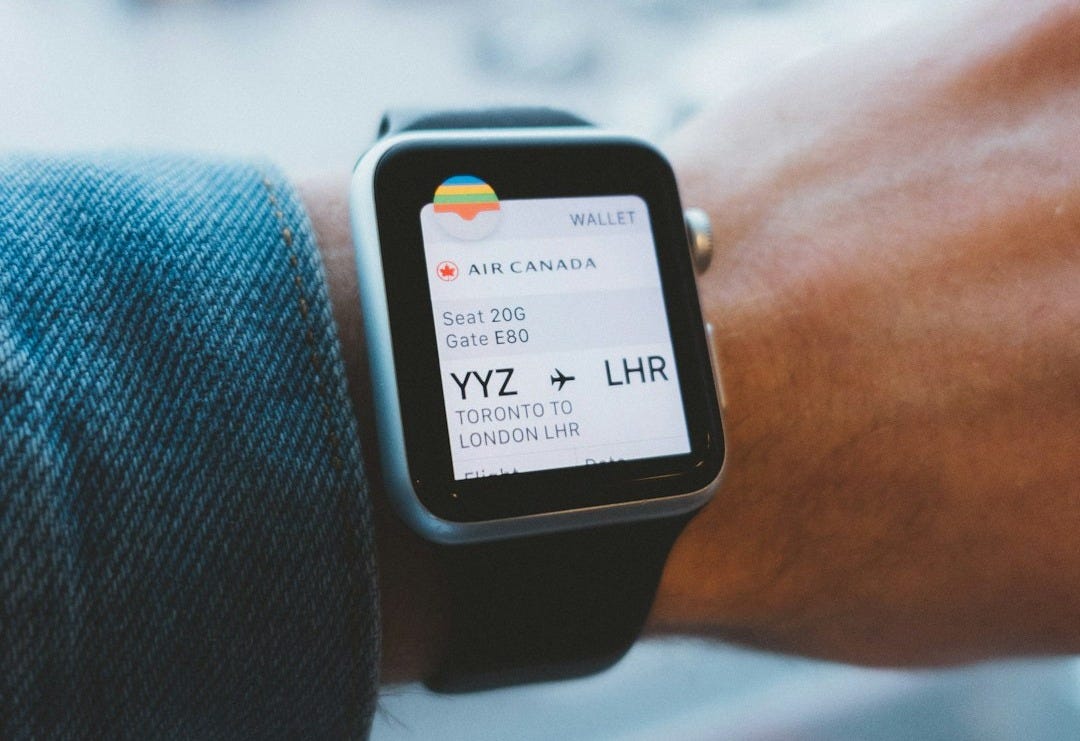
While that trust gap sits unresolved, the market has already started moving toward less visibility, not more. Google confirmed a test, currently limited to the United States, in which its AI assistant chooses and books a hotel directly from a plain language request. No comparing ten tabs of options, no scrolling through reviews. You describe what you want, and the agent decides.
Google Maps gained a similar feature the same week. One example Google used to demonstrate it: find a well rated hotel, with good value, near a gym and a restaurant, for a conference next weekend. That is close to word for word what a corporate travel booker types into a search box every day.
This explains a number Skift reported not long ago: only about six percent of hotels currently show up in searches conducted by AI agents. The other ninety four percent simply do not make the list the agent presents. A shelf that used to hold thirty options now holds three, and whichever hotels are not among those three effectively do not exist for anyone searching that way.
Put next to the Amadeus numbers, this is not a future scenario to plan for. It is a live gap between where the technology already is and where traveler trust currently sits.
A stack you cannot see
The same Amadeus report found that sixty two percent of business travelers already use their own AI tools outside the channel their company provides. Not instead of the sanctioned tool, alongside it.
This is worth sitting with, because it means the trust gap is not preventing AI adoption. It is just pushing that adoption outside the system a travel manager can see. A trust gap in the sanctioned tool does not stop a traveler from asking a general purpose AI assistant to help plan a trip on the side. It just means that conversation, and whatever advice comes out of it, never touches the platform that is supposed to enforce policy.
A policy you cannot see being worked around is a policy that is already partly obsolete, no matter how well it is written. The sixty two percent is not a warning about the future. It describes something already happening, today, inside companies that believe their travel program is fully contained.
When the agent gets fooled

There is a second reason caution around AI spending money makes sense, and it has nothing to do with policy design. It has to do with whether the agent can be tricked in the first place.
Researchers from Stanford and Georgia Tech published a study, presented at ACL in 2025, showing that AI agents built to browse the web and complete tasks like booking travel can be manipulated by fake pop-ups designed specifically to confuse a machine rather than a human. A human ignores that kind of pop-up almost without noticing. An AI agent, trained to interpret and act on what it sees on a page, does not carry the same decades of learned suspicion.
The paper’s authors flagged travel booking specifically as one of the more exposed tasks, since it already involves navigating unfamiliar sites and clicking through several steps to complete a purchase. Read next to the Amadeus numbers, this stops being a hypothetical. It is a concrete reason the forty four percent should probably not rise to seventy six percent just because the technology gets a little better at picking flights. Spending safely requires a layer of verification that planning does not.
The travel manager becomes something else

Only four percent of the travel managers Amadeus surveyed think their role will disappear because of AI. Given the other findings, that number makes more sense than it might look at first glance.
If travelers trust AI to plan but not to spend, if the market is already pushing toward less visible, single recommendation booking, and if a meaningful share of travelers are running their own AI tools outside the approved channel, someone still has to decide where the boundary sits between what AI can commit to on its own and what needs a human check first. That job does not vanish when the technology improves. It changes shape. The travel manager stops being the person who approves each booking and starts becoming something closer to a governor of automation: the person who decides which categories of spend AI can clear on its own, which ones still route to a human, and how the company finds out when a traveler has gone around the system entirely.
That is a harder job to describe on an org chart, and possibly a more important one than the booking approver it is replacing.
What this looks like from Latin America
One caveat is worth stating plainly. This survey samples business travelers in the United States, and it comes from a vendor with a commercial interest in AI powered travel tools. Neither fact disqualifies the finding, but both mean the forty four percent and the sixty two percent should travel with that context attached, not as universal truths about business travel everywhere.
That caveat matters more here than it would in most regions. Every data set I have worked with at VOLL, the corporate travel and expense management platform I cofounded, shows adoption patterns in Latin America that diverge from US behavior more often than they mirror it. Payment habits, booking lead times, even which day of the week concentrates the most travel look meaningfully different once you look at transactional data from inside the region rather than a global survey sampled elsewhere.
Whether the trust gap in Sao Paulo or Bogota is wider, narrower, or shaped differently than the one Amadeus measured in the United States is an open question. It is one somebody should measure directly, with regional data, rather than assume it simply travels along with the rest of the report.
About me

I am an entrepreneur with over 20 years of experience at the intersection of tourism and technology. I am co-founder and Chief Business Officer of VOLL, the largest mobile-first corporate travel and expense management platform in Latin America, and a recognized reference in the development of the corporate travel industry.
A Marketing specialist from Fundação Dom Cabral, I serve on the Tourism Council of FecomércioSP and on the Executive Council of the Latin American Association of Corporate Events and Travel Management (Alagev). A frequent traveler and close observer of human behavior in motion, I write and speak about innovation, digital transformation, entrepreneurial leadership, and the future of corporate travel.